
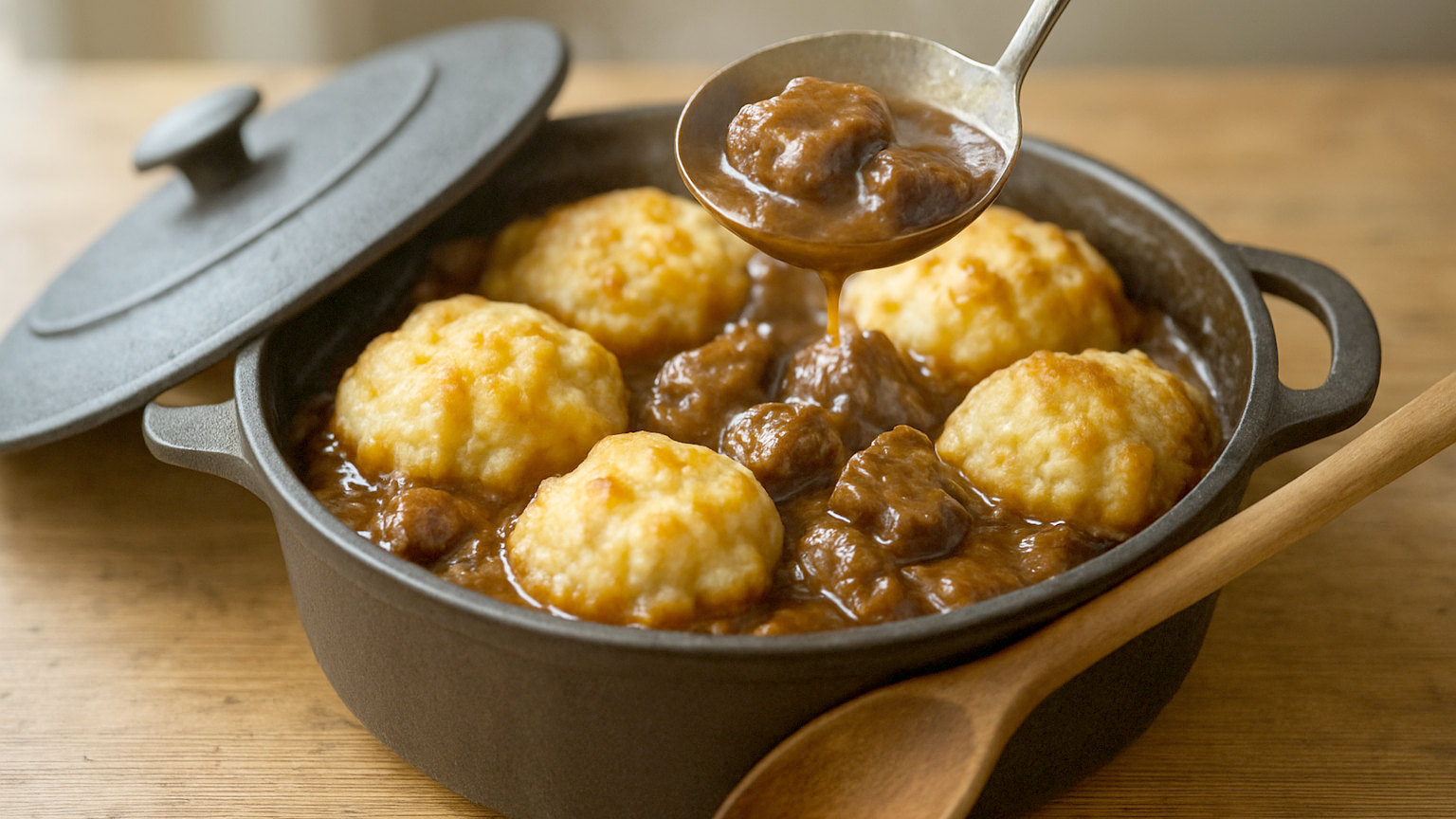
The rules for buying beef to stew are the reverse of those for a steak. You want the hardest working muscles, full of the connective tissue that would be unpleasant grilled but which turns to gelatine over three hours of gentle heat. Lean is a fault here rather than a virtue, which is why the packets marked lean stewing steak so often disappoint.
What makes a cut suitable?
Collagen. It is the tough connective tissue in working muscles, and above about 70C held for a long time it breaks down into gelatine, which is what makes braised meat feel succulent and thickens the gravy.
A cut with no collagen has nothing to convert, so it simply dries out and goes stringy.
Which cut is best?
Shin, also sold as leg or gravy beef. It has more collagen than anything else on the counter and produces a rich, glossy sauce that needs no flour.
Shin is also among the cheapest cuts in the shop. It is a rare case where the best option for the job is also the least expensive, mainly because it is useless for anything quick.
What about chuck and blade?
Chuck steak, blade and feather blade all braise very well and are widely available. They are slightly leaner than shin but still have plenty of connective tissue.
Blade contains a line of gristle down the middle that melts entirely over three hours, so do not trim it out.
Does brisket work?
Very well, though it is better cooked as a whole piece and shredded than cut into cubes, since the grain runs in long fibres.
If you do cube it, cut across the grain and give it four hours rather than three.
Is oxtail worth the trouble?
It makes the richest stew of all, since the bones and marrow add body no boneless cut can match. It needs four hours and there is a lot of bone in the weight.
Allow 400g per person and skim the fat off the surface after cooling, which is easiest done the day before.
What should you avoid?
Anything from the hindquarter that is sold for roasting or frying. Topside, silverside, rump and sirloin all lack the collagen and will be dry and fibrous.
Packets simply marked stewing steak are a gamble, since they can contain trimmings from several cuts of varying quality.
How should it be cut?
Into cubes of 4cm to 5cm, which is larger than most supermarket packs. Small pieces overcook and fall apart into threads before the collagen has done its work.
Ask the butcher to cut it for you, or buy a whole piece of shin and do it yourself.
What should you ask the butcher?
Ask what is on the bone rather than what is in the pre packed tray, since shin and blade are often behind the counter rather than on display.
A butcher will also cut it to the size you want, which supermarkets cannot do.
How much do you need?
Allow 175g of boneless meat per person, so 1kg feeds six. Meat shrinks by about a third during braising.
For oxtail or any cut on the bone, allow 400g per person.
Does the fat matter?
Some fat is essential for flavour, and it can be skimmed off the surface at the end if there is too much. Trimming it all off before cooking removes flavour you cannot put back.
Chilling the stew overnight makes the fat set on top so it lifts off in a sheet.
Does it need to be diced at all?
Not always. A whole piece of shin or a lamb shoulder braised in one and shredded afterwards gives a better texture than cubes and takes less preparation.
It also loses less moisture, since there is far less cut surface exposed to the liquid.
What about lamb and pork?
The same principle applies. Lamb shoulder, neck and shank braise well while leg does not. For pork, shoulder and hand are the cuts to use.
In every case, look for the muscles that worked hardest and cost the least.
For something along the same lines, see Beef Stew and Dumplings, or browse all our Mains recipes.


