
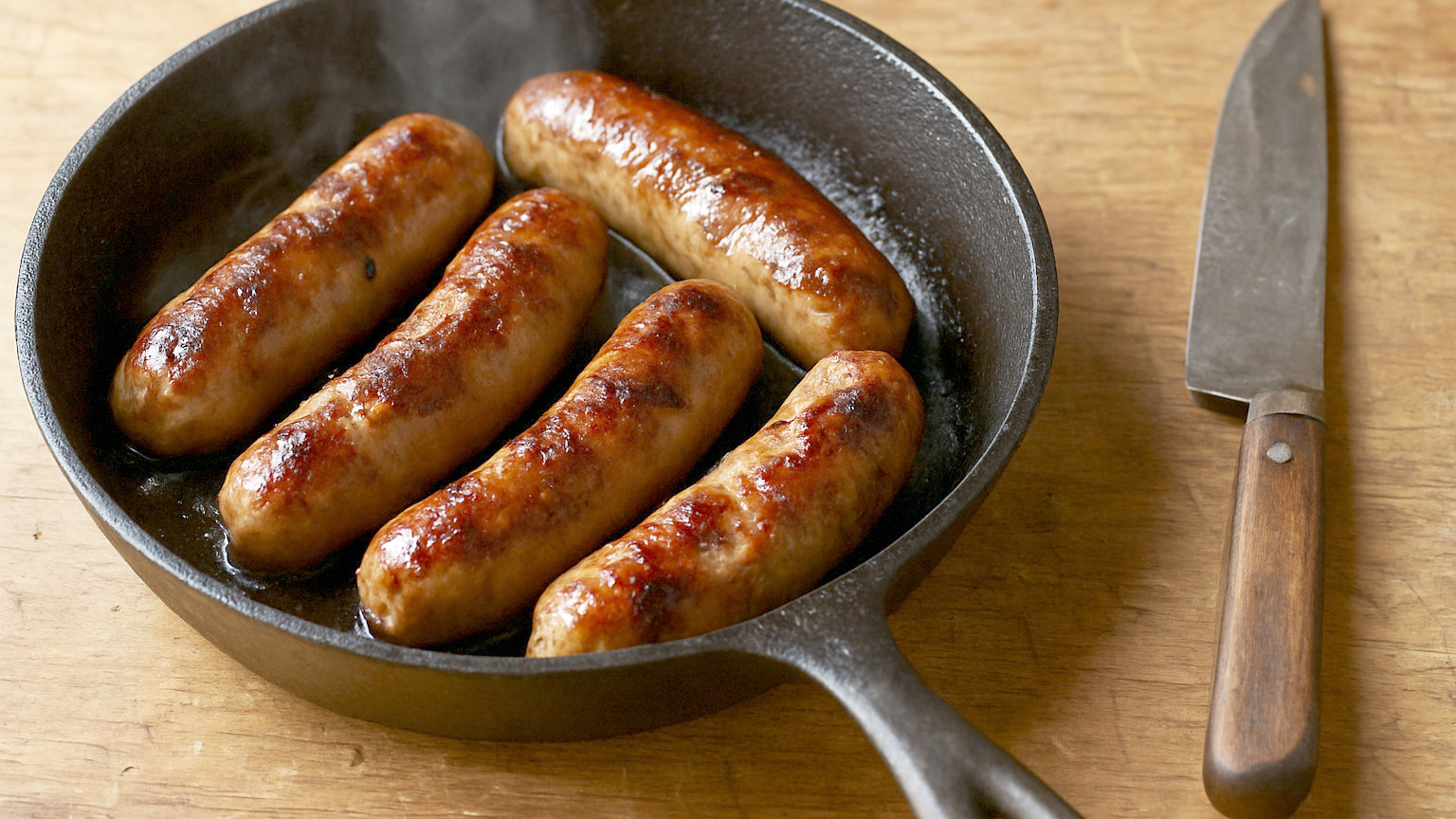
Split sausages are the most common complaint about cooking them and the fix is almost always the same. The heat was too high. Everything inside the casing expands as it heats, and if that happens too fast the skin cannot stretch to accommodate it and gives way. There are a few contributing factors, but temperature is the main one.
What actually causes it?
Water and fat inside the sausage turn to steam and expand rapidly. The casing, whether natural or collagen, can only stretch so far before it tears.
Gentle heating lets the contents expand slowly while the proteins set, and the casing keeps up.
How hot is too hot?
Anything above a medium heat in a pan. Sausages want 20 minutes over a medium to medium low flame, turning every three or four minutes.
The instinct to sear a sausage is the problem. They are not steaks and there is nothing to be gained from a fierce initial heat, which only burns the outside and splits the skin.
Does pricking help?
No, and it is worth being clear about this because the advice is so widespread. Pricking lets the fat and juices escape, so you get a drier sausage and a greasier pan.
It does not meaningfully reduce the pressure that causes splitting, and lowering the heat solves the problem without any cost.
Does the quality of the sausage matter?
Considerably. Cheap sausages contain a great deal of water and rusk, and that water turns to steam and bursts the casing readily.
A sausage with 85 per cent meat or above splits far less often, because there is less free water inside it.
Are natural casings more prone to it?
Natural casings are more delicate but also more elastic, so they stretch better under gentle heat. Collagen casings are tougher but less forgiving.
Either will split if the pan is too hot, so the casing is not usually the deciding factor.
Do frozen sausages split more?
Yes. A frozen sausage has ice crystals inside that expand fast when heated, and the outside is cooking long before the middle has thawed.
Defrost them fully in the fridge before pan frying. If you must cook from frozen, use the oven at a moderate temperature.
Does the cooking method affect it?
The oven at 190C fan is the most forgiving, since the heat is gentle and even. A pan is next. A very hot grill close to the element is the most likely to split them.
An air fryer at 180C rarely causes splitting because the temperature is moderate.
Should you add water to the pan?
Some cooks start sausages with a splash of water in a covered pan to steam them gently, then uncover and brown. It works and it does prevent splitting.
It also washes away some browning, so the result is slightly paler.
Does it matter if they split?
Only cosmetically and slightly in texture, since some juice is lost. A split sausage is perfectly safe and tastes much the same.
It is a sign the heat was too high, which usually means the outside is darker than it should be too.
Does turning them often help?
Yes. Turning every three or four minutes spreads the heat evenly rather than letting one face get much hotter than the rest, which is where a split usually starts.
It also gives a more even colour, which is worth the small amount of attention.
What about very thick sausages?
Cumberland coils and thick butchers sausages need longer at a lower heat, sometimes 30 minutes, because the centre is further from the surface.
The oven is the easier method for these, since the heat is gentler and more even than a pan.
What is the short answer?
Turn the heat down, buy better sausages and stop pricking them. Those three changes solve it in almost every kitchen.
Cook them until piping hot throughout with no pink remaining, in line with Food Standards Agency guidance.
See also Which Sausages Should You Buy?, or browse more Mains recipes.


