
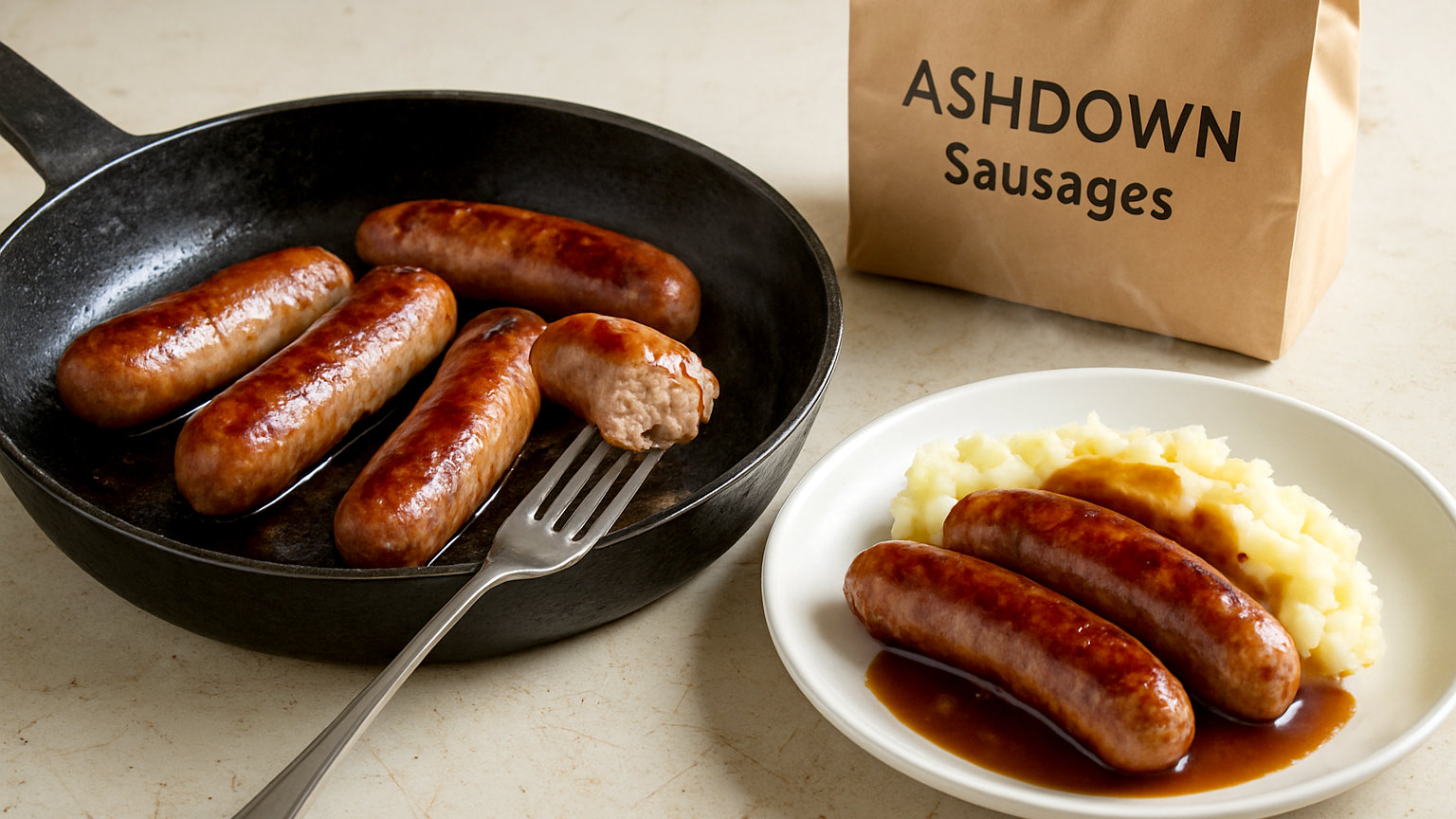
Sausages vary more in quality than almost anything else in a British supermarket, and the difference is not hidden. Meat content is printed on the pack by law, and it explains most of what you need to know. A sausage at 42 per cent pork is largely rusk, water and fat, and it will shrink, split and taste of seasoning rather than meat.
What meat content should you look for?
Above 80 per cent for a good sausage, and above 90 per cent for an excellent one. Between 70 and 80 is acceptable. Below 65 per cent is mostly filler.
The figure is on the front or in the ingredients list. It is the single most useful number on the packet and it correlates closely with how the sausage behaves in the pan.
What is rusk for?
Rusk is a dried breadcrumb that absorbs water and fat, keeping the sausage moist and giving it its characteristic soft texture. British sausages have always contained it.
It is not an adulterant in itself. The question is proportion, and a sausage that is a third rusk has too much.
What is a Cumberland sausage?
A coarse cut pork sausage seasoned with pepper, traditionally sold in a long coil rather than links. Traditional Cumberland has protected geographical status.
The coarse grind is the distinguishing feature, giving a meatier texture than a standard sausage.
What is a Lincolnshire sausage?
Pork seasoned generously with sage, with a chunky open texture. The sage is the defining note and it is unmistakable once you know it.
It suits toad in the hole and bangers and mash particularly well.
What other regional types are there?
Newmarket sausages, which have protected status and a distinctive spicing. Glamorgan sausages, which are vegetarian and made with cheese and leek. Black and white pudding, which are a different thing again.
Toulouse and Italian style sausages are widely sold and suit casseroles and pasta dishes.
Do the casings matter?
Natural casings, made from cleaned intestine, give a better bite and a satisfying snap. Collagen casings are uniform and slightly rubbery.
Most butchers use natural casings and many supermarket sausages do not, which is a large part of the quality difference.
What should the fat content be?
Around 20 to 30 per cent of the meat, which sounds high and is correct. A very lean sausage is dry and crumbly.
Fat is what makes a sausage taste of something, and reduced fat versions are generally disappointing.
Does the grind size matter?
A coarse grind gives a meatier bite and is the mark of a traditional sausage. A fine grind produces the smooth, uniform texture of a cheaper supermarket banger.
Are butchers sausages worth it?
Usually. They tend to have higher meat content, natural casings and a coarser grind, and the price gap against premium supermarket ranges is often small.
Ask what is in them, since a good butcher will tell you the proportion without hesitating.
How many should you allow?
Two per person for a main course, or three for a large appetite. Sausages are usually sold in packs of six or eight, which suits three or four people.
Chipolatas are thinner and you need three or four each.
What should you avoid?
Anything with very low meat content, anything with a long list of additives, and value packs where the price per kilo is barely above the cost of the rusk.
They shrink dramatically, release a great deal of water and split readily.
What about vegetarian sausages?
They have improved considerably and the better ones are based on pea protein or mycoprotein rather than simply vegetables and breadcrumb.
They contain almost no fat, so they need oil in the pan and they cook faster than meat sausages, usually in about 12 minutes.
How should they be stored?
On the bottom shelf of the fridge in a covered dish, used within the date on the pack. They freeze for three months and should be defrosted in the fridge.
Cook within 24 hours of defrosting, in line with Food Standards Agency guidance.
Worth reading next: Why Do My Sausages Split?. There is more in our Mains recipes.


