
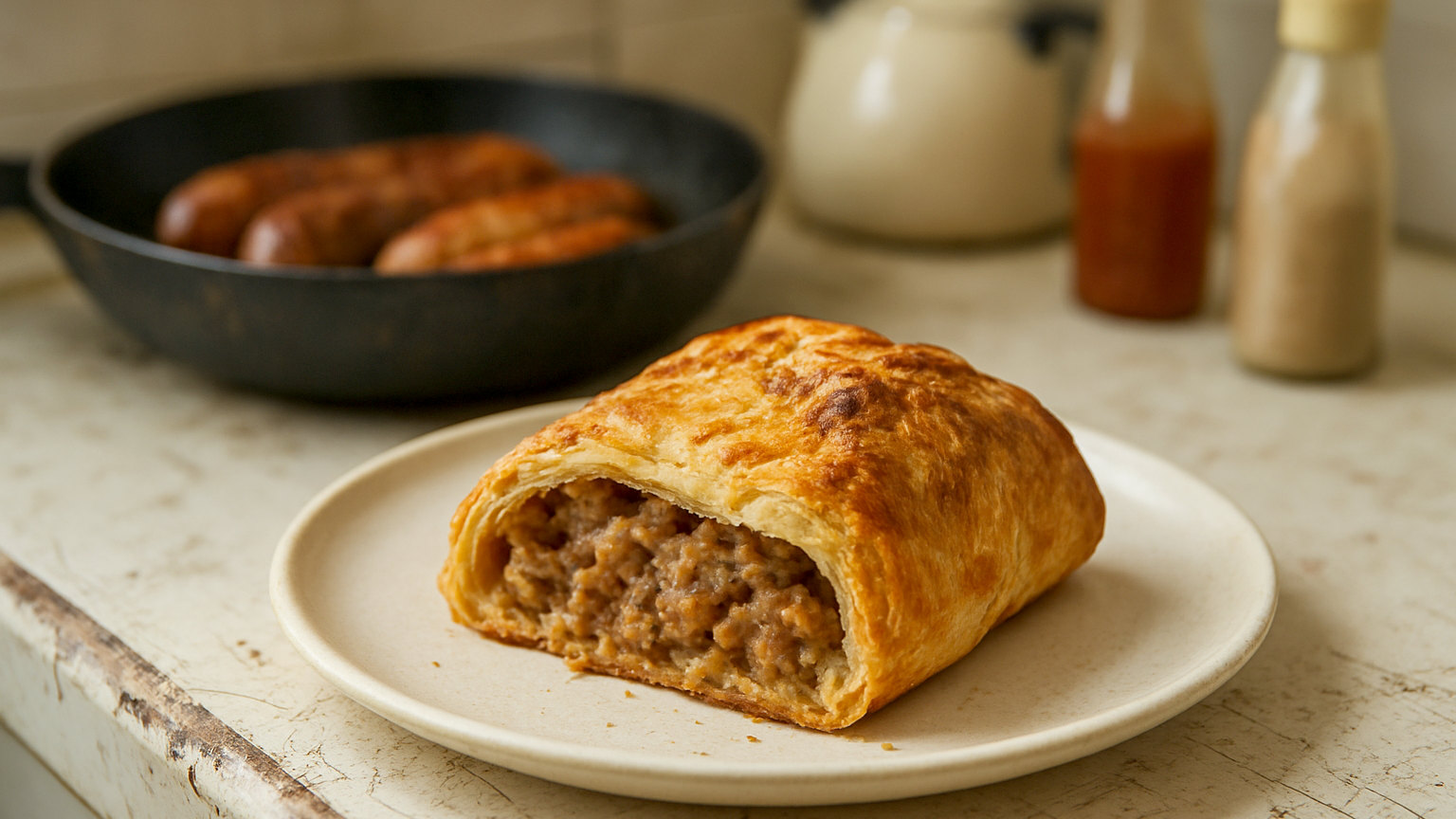
Sausage rolls are simple enough that the failures are all in the detail. A soggy base, a filling that shrinks away from the pastry, or a roll that bursts open in the oven. All three come from the same handful of causes, and none of them takes any extra time to avoid once you know what they are.
What do you need for 12 rolls?
- 500g good sausagemeat, or sausages with the skins removed
- 1 onion, finely chopped and softened in butter, then cooled
- 1 teaspoon dried sage and 1 teaspoon fennel seeds, crushed
- 50g fresh breadcrumbs
- 1 tablespoon wholegrain mustard
- 375g puff pastry, all butter
- 1 egg, beaten, for glazing
- Sesame or poppy seeds, optional
- Salt and plenty of black pepper
How do you make them?
- Mix the sausagemeat with the cooled onion, herbs, breadcrumbs and mustard and season heavily.
- Roll the pastry into a rectangle about 30cm by 24cm and cut it lengthways into two strips.
- Shape the filling into two long sausages and lay one down the centre of each strip.
- Brush one long edge with beaten egg, fold the pastry over and press to seal.
- Trim the seam and crimp with a fork, keeping the seam underneath.
- Chill the two logs for 30 minutes, then cut each into 6.
- Glaze with egg, scatter with seeds and cut two slashes in each top.
- Bake at 200C fan for 25 to 30 minutes on a preheated tray.
Chill the rolls before cutting and baking. Cold pastry holds its shape and the layers rise properly, while warm pastry slumps and the butter leaks out before the oven can set it.
Why season the sausagemeat?
Plain sausagemeat is under seasoned for this purpose, since it is intended to be cooked in a casing that concentrates the flavour.
Sage, fennel, mustard and plenty of pepper are the traditional additions, and a good pinch of salt is essential.
How do you get a crisp base?
Put the baking tray in the oven while it heats and slide the rolls onto it. Direct contact with hot metal sets the base before it can absorb fat.
Keeping the seam underneath also helps, since it adds a second layer of pastry at the bottom.
Why do they burst open?
Steam has nowhere to go. Two shallow slashes in each top release it and the rolls stay intact.
Sealing the seam properly with egg wash matters too, since a loose seam opens as the filling expands.
Why add breadcrumbs?
They absorb the fat and juices that would otherwise run into the pastry, and they stop the filling shrinking into a dense cylinder.
Fifty grams per 500g of meat is enough to help without diluting the flavour.
What else can go in?
Grated apple, chopped black pudding, caramelised onion, chorizo, or a spoonful of chutney spread on the pastry.
Keep additions dry, since a wet filling gives a soggy base.
Can they be frozen?
Yes, and raw is better than cooked. Freeze them unglazed on a tray, then bag them, and bake from frozen at 190C fan for about 35 minutes.
They keep three months and are one of the most useful things to have in the freezer.
Can you use ordinary sausages?
Yes, and it is usually cheaper than buying sausagemeat. Squeeze the meat out of the skins and use it exactly as it is, reducing the added seasoning slightly since sausages are already seasoned.
Look for a high meat content, since a cheap sausage releases a great deal of water into the pastry.
What size should they be?
About 8cm each for a lunch or picnic roll, or 4cm for party food. Cut them after chilling, using a sharp knife in one downward stroke.
Sawing through drags the pastry and pinches the layers shut so they cannot rise.
How do you know they are cooked?
The filling should reach 75C with no pink remaining, in line with Food Standards Agency guidance for sausagemeat.
Golden pastry alone is not proof, particularly with a large roll or one baked from frozen.
If that was useful, Sausage and Butter Bean Casserole covers related ground, and there is plenty more in Mains recipes.


