
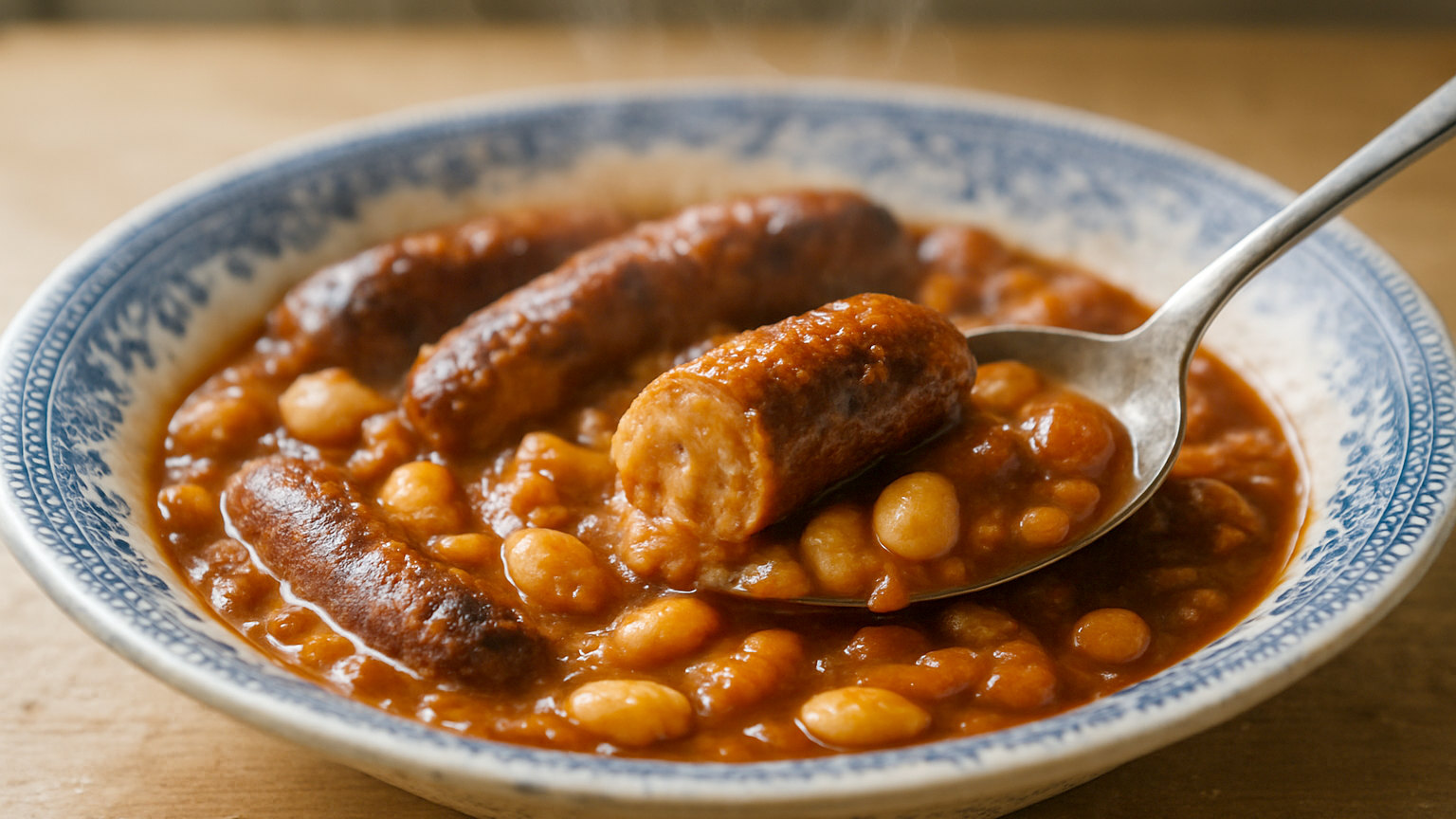
A sausage casserole is the most forgiving thing in this section and the one most likely to be made on a Tuesday. It also rewards ten minutes of care at the start. Sausages tipped straight into a tin of tomatoes produce something pale and thin, while sausages browned properly in a hot pan give the whole dish a depth it otherwise lacks.
What do you need for 4 people?
- 8 good pork sausages
- 2 onions, sliced, and 2 red peppers, cut into strips
- 4 cloves of garlic, sliced
- 2 teaspoons smoked paprika and 1 teaspoon dried oregano
- 2 tablespoons tomato puree
- 2 tins of chopped tomatoes
- 1 tin of butter beans or cannellini beans, drained
- 300ml chicken stock
- 1 tablespoon red wine vinegar
- 2 tablespoons oil, salt and black pepper
How do you make it?
- Brown the sausages all over in the oil in a wide casserole, about 8 minutes. Set aside.
- Soften the onions and peppers in the same pan for 12 minutes.
- Add the garlic, paprika and oregano and cook for 2 minutes.
- Stir in the tomato puree and cook until it darkens.
- Add the tomatoes and stock and bring to a simmer.
- Cut the sausages in half and return them to the pan.
- Simmer part covered for 35 minutes.
- Add the beans and cook for 10 minutes more, then stir in the vinegar and season.
Brown the sausages whole, then cut them. Cutting first means more surface area losing juices into the sauce, and whole sausages hold their shape far better through the browning.
Why does the vinegar go in at the end?
A long simmered tomato sauce flattens out, and a tablespoon of vinegar at the end lifts everything. It is the difference between a sauce that tastes finished and one that tastes dull.
Taste before adding more, and check the salt separately.
Should the sausages be cut at all?
Halved is the usual approach, since it makes the dish easier to eat and helps the sausages take up the sauce. Left whole they look better and stay juicier.
Which beans work best?
Butter beans for their size and creaminess, or cannellini for something firmer. Haricot beans work and are what baked beans are made from.
Add them late so they keep their shape rather than breaking down into the sauce.
Which sausages should you use?
Plain pork sausages with a high meat content, or Toulouse style for something richer. Chorizo added alongside gives a strong smoky note.
Avoid very fatty cheap sausages, which release a great deal of grease into the sauce.
What can you add?
A tin of cider or a glass of white wine reduced before the tomatoes. Chopped bacon, a bay leaf, or a handful of kale stirred in at the end.
Diced potato added for the last 25 minutes turns it into a complete one pot meal.
Can it be made ahead or frozen?
It improves overnight and keeps three days in the fridge. It freezes for three months and is ideal for batch cooking.
Portion it before freezing rather than freezing the whole pot.
Why did the sauce turn out thin?
Either too much stock or not enough simmering. Take the lid off and let it reduce for ten minutes rather than adding flour.
Mashing a few of the beans against the side of the pan thickens it naturally.
Can it be cooked in a slow cooker?
Yes, once the sausages and vegetables have been browned in a pan. Four hours on low, using two thirds of the stock.
Can it be made vegetarian?
Yes, and the base works well with vegetarian sausages. Brown them in a little more oil, since they release almost no fat of their own, and add them later so they do not break up.
Extra beans and a handful of lentils make up the substance.
What should you serve with it?
Mashed potato, crusty bread or rice. It is substantial enough that a green vegetable is all it needs alongside.
Cool leftovers quickly, refrigerate within two hours and reheat once only until piping hot, following Food Standards Agency guidance.
For something along the same lines, see Sausage Rolls With Rough Puff Pastry, or browse all our Mains recipes.


