
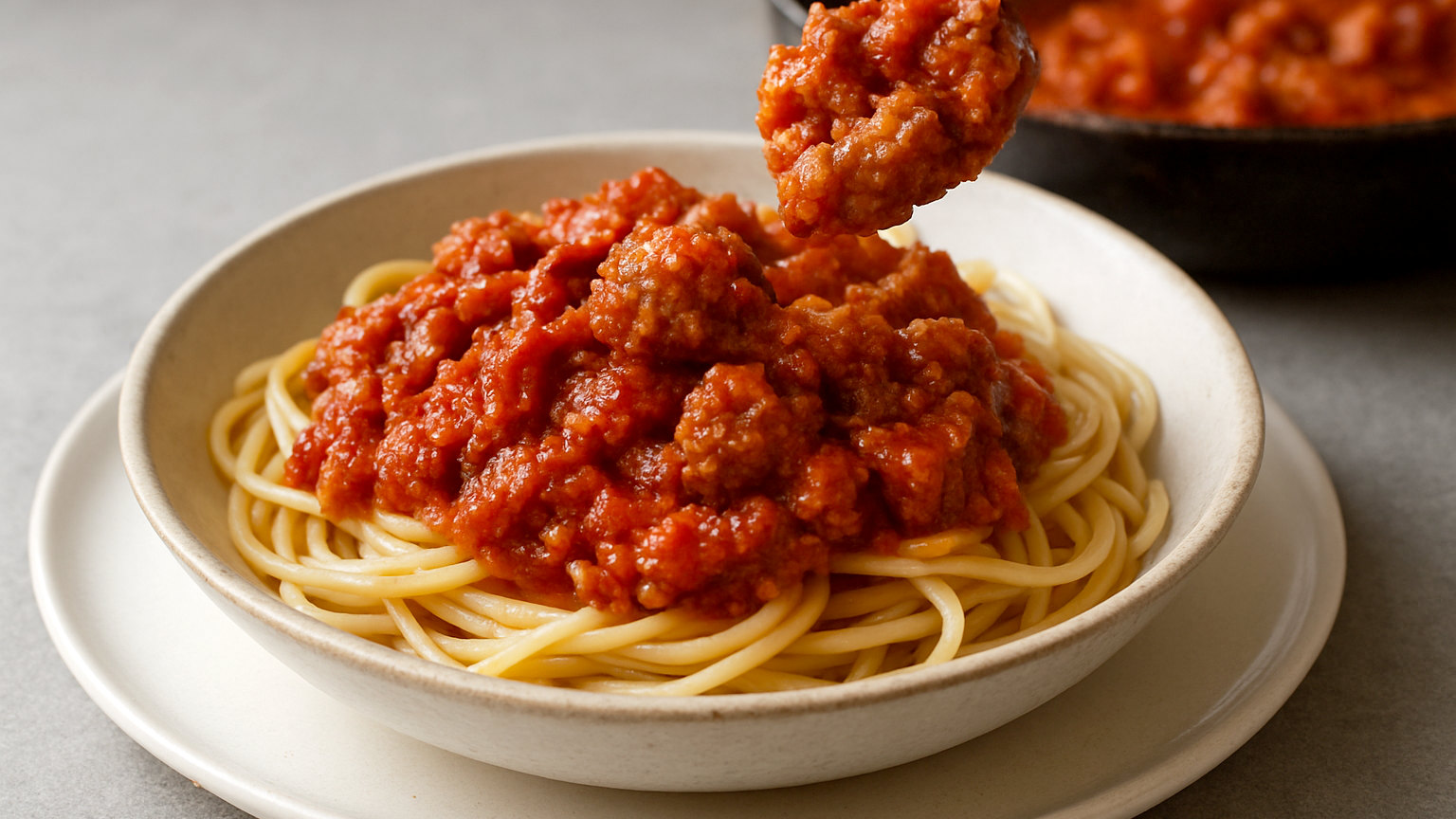
A sausage ragu is the fastest route to a serious pasta sauce, because sausagemeat is already seasoned, already fatty and already finely minced. What would take three hours with a piece of shin takes about forty minutes here, and the result is closer to a slow cooked ragu than the time suggests.
What do you need for 4 people?
- 6 good pork sausages, skins removed
- 1 onion, finely chopped
- 3 cloves of garlic, sliced
- 1 teaspoon fennel seeds, crushed
- Half a teaspoon of chilli flakes
- 150ml white wine
- 1 tin of chopped tomatoes and 1 tablespoon tomato puree
- 200ml chicken stock
- 2 tablespoons olive oil
- 400g rigatoni or pappardelle, and parmesan to serve
How do you make it?
- Squeeze the sausagemeat out of the skins and break it into rough lumps.
- Brown it hard in the oil in a wide pan, leaving it undisturbed for two minutes at a time.
- Add the onion and cook for 8 minutes until soft.
- Add the garlic, fennel seeds and chilli and cook for 2 minutes.
- Pour in the wine and let it reduce by half.
- Add the tomato puree, tomatoes and stock.
- Simmer gently for 30 minutes until thick.
- Toss with drained pasta and a splash of the cooking water, and serve with parmesan.
Leave the meat in rough lumps rather than breaking it up finely. Larger pieces brown better and give the sauce texture, and they are what distinguishes a sausage ragu from a bolognese.
Why remove the skins?
The casing does not break down and becomes chewy in a sauce. Squeezing the meat out takes a minute and gives a far better texture.
Sausagemeat bought loose works equally well and skips the step, though it is less well seasoned.
Why fennel seeds?
Fennel and pork are a classic pairing, and Italian sausages contain fennel as standard. Adding it to British sausages moves them in that direction.
Crush the seeds lightly to release the oils rather than adding them whole.
Which sausages should you use?
Plain pork with a high meat content, so the seasoning does not fight with the fennel and chilli. Lincolnshire brings sage, which also works.
Italian sausages are ideal if you can find them, since they are already seasoned for this.
What can you use instead of wine?
Chicken stock with a squeeze of lemon, or dry vermouth. The wine is contributing acidity rather than anything more complicated.
Should the pasta water be kept?
Yes. It is starchy and salty, and a few tablespoons stirred into the sauce help it cling to the pasta rather than sliding to the bottom of the bowl.
Reserve a mugful before draining, which is easy to forget once the colander is in the sink.
How much pasta per person?
About 100g dried for a main course. This quantity of sauce comfortably dresses 400g of pasta for four.
Which pasta suits it?
Something with ridges or hollows to catch the meat: rigatoni, penne rigate or pappardelle. Spaghetti lets a chunky sauce slide off.
Finish the pasta in the sauce for a minute with a splash of cooking water, which helps it cling.
What else can go in?
Sliced fennel softened with the onion, a handful of black olives, or a splash of cream stirred in at the end for a richer sauce.
Chopped kale or cavolo nero added for the last ten minutes turns it into a more substantial dish.
How long does it really need?
Thirty minutes is enough because the meat is finely minced and already fatty. An hour makes it slightly better and it does not improve much beyond that.
That is the practical advantage over a beef ragu, which needs three hours to reach the same point.
Can it be made ahead or frozen?
It keeps three days in the fridge and freezes for three months. Like most ragus it improves overnight.
Cool leftovers quickly, refrigerate within two hours and reheat once only until piping hot, in line with Food Standards Agency guidance.
For something along the same lines, see Sausage and Butter Bean Casserole, or browse all our Mains recipes.


