
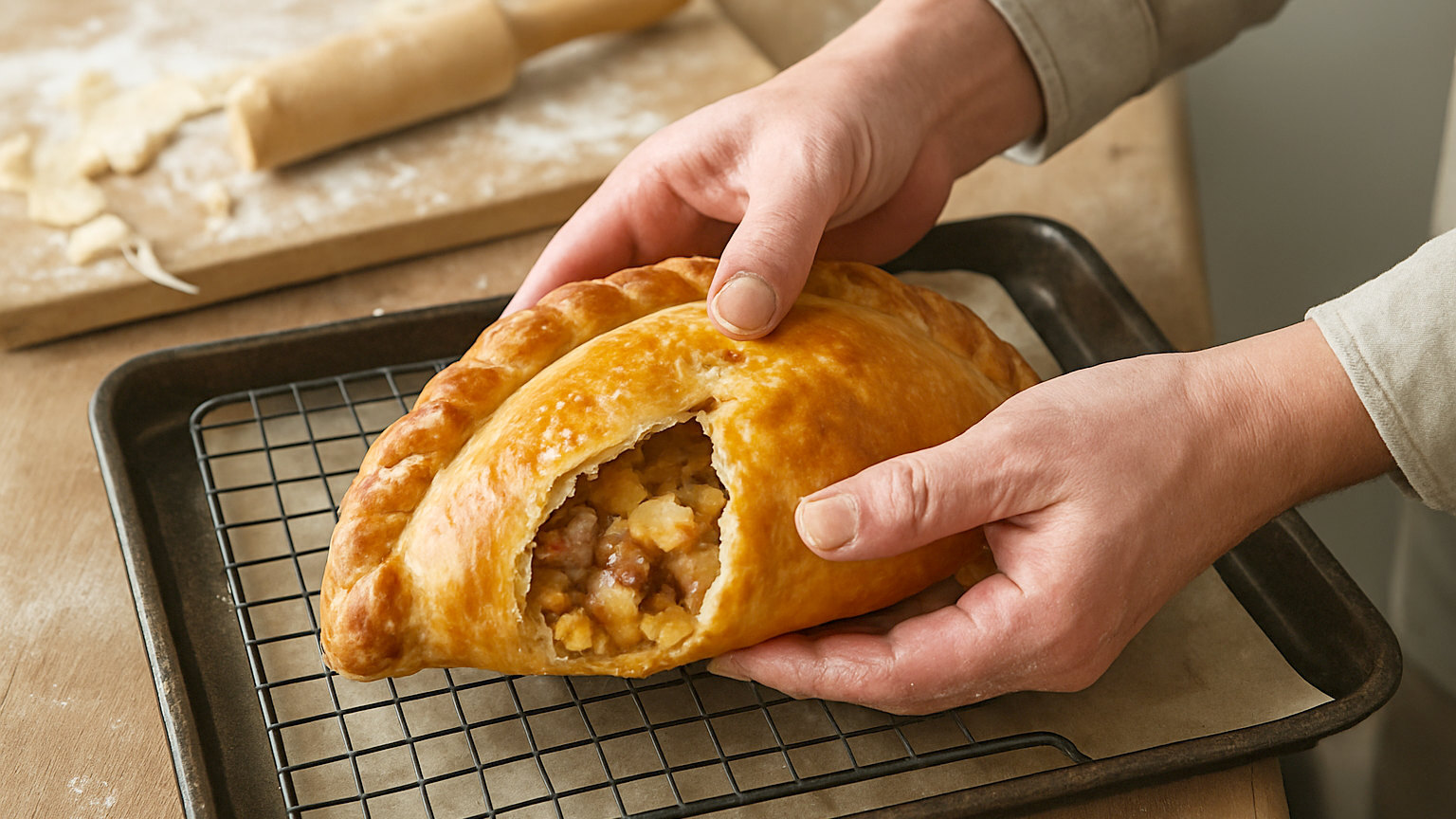
A pasty that splits in the oven and empties its filling onto the tray is a dispiriting sight, particularly after an hour of work. The causes are all decided before it goes in, which is good news because it means the problem is entirely preventable. There are four of them and they often occur together.
Was it overfilled?
The most common cause. A 20cm pastry circle takes about 250g of filling and no more, and the temptation is always to add another spoonful.
Leave a clear 2cm border all the way round. Filling that reaches the edge prevents the two layers of pastry bonding, so the seal is only as strong as the crimp itself.
Was air trapped inside?
Air expands considerably as it heats and will force the weakest point open. Press the pastry down over the filling and work the air out towards the edge before crimping.
Start crimping at one end and work along, rather than sealing both ends first and trapping air in the middle.
Was the edge dry?
Pastry will not bond to itself unless the edge is slightly damp. Brush it with water, not egg, which is slippery and works against the seal.
Water is enough. Anything more makes the pastry soggy at the join.
Was the filling too wet?
A filling that pours rather than holds its shape will find any weakness. Cooked fillings should be reduced until thick and cooled completely.
Raw fillings such as a Cornish pasty are fine, since the moisture is released slowly as steam rather than sitting in the pastry from the start.
Was there a steam hole?
A small hole in the top gives the steam somewhere to go. Without it the pressure builds and the crimp is the first thing to give.
Cut it before baking rather than after, and keep it small so the filling does not dry out.
Was the crimp firm enough?
Each fold has to be pressed down properly and overlap the last. A shallow crimp looks right and holds nothing.
If you are using a fork instead, press hard and go round twice slightly offset.
Was the pastry too warm?
Warm pastry tears as it is folded and the fat begins to melt out, weakening the seal before it reaches the oven.
Chill assembled pasties for twenty minutes before baking, which also helps them hold their shape.
Was there a hole in the pastry?
Small tears are easy to miss when rolling and they open up in the oven. Hold each circle up to the light before filling it and patch anything you find with a scrap and a dab of water.
Was the pastry rolled too thin?
Four millimetres is the right thickness for a pasty. Thinner than that and it cannot take the weight of the filling or the pressure of the steam.
Use strong bread flour rather than plain, which gives a considerably sturdier pastry.
Should the tray be lined?
Baking paper stops any escaping filling welding the pasty to the tray, which turns a small leak into a ruined pasty when you try to lift it.
Can a split pasty be saved?
Once it has opened in the oven, no. It will still taste fine and simply looks untidy.
If you spot a crack before baking, patch it with a scrap of pastry stuck down with water.
Should you chill before baking?
Twenty minutes in the fridge firms the pastry and sets the crimp, which makes it considerably less likely to open under pressure.
It also stops the pasty spreading out as it bakes, so it holds a better shape.
Does the oven temperature matter?
A very hot oven creates steam faster than the pastry can accommodate. A moderate 180C fan gives the seal time to set before the pressure builds.
Does it matter which way up it sits?
A side crimped pasty is more secure than a top crimped one, since the seam is not directly above the heaviest part of the filling.
That is one practical argument for the traditional Cornish shape.
See also Breakfast Pasty With Sausage, Bacon and Egg, or browse more Mains recipes.


