
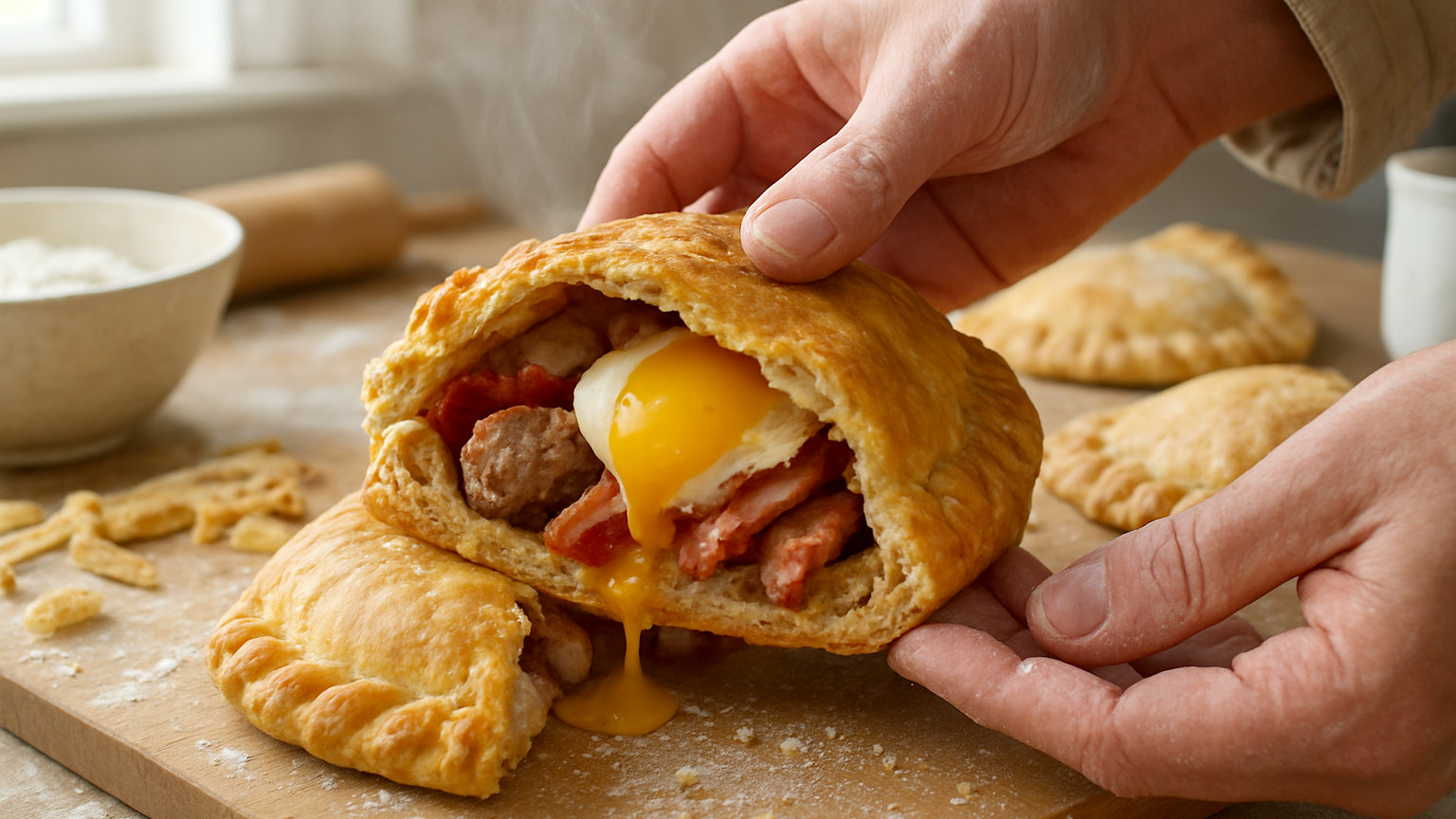
A breakfast pasty is a modern idea rather than a traditional one, and it is a good one. The components of a fried breakfast work well in pastry provided the moisture is managed, which means cooking everything first except the egg. The egg goes in raw and sets during the bake, which is the part that makes it worth doing.
What do you need for 4 pasties?
- 1 quantity of pasty pastry made from 500g strong flour
- 6 good pork sausages
- 8 rashers of smoked streaky bacon
- 250g potato, diced small and parboiled
- 200g chestnut mushrooms, sliced
- 1 onion, sliced
- 100g mature cheddar, grated
- 4 eggs, plus 1 beaten for glazing
- 1 tablespoon brown sauce, salt and plenty of black pepper
How do you make them?
- Cook the sausages, cool and slice them into rounds.
- Fry the bacon until crisp, then chop.
- Cook the mushrooms hard in the same pan until the liquid has completely gone, then add the onion for 8 minutes.
- Combine everything with the parboiled potato, cheese and brown sauce, season and cool completely.
- Roll the pastry into 4 circles about 22cm across.
- Pile the filling on one half, making a well in the centre.
- Crack an egg into each well.
- Brush the edge with water, fold, crimp and glaze, then bake at 190C fan for 30 to 35 minutes.
Cook the mushrooms until the pan is completely dry. They are mostly water and they will flood the pastry otherwise, which is the single most likely way this pasty goes wrong.
Why does the egg go in raw?
It sets during baking and gives a soft centre, which is the point. A pre cooked egg would be rubbery by the time the pastry was done.
Build a well in the filling so the egg sits in a hollow rather than running to the edges and weakening the seal.
Will the egg be fully cooked?
After 30 minutes at 190C fan, yes, and the yolk will be firm rather than runny. The filling should reach 75C throughout.
If you prefer a softer yolk, use eggs with the British Lion mark, which are safe to eat less than fully set.
Why cook the sausage and bacon first?
Both release a great deal of fat, and if they release it inside the pasty the pastry becomes greasy and the base fails.
Cooking them first also lets you drain that fat away and gives the browning that raw meat would not develop inside pastry.
Can they be made ahead?
Make the filling up to two days ahead and refrigerate. Assemble and add the eggs on the day, since the egg cannot sit in the raw pastry.
Can they be frozen?
The filling freezes for three months. Assembled pasties with raw egg in them do not freeze well, since the egg separates.
Freeze them without the egg and add it after defrosting if you want to work ahead.
Should the potato be parboiled?
Yes, unlike a Cornish pasty. The bake here is only 35 minutes because everything else is already cooked, which is not long enough for raw potato.
Seven minutes in boiling water and a thorough steam dry is enough.
What can you leave out or swap?
Black pudding in place of some of the bacon, baked beans instead of brown sauce, or a vegetarian version with mushrooms, spinach and cheese.
Tomatoes are best left out, since they release too much liquid.
Why is the pastry circle larger?
Because the filling is bulkier than a standard pasty and contains a whole egg, which needs room. A 22cm circle gives enough pastry to enclose it without stretching the seal.
Roll it slightly thicker than usual too, at about 5mm, since there is more weight to carry.
Can they be made smaller?
Yes, using a quail egg or leaving the egg out entirely. Small breakfast pasties are good party food and bake in about 20 minutes.
How should they be served?
Warm rather than piping hot, with brown sauce or ketchup. Cool leftovers quickly, refrigerate within two hours and use within two days.
Worth reading next: How to Reheat a Pasty. There is more in our Mains recipes.


