
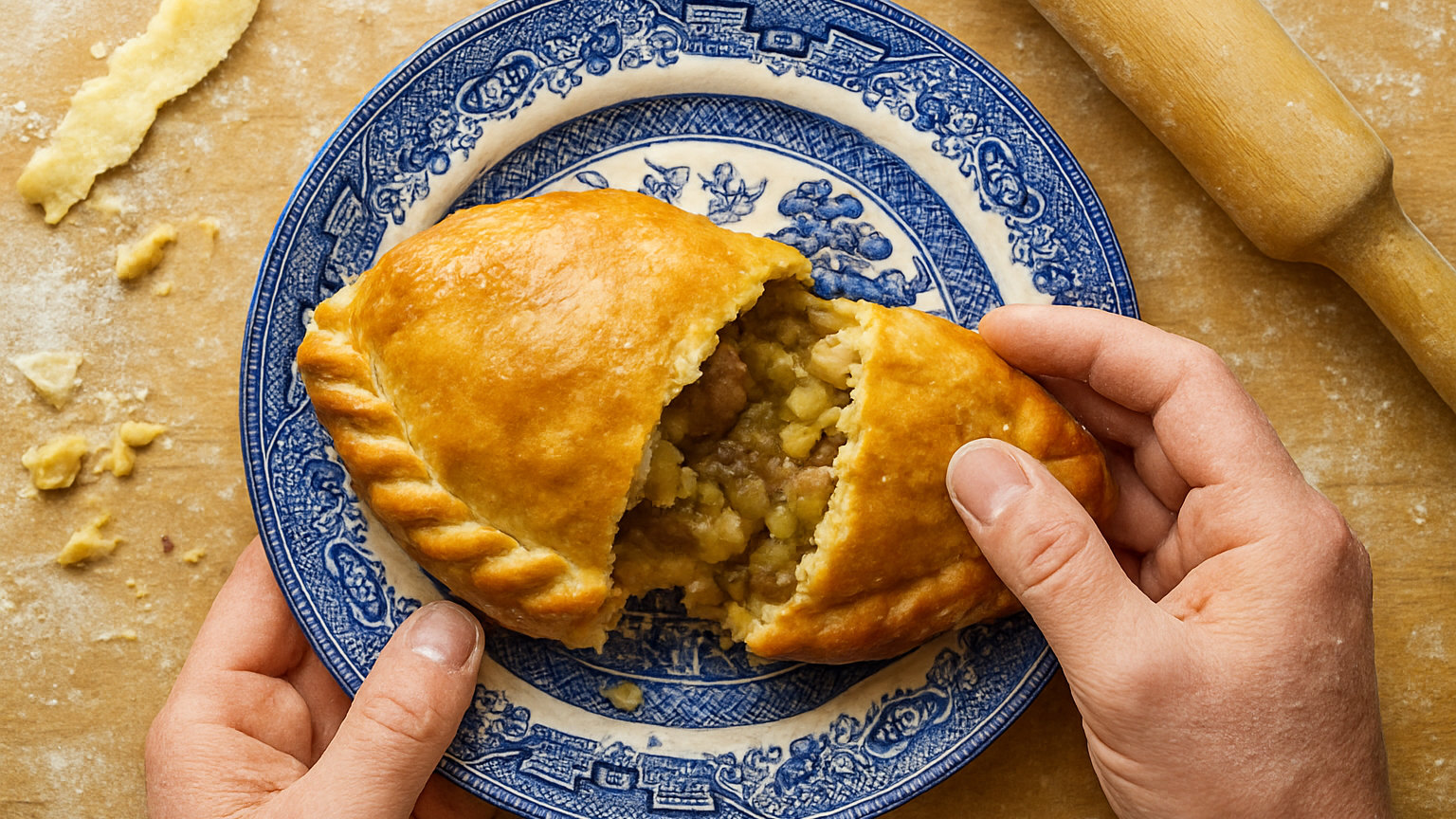
A pasty is a dense object with a crisp shell, and those two facts govern everything about reheating it. The middle takes a long time to warm through, and the shell is destroyed by any method that introduces moisture. That rules out the microwave, which is unfortunately what most people reach for.
What is the best method?
A conventional oven at 180C fan for 15 to 20 minutes for a large pasty, straight onto a tray or the shelf.
It restores the pastry properly and heats the centre through, which nothing else does as reliably.
Why is a microwave so bad for it?
A microwave heats the water in the food, and that steam has to escape through the pastry. The shell absorbs it and turns soft, pale and slightly leathery within about ninety seconds.
Once that has happened the pastry cannot be crisped again, since the damage is to the structure rather than the surface.
Is there a compromise?
Microwave for 60 seconds to warm the centre, then 8 minutes at 200C fan to dry and crisp the pastry. It is quicker than the oven alone and the result is acceptable.
Doing it the other way round does not work.
Does an air fryer work?
Very well, at 170C for 10 to 12 minutes. The moving air crisps the pastry noticeably better than an oven does.
Large pasties may brown before the centre is hot, so check with a probe rather than trusting the colour.
Should it be covered?
No. Foil traps steam against the pastry, which is exactly the problem you are trying to avoid.
If the pastry is browning too fast, lower the temperature rather than covering it.
How do you know it is hot in the middle?
A probe pushed into the centre should read at least 75C, and it must be piping hot throughout, in line with Food Standards Agency guidance.
A metal skewer held in the centre for five seconds and touched to your wrist is a reasonable alternative.
What about a grill?
Not on its own. A grill browns the top long before the centre is warm, and it cannot heat a dense pasty through evenly.
It is useful only for crisping the surface of a pasty that has already been warmed by another method.
Should it come out of the fridge first?
Twenty minutes at room temperature reduces the reheating time and helps the centre catch up with the outside.
Do not leave it out longer than that.
How many times can it be reheated?
Once only. Reheat what you are going to eat rather than warming the whole batch and putting some back.
Can you reheat one in a pan?
A dry frying pan over a low heat with a lid crisps the base and warms the middle in about ten minutes, turning once. It is a reasonable option with no oven.
The lid traps some steam, so take it off for the last two minutes to dry the pastry again.
Are pasties good cold?
Genuinely, and it is often the better option. Cheese and onion and vegetable pasties in particular are excellent cold and that is how bakeries expect them to be eaten.
A cold pasty with piccalilli is a proper lunch rather than a compromise.
Can you reheat a frozen baked pasty?
Yes, from frozen at 170C fan for about 35 minutes. It takes considerably longer than a chilled one and the centre is the part to check.
Do not defrost it on the worktop first, in line with Food Standards Agency guidance.
Does the filling change the timing?
A dense meat and potato filling takes longer to heat through than a cheese and onion one. Allow an extra five minutes for a traditional Cornish pasty.
Size matters more than filling, though, and a large pasty always needs longer than it looks.
How should they be stored?
Cool quickly, refrigerate within two hours of baking and use within two days. Keep them in a container rather than wrapped tightly, which softens the pastry.
A baked pasty left out overnight should be thrown away rather than reheated.
If that was useful, What Do You Serve With a Pasty? covers related ground, and there is plenty more in Mains recipes.


