
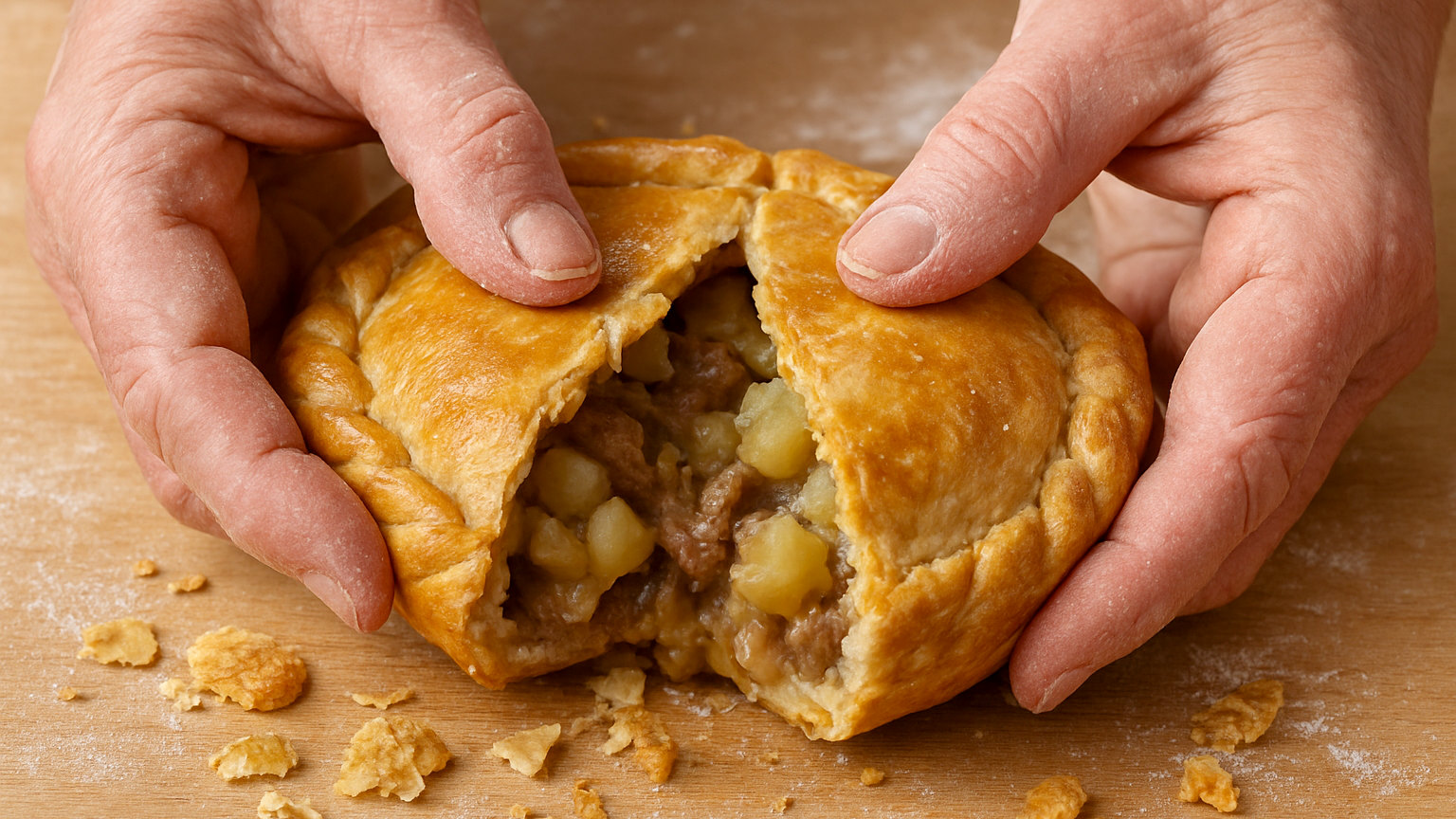
A pasty was designed to need nothing at all. It contains meat, vegetables and starch in a wrapper you can hold, which is the whole point of it, and eating one standing up with no plate is entirely correct. If it is going on a plate as a dinner, the additions are worth thinking about, and they are mostly about acidity.
Does it need anything?
No. A traditional pasty is a complete meal and adding a side dish is a modern refinement rather than a requirement.
Brown sauce or ketchup on the side is the most common addition and needs no defending.
What works if it is a plated dinner?
Something sharp and something green. Pickled red cabbage, piccalilli or a spoonful of chutney, plus buttered greens, peas or a salad.
Acidity is what the plate is missing. A pasty is rich, salty and starchy throughout, and a pickle cuts through it in a way that another vegetable does not.
Should there be gravy?
It divides opinion sharply. In Cornwall the pasty makes its own gravy inside and pouring more over it is considered wrong.
Elsewhere, a pasty with chips and gravy is a normal chip shop order, and there is nothing wrong with it.
What about chips?
A pasty already contains potato, so chips make it a very heavy plate. It is common in chip shops and it is a lot of starch.
If you do serve both, keep everything else on the plate green and sharp.
Is a side salad worth bothering with?
More than you might expect. A sharp leaf salad with a mustard vinaigrette does the same job as a pickle and lightens what is otherwise a heavy plate.
Watercress in particular suits a beef pasty, since the pepperiness cuts through the pastry.
Do baked beans work?
They are a widespread and perfectly reasonable accompaniment, particularly with a cheese and onion pasty or at breakfast.
They also supply some of the moisture a plated pasty otherwise lacks.
What suits a cold pasty?
Pickles above all. Piccalilli, pickled onions, English mustard and a sharp chutney are the natural partners.
A tomato salad or some watercress turns it into a proper lunch with almost no effort.
What about a picnic?
A pasty is close to the ideal picnic food, since it travels well, needs no cutlery and is good at room temperature.
Take a small pot of chutney rather than anything that needs a fork.
Does a vegetable pasty want different sides?
It benefits from something rich rather than something sharp, since the filling is leaner. Cheese, a dollop of soured cream or a mustard mayonnaise all work.
Gravy suits a vegetable pasty better than it suits a meat one, for the same reason.
What should you drink with it?
Tea is the traditional answer and it works better than it sounds. A pint of bitter or a dry cider suits an evening pasty.
Is there a pudding version?
Some traditional pasties had a sweet filling at one end, and the Bedfordshire clanger still does. An apple pasty is a legitimate dish in its own right.
Serve it with custard or clotted cream.
What goes with a bridie or a Scotch pie?
A Scotch pie is traditionally served with mushy peas or beans spooned into the sunken lid, which is what the lid is for.
A bridie needs nothing, though brown sauce is usual and chips are common.
Should it be eaten hot or warm?
Warm rather than straight from the oven. A pasty out of the oven has molten filling that will burn your mouth, and ten minutes of cooling improves the flavour.
It is one of the few things that is genuinely good hot, warm and cold.
How much is a portion?
One large pasty is a full meal for an adult. Smaller ones at around 15cm suit a lunchbox alongside something else.
Cool leftovers quickly, refrigerate within two hours and use within two days, in line with Food Standards Agency guidance.
See also Traditional Cornish Pasty, or browse more Mains recipes.


