
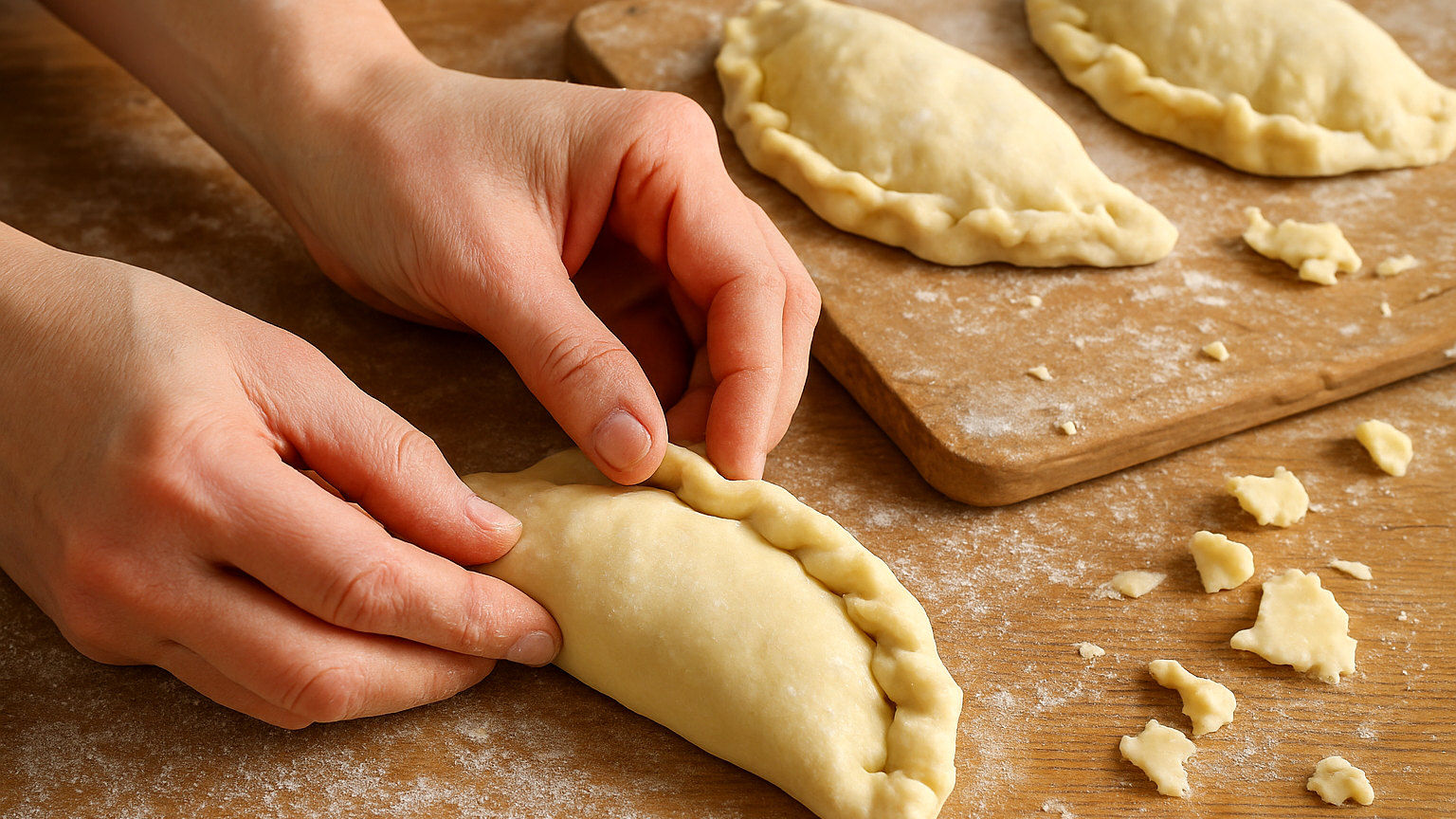
The Cornish pasty is one of a small number of British foods with protected status, which means both the recipe and the place of manufacture are defined in law rather than by custom. That has settled several long running arguments and created a few new ones, and it makes the pasty unusual among British dishes in having an official specification.
What does protected status mean?
The Cornish pasty holds a Protected Geographical Indication, granted in 2011. It means a product sold as a Cornish pasty must be made in Cornwall and must follow the defined recipe.
Pasties made elsewhere to the same recipe are perfectly legal and simply cannot be called Cornish.
What must be in the filling?
Beef, potato, swede and onion, seasoned with salt and pepper, and nothing else. All of it goes in raw.
Carrots are not permitted. This is the point that causes most argument, and a pasty with carrot in it is simply a different pasty rather than a Cornish one.
How much meat is required?
The specification requires at least 12.5 per cent beef and at least 25 per cent vegetables by weight of the whole pasty.
That is a minimum rather than a target, and a good pasty usually contains considerably more.
What shape must it be?
D shaped, with the crimp along the curved edge. A pasty crimped across the top is a Devon pasty rather than a Cornish one.
The distinction is real and it is one of the easiest ways to tell the two apart at a glance.
Why is the crimp on the side?
The traditional explanation is that tin miners held the pasty by the thick crimp, ate the rest and discarded the crust, since their hands carried arsenic and other residues from the ore.
Whether that is literally how it began is debated, but the side crimp is certainly the older Cornish form.
Does the pastry have to be a particular type?
It must be savoury and strong enough to hold its shape without breaking. Shortcrust, rough puff and a strong flour pastry are all permitted.
In practice most bakers use a strong flour shortcrust made with lard, which is sturdier than an ordinary pie crust.
Where does it have to be made?
In Cornwall, though it may be baked elsewhere provided it was prepared and assembled there. Frozen unbaked pasties are shipped out and baked in shops across the country quite legitimately.
What about the sweet end?
Some traditional pasties had a savoury filling at one end and a sweet one, usually apple or jam, at the other, making a complete meal in one item.
The Bedfordshire clanger does the same thing and is still made that way.
Was it really eaten by miners?
Widely, and the shape suited the purpose. It was portable, needed no plate or cutlery, and the thick pastry kept the filling warm for hours underground.
Some accounts describe initials pressed into one corner so a miner could identify his own and save part for later.
How old is the pasty?
Pasties are recorded in England from medieval times, though they were then a courtly dish of venison in pastry. The Cornish version as a working meal dates from the eighteenth and nineteenth centuries.
Its association with tin mining is what fixed the form and the ingredients.
What is a Devon pasty?
The same idea crimped across the top rather than along the side, and traditionally it may include other fillings. It has no protected status.
The rivalry between the two counties over pasties is longstanding and entirely good natured.
Are other British pasties protected?
No, though several other regional foods are, including Melton Mowbray pork pies and traditional Cumberland sausage.
Forfar bridies and Bedfordshire clangers are traditional but unprotected, so anyone can make and sell them under those names.
Does any of this matter to a home cook?
Only if you want to make the traditional article. Nothing stops you adding carrot, cooking the filling first or crimping across the top.
It just will not be a Cornish pasty, and someone from Cornwall will tell you so.
See also Traditional Cornish Pasty, or browse more Mains recipes.


