
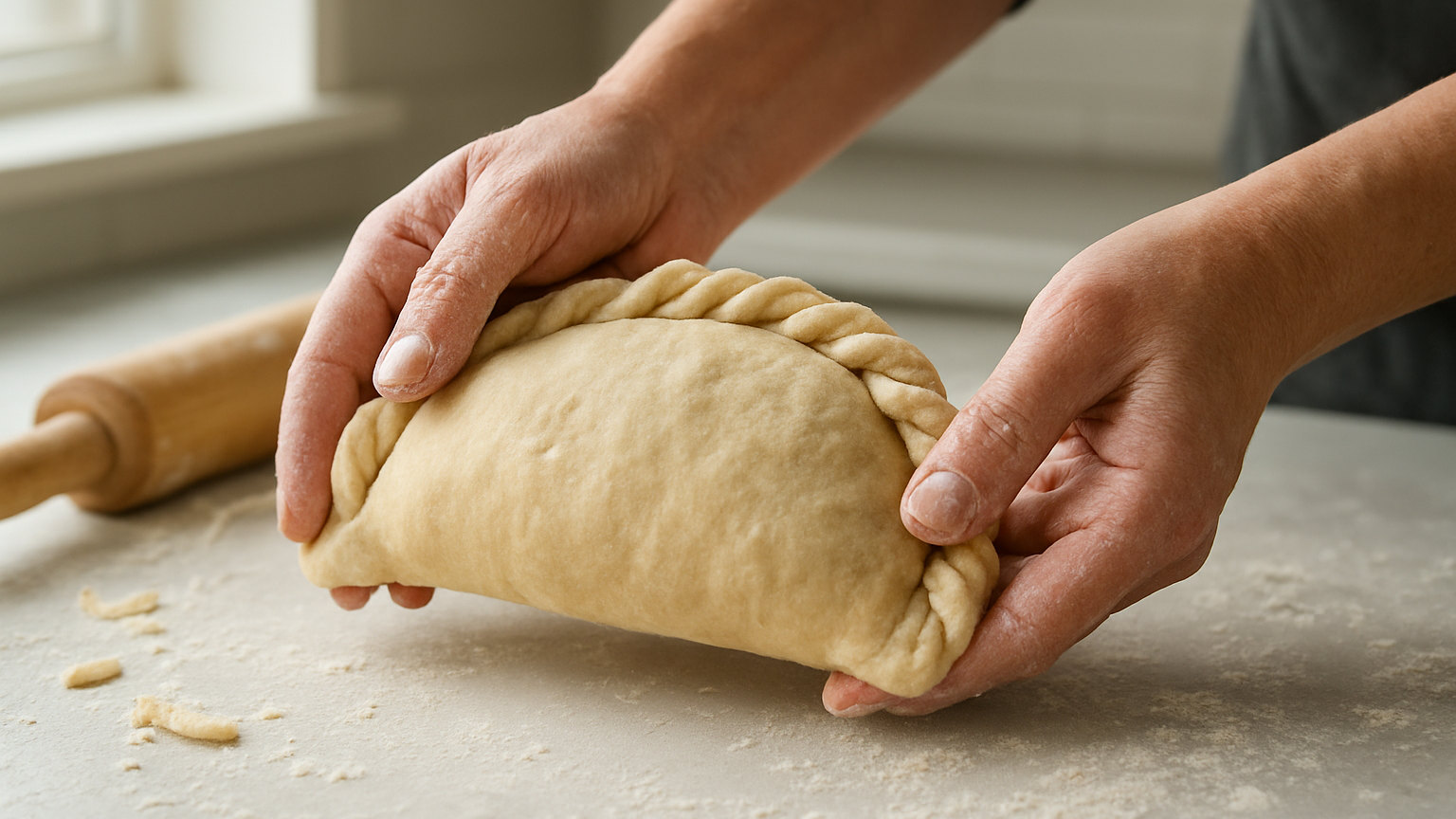
Pasties are among the most useful things to keep in a freezer, because they are a complete meal in one item and they bake straight from frozen with no defrosting at all. The important decision is whether to freeze them raw or cooked, and raw is clearly better for anything you are making deliberately rather than salvaging.
Should you freeze them raw or baked?
Raw, assembled and unglazed. The pastry goes into the oven having never been baked, so it rises and crisps exactly as it would have done fresh.
Baked pasties freeze acceptably and are the right choice for leftovers, but the pastry is noticeably tougher after two bakings.
How do you freeze them raw?
- Make the pasties completely, but do not glaze them.
- Sit them on a lined tray, spaced apart.
- Open freeze uncovered for 3 hours until solid.
- Wrap individually and put them into a bag or box.
- Label with the filling and the date.
Open freeze before wrapping. Pasties wrapped while soft lose their shape and the crimp flattens, and they stick together in a way that makes taking out one impossible.
Why not glaze before freezing?
Egg wash goes patchy and can crack as the pastry contracts. Brush it on just before the pasty goes into the oven instead.
It also gives you a chance to check the crimp and cut a steam hole if the pastry has shifted.
How do you bake them from frozen?
At about 10C below the usual temperature for around half as long again. A Cornish pasty that takes 55 minutes fresh needs roughly 70 minutes at 170C fan.
Cover the top with foil if the pastry browns before the middle is hot.
How do you know they are cooked through?
The centre must be piping hot, which means at least 75C on a probe pushed through the steam hole.
Golden pastry is not proof with a frozen pasty, since the outside browns long before the middle has thawed and heated.
How long do they keep?
Three months in either form. They remain safe beyond that but the pastry dries and picks up freezer flavours.
Does the filling need to be cold before freezing?
Completely, and this matters as much as with a fresh pasty. Warm filling melts the pastry fat and freezing does not undo that.
Cool cooked fillings quickly and refrigerate them before assembling.
Which fillings freeze well?
Meat, cheese and vegetable fillings all freeze well. Anything with a high proportion of cream can split, and potato in a filling stays fine.
Raw fillings such as the traditional Cornish one freeze particularly well, since nothing has been cooked twice.
Can you freeze the pastry separately?
Yes, for three months, either as a block or already rolled into discs with baking paper between them.
Rolled discs are the more useful form, since they defrost in about twenty minutes.
Do frozen pasties need longer at a lower temperature?
Yes, and the combination is what matters. A lower oven gives the centre time to thaw and cook while the pastry browns at a manageable rate.
Baking a frozen pasty at the usual fresh temperature produces a dark crust and a cold middle.
Can you refreeze a baked pasty?
No. A pasty frozen raw, baked and served should not go back into the freezer.
Leftovers should be cooled quickly, refrigerated within two hours and eaten within two days, in line with Food Standards Agency guidance.
What should you freeze them in?
Wrapped individually in cling film or foil, then in a rigid box rather than a bag. The crimp is fragile once frozen and crushes easily.
Individual wrapping also means you can take out one at a time without the others thawing.
Can you cook them in an air fryer from frozen?
Small pasties, yes, at 170C for about 35 minutes. Large ones will brown outside before the middle is hot, so the oven is the safer choice.
Is it worth making a large batch?
Very much so. The pastry and the filling take the same time whether you make four or twelve, and the assembly is the only part that scales.
A dozen pasties in the freezer covers a fortnight of lunches.
Next, try Why Does My Pasty Leak?, or see the rest of our Mains recipes.


