
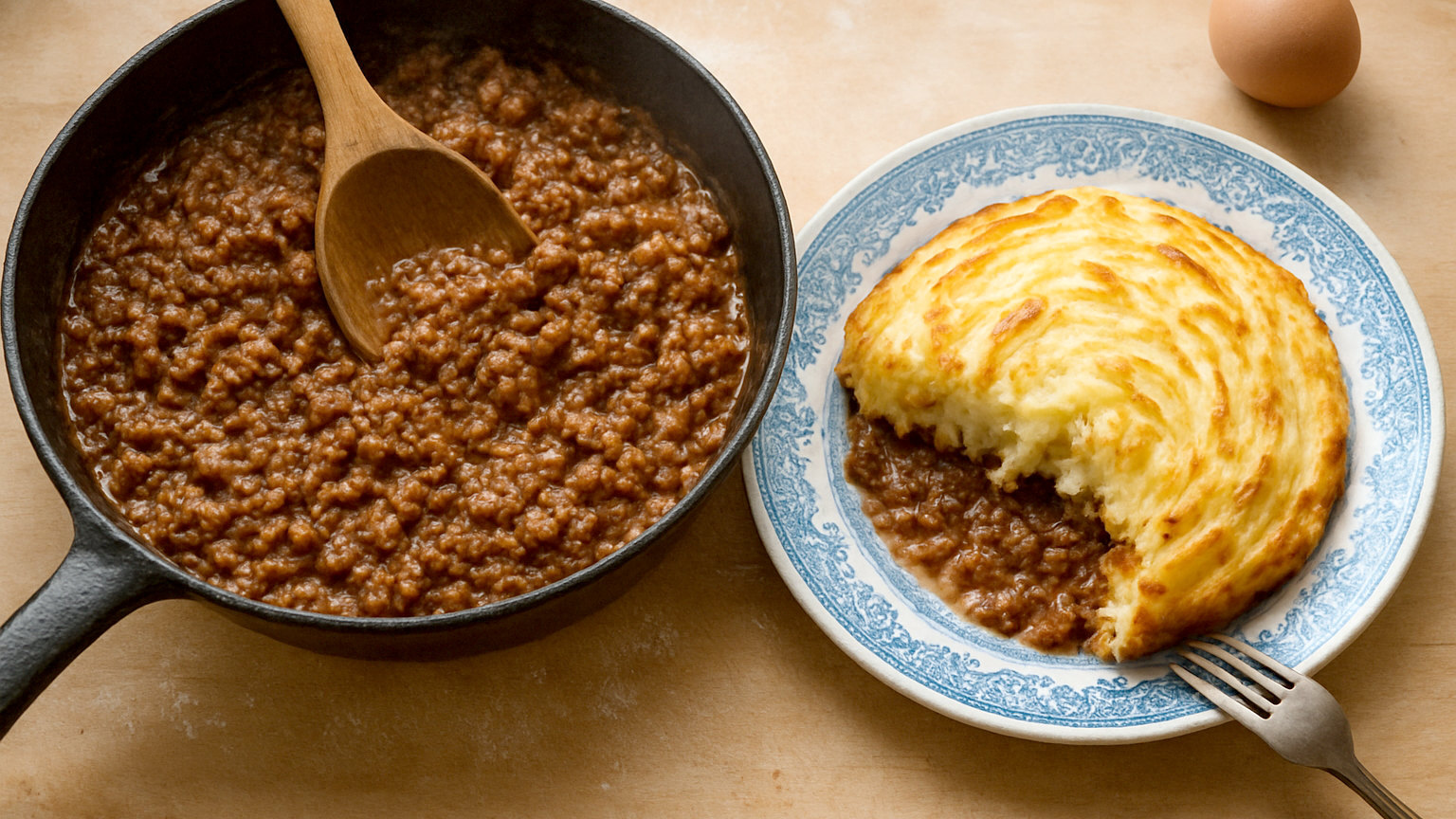
Supermarket mince is sold at roughly five, twelve and twenty per cent fat, and the leanest is usually the most expensive. For most British dishes that is money spent making the food worse. Fat carries flavour, helps the mince brown and keeps it from drying out, and a good deal of it can be poured away after cooking anyway.
What do the percentages mean?
The proportion of the total weight that is fat. Five per cent is very lean, twelve is standard, and twenty is what a butcher would usually mince from chuck.
Anything above twenty is unusual in supermarkets but common from butchers, and it is excellent for burgers.
Which should you buy for a slow cooked dish?
Fifteen to twenty per cent for bolognese, chilli, cottage pie and anything that simmers. The fat renders into the sauce and carries flavour through the dish.
Lean mince in a long simmer goes dry and grainy. There is nothing to keep the meat moist over an hour, and the sauce tastes thin no matter what else goes into it.
What about burgers?
Twenty per cent minimum, since a burger is cooked fast over high heat and loses moisture rapidly. Lean burgers are dry and crumbly.
Ask a butcher for coarsely minced chuck, which is around twenty per cent and usually cheaper than lean supermarket mince.
When is lean mince the right choice?
For dishes where the mince is not browned or where the fat cannot be drained, such as some meatballs, meatloaf and stuffed vegetables.
It also suits anyone managing their fat intake for medical reasons, where the trade in flavour is worth making.
Can you just drain the fat?
Yes, and this is the practical answer. Brown twenty per cent mince, tip it into a sieve, and you end up with something close to twelve per cent having gained all the browning benefit.
The flavour has already gone into the meat and the pan by that point.
Why does lean mince cost more?
It is made from leaner cuts, which are in demand for other uses, and it requires more trimming. The premium is real rather than arbitrary.
It is worth noting that you are paying more for less flavour, which is an unusual arrangement.
Does fat affect browning?
Considerably. Fat conducts heat to the surface of the meat and helps it brown, while very lean mince tends to release water and steam.
If you use lean mince, add a tablespoon of oil to the pan to compensate.
What about lamb and pork?
Lamb mince is typically twenty per cent and releases a great deal of fat, so draining is almost always worthwhile.
Pork mince is usually around fifteen per cent and is often mixed with beef for meatballs and bolognese.
Does the percentage change during cooking?
Effectively yes. Twenty per cent mince browned and drained ends up close to twelve per cent on the plate, since most of the rendered fat is poured away.
That is why buying the fattier option and draining it usually beats buying lean.
Is turkey mince a good substitute?
It is very lean, around two to seven per cent, and needs help. Add olive oil, plenty of seasoning and something savoury such as mushrooms or Worcestershire sauce.
Treated like beef mince it will be dry and bland, which is why it has a poor reputation.
Does the grind size matter?
Coarse mince gives a better texture in burgers and meatballs, where you want to feel the meat. Fine mince suits sauces and pie fillings, where it should disappear.
Butchers will grind to order, which supermarkets cannot do, and it costs the same.
How much shrinkage should you expect?
Around a quarter by weight for twenty per cent mince, less for leaner. Allow 125g per person for a simmered dish.
Cool leftovers quickly, refrigerate within two hours and use within two days, in line with Food Standards Agency guidance.
For something along the same lines, see How to Brown Mince Properly, or browse all our Mains recipes.


