
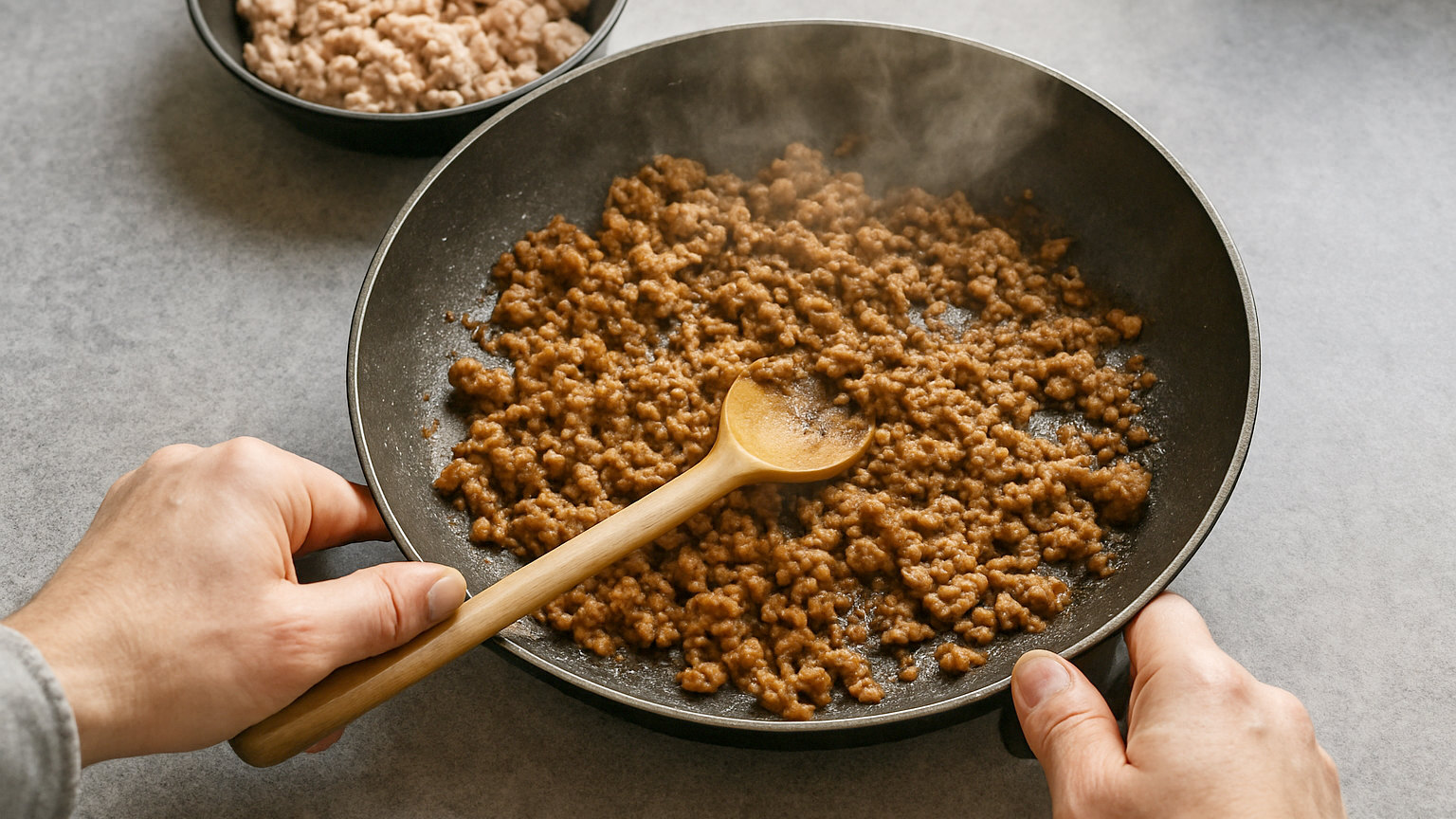
Almost all mince cooked in British kitchens is boiled rather than browned. It goes into a pan that is not hot enough, in a quantity the pan cannot handle, and it is stirred constantly. The result is grey, wet and slightly bland, and every dish made from it is missing a layer of flavour that costs nothing but five extra minutes.
Why does mince go grey?
Mince holds a great deal of water. If the pan is not hot enough, or there is too much in it, that water is released faster than it evaporates and the mince simmers in it.
Browning only begins once the surface is dry and above about 140C, and that cannot happen while the meat is sitting in liquid.
How hot should the pan be?
Very hot, with the fat shimmering before anything goes in. The mince should hiss loudly on contact.
If it goes in silently, the pan is not ready. Take the mince back out, let the pan recover and start again, because a cool start cannot be corrected later.
How much should go in at once?
Enough to cover the base in a single layer with gaps. For most domestic pans that means around 350g at a time, so 750g needs two batches.
Two batches take four minutes longer than one and the difference in the finished dish is obvious.
Why should you stop stirring?
Every stir brings cooler meat into contact with the pan and breaks up the crust that is forming. Leave it undisturbed for two full minutes before touching it.
Then break it up, spread it out and leave it again. Three or four such stages is enough.
What pan should you use?
The widest heavy pan you own. A large frying pan or a shallow casserole beats a deep saucepan, since surface area is what lets moisture escape.
Stainless steel and cast iron brown better than non stick, which struggles at high temperatures.
Should you drain the fat?
For beef mince at 15 to 20 per cent fat, usually not, since the fat carries flavour and the sauce needs it. For lamb, which releases far more, draining is worth it.
Tip the browned mince into a sieve over a bowl and let it drain for a minute.
Does frozen mince brown?
Poorly. It releases far more water and effectively steams. Defrost it fully in the fridge and pat it dry before it goes near the pan.
A defrosted mince that has been sitting in liquid should be drained thoroughly first.
What about the bits stuck to the pan?
That residue is where a large part of the flavour lives. Deglaze the pan with wine, stock or water and scrape it all up before adding anything else.
A pan that comes out clean after browning is a sign that nothing browned.
How long does proper browning take?
About six to eight minutes per batch, which for 750g in two batches means roughly fifteen minutes in total.
Most recipes allow five minutes for the whole quantity, which is where the problem starts.
Should the vegetables go in first?
Brown the meat first, set it aside, then cook the vegetables in the same pan. Onions release water and will stop the mince browning if they go in together.
This is the most common ordering mistake and the easiest to correct.
Should you add salt while browning?
Not at the start. Salt draws moisture out of the meat, which is the opposite of what you want in a pan that is trying to stay dry.
Season once the mince has browned and the liquid has gone.
Does it matter for every dish?
For anything with a long simmer such as bolognese, chilli or cottage pie, yes, since browning is the main source of savoury depth.
For a quick dish where the mince is one element among many, it matters less, though it still helps.
Next, try What Fat Percentage Should Mince Be?, or see the rest of our Mains recipes.


