
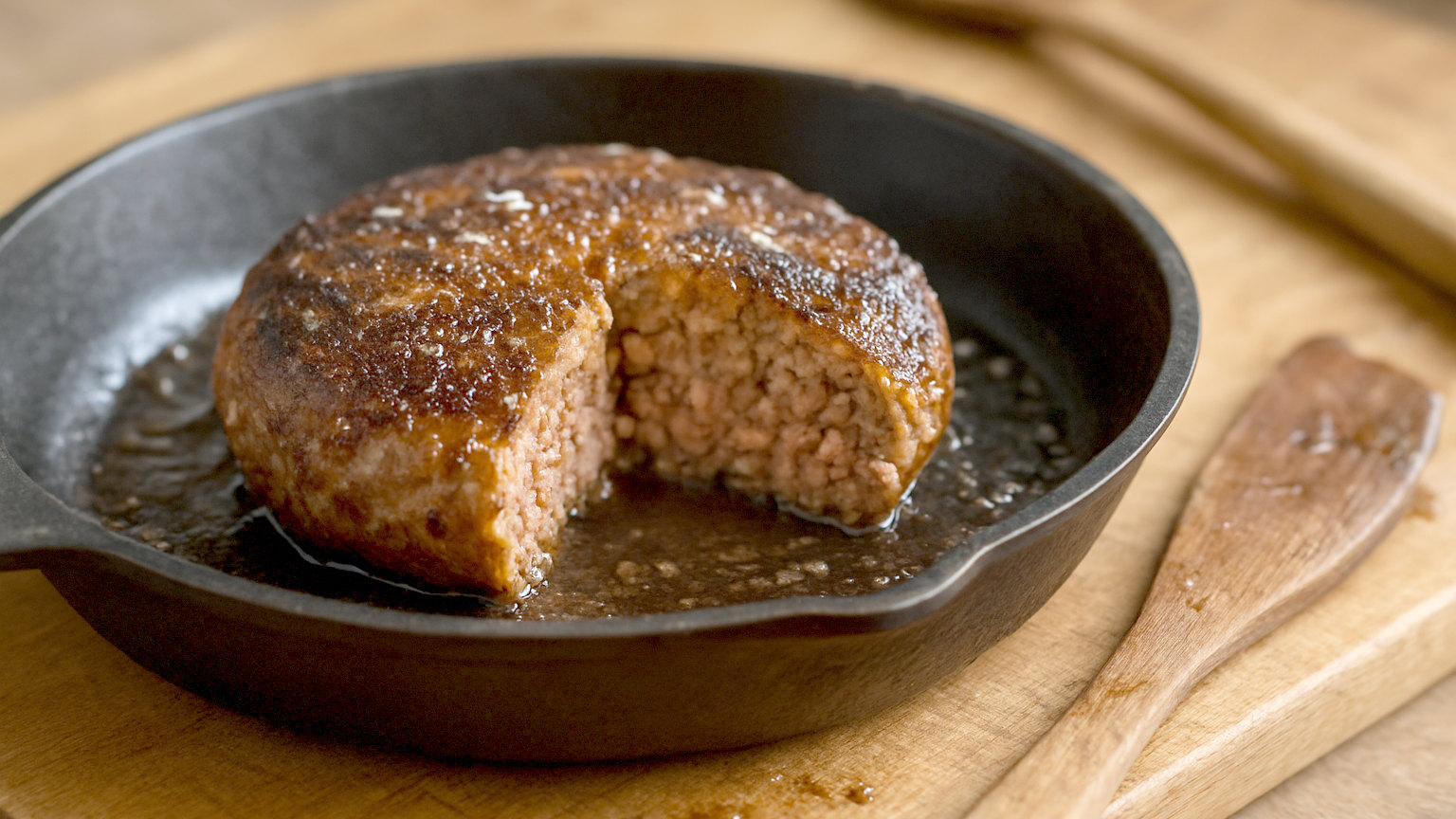
A good burger is mostly about restraint. Mince, salt and heat are all it needs, and almost every addition beyond that makes it worse. Egg and breadcrumbs turn it into a rissole, and mixing in seasonings compacts the meat. The two things that genuinely matter are the fat content and how little you touch it.
What do you need for 4 burgers?
- 600g coarsely minced beef, 20 per cent fat
- Flaky salt and coarse black pepper
- A little oil or beef dripping
- 4 soft buns, lightly toasted
- Cheese, lettuce, tomato, pickles and sauce to serve
How do you make them?
- Divide the mince into four 150g portions without compressing it.
- Shape each into a patty slightly wider than the bun, about 2cm thick.
- Press a shallow dimple into the centre of each with your thumb.
- Chill for 30 minutes.
- Season both sides heavily with salt and pepper just before cooking.
- Cook in a very hot pan or on a barbecue for 3 to 4 minutes a side.
- Add cheese for the final minute and cover to melt it.
- Rest for 3 minutes before assembling.
Salt goes on immediately before cooking, not into the mixture. Salt dissolves the proteins and makes the meat bind into a springy, sausage like texture, which is why supermarket burgers often feel bouncy.
What fat content do you need?
Twenty per cent. Anything leaner produces a dry burger, since fat is what carries the flavour and keeps it moist over a high heat.
Ask a butcher for chuck minced coarsely, which is the ideal cut and usually cheaper than pre packed lean mince.
Why the dimple in the middle?
Burgers contract as they cook and swell in the centre. A shallow dimple compensates, so the finished patty is flat rather than domed.
It also stops the burger rocking about in the bun.
Why not compress the patty?
Compacting the mince squeezes out the air pockets that keep the burger tender, giving something closer to a slab of meatloaf.
Shape it just enough to hold together and no more, handling it as little as the meat allows.
Should burgers be cooked through?
At home, yes. Food Standards Agency guidance is that burgers should be cooked thoroughly until piping hot throughout, with no pink meat and clear juices, because mincing spreads any surface bacteria through the whole patty.
Restaurants serving pink burgers operate under specific controls that a domestic kitchen cannot replicate.
How hot should the pan be?
Very hot, so a crust forms quickly. A heavy cast iron pan or a flat griddle is better than a barbecue grate, since more of the surface makes contact.
Do not press the burger with a spatula. It squeezes out the juices and achieves nothing else.
How often should you turn them?
Once is traditional, though turning every minute cooks them more evenly and is now widely recommended. Either works.
What matters is leaving them long enough on the first side to build a crust before moving them.
Should anything be mixed in?
Nothing, for a plain burger. If you want a seasoned patty, finely grated onion, Worcestershire sauce or mustard powder can go in, accepting a slightly denser texture.
Egg and breadcrumbs are for meatballs and rissoles rather than burgers.
How thick should the patty be?
About 2cm for a single patty, or 1cm each if you are making two thinner ones per bun. Thin patties cook faster and give more crust per mouthful.
Make them slightly wider than the bun, since they shrink by about a centimetre as they cook.
What should go in the bun?
Something acidic to cut the fat, which usually means pickles, and something fresh. Lettuce, tomato, red onion and a sharp sauce are enough.
Toast the cut faces of the bun in the pan afterwards, which stops it going soggy.
Can they be made ahead or frozen?
Shape them a day ahead and keep them covered in the fridge, unseasoned. Raw patties freeze for three months with baking paper between them.
Cook from frozen with an extra 5 minutes a side, checking they are piping hot throughout.
See also Beef Meatballs in Tomato Sauce, or browse more Mains recipes.


