
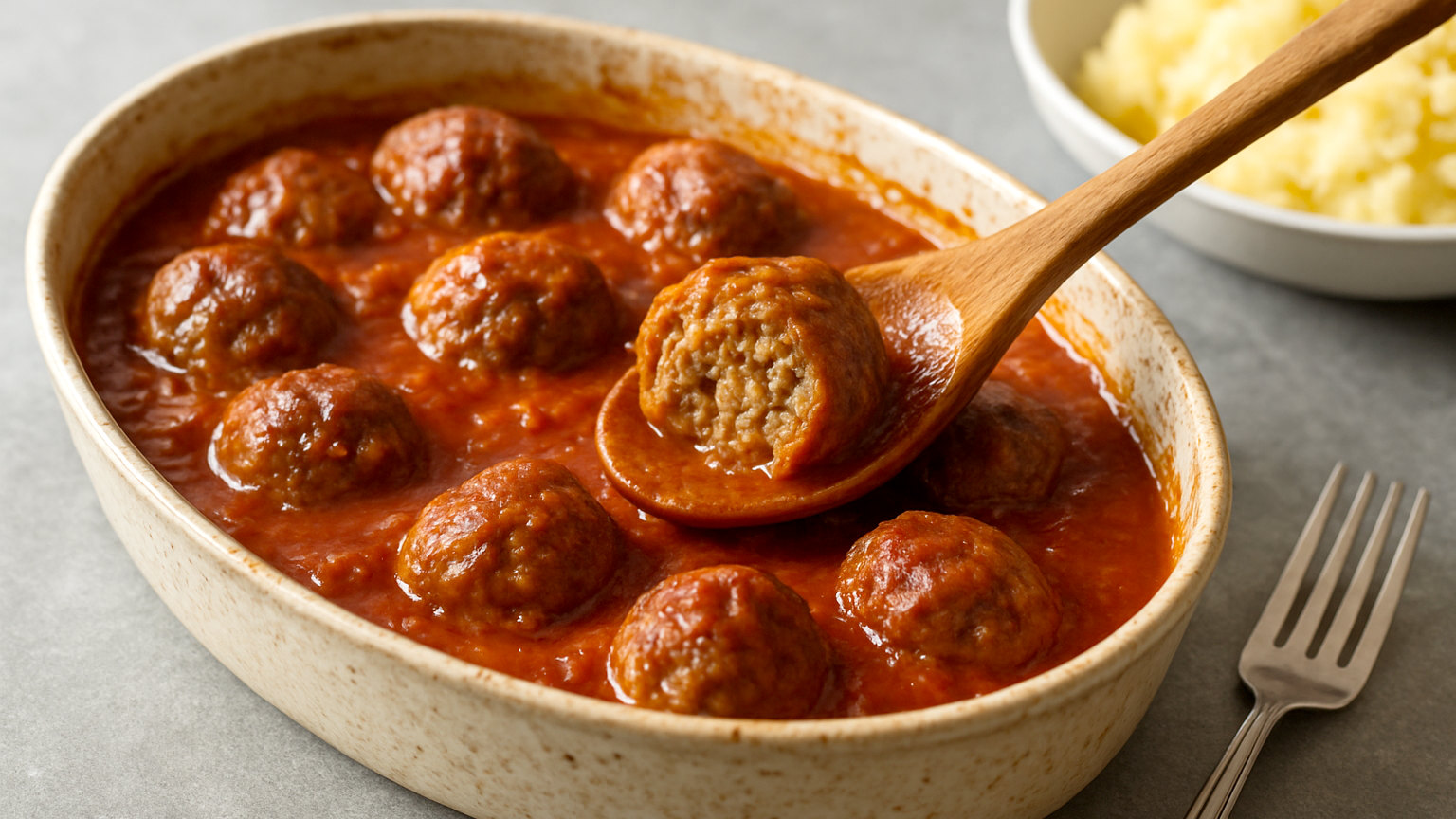
Meatballs are usually let down by texture rather than flavour. Mince, egg and breadcrumbs mixed together produce something dense and slightly bouncy. The fix is a panade, which is bread soaked in milk and mashed to a paste, and it is used in every good meatball recipe from Italy to Sweden for exactly this reason.
What do you need for 4 people?
- 500g beef mince, 15 to 20 per cent fat
- 2 thick slices of white bread, crusts removed
- 100ml whole milk
- 1 onion, very finely chopped and softened in butter
- 2 cloves of garlic, crushed
- 1 egg
- 40g parmesan, grated, and a handful of chopped parsley
- 2 tins of chopped tomatoes, 1 onion and 3 cloves of garlic for the sauce
- Olive oil, salt and black pepper
How do you make them?
- Tear the bread into a bowl, pour over the milk and leave for 10 minutes, then mash to a paste.
- Mix the paste with the mince, cooled onion, garlic, egg, parmesan and parsley.
- Season heavily and combine with your hands until just mixed.
- Roll into balls the size of a walnut, about 20.
- Chill for 30 minutes to firm up.
- Brown them in oil in batches, turning carefully, then set aside.
- Make the sauce in the same pan with onion, garlic and tomatoes, simmering for 20 minutes.
- Return the meatballs and simmer gently for 25 minutes.
The milk soaked bread is not optional. The starch holds moisture and physically separates the meat proteins, which is what stops them binding into a dense mass as they cook.
Why chill them before cooking?
The fat firms up so the meatballs hold their shape when they meet the hot pan, and they are far less likely to break apart.
Thirty minutes is enough, and they can be shaped several hours ahead.
Should they be browned or poached?
Browning gives more flavour and a firmer exterior. Poaching them directly in the sauce gives a softer, more tender result and is what many Italian home cooks do.
Browning is the better choice for a British palate and it also thickens the sauce with the residue left in the pan.
How should the mixture be handled?
As little as possible. Overworking develops the proteins and makes them springy and tight.
Mix until the ingredients are just combined and stop, even if it looks slightly uneven.
What can you use instead of parmesan?
Mature cheddar or pecorino, or leave it out and add an extra pinch of salt. It is contributing savouriness rather than cheesiness.
Can you use other meats?
A mixture of beef and pork is the classic and gives a better texture. Lamb suits a Middle Eastern treatment with cumin and mint.
Turkey and chicken mince are very lean and need the panade even more, plus a little olive oil in the mix.
Why did they fall apart?
Usually because they were not chilled, or the pan was not hot enough, or they were turned too early. Let them form a crust before moving them.
Too much liquid in the mixture is the other cause, so squeeze the soaked bread out lightly if it looks very wet.
Can they be made ahead or frozen?
Shape them a day ahead and keep them covered in the fridge. Raw meatballs freeze for three months on a tray then bagged.
Cooked meatballs in sauce also freeze for three months and reheat well.
How big should they be?
Walnut sized, about 30g each, which gives around 20 from 500g of mince. Larger ones need longer in the sauce and can dry out in the middle.
Keep them even so they cook at the same rate, and wet your hands slightly to stop the mixture sticking.
What should you serve with them?
Spaghetti, or bread and a green salad. They also make an excellent sandwich in a soft roll with melted cheese.
Cool leftovers quickly, refrigerate within two hours and reheat once only until piping hot, in line with Food Standards Agency guidance.
If that was useful, Homemade Beef Burgers covers related ground, and there is plenty more in Mains recipes.


