
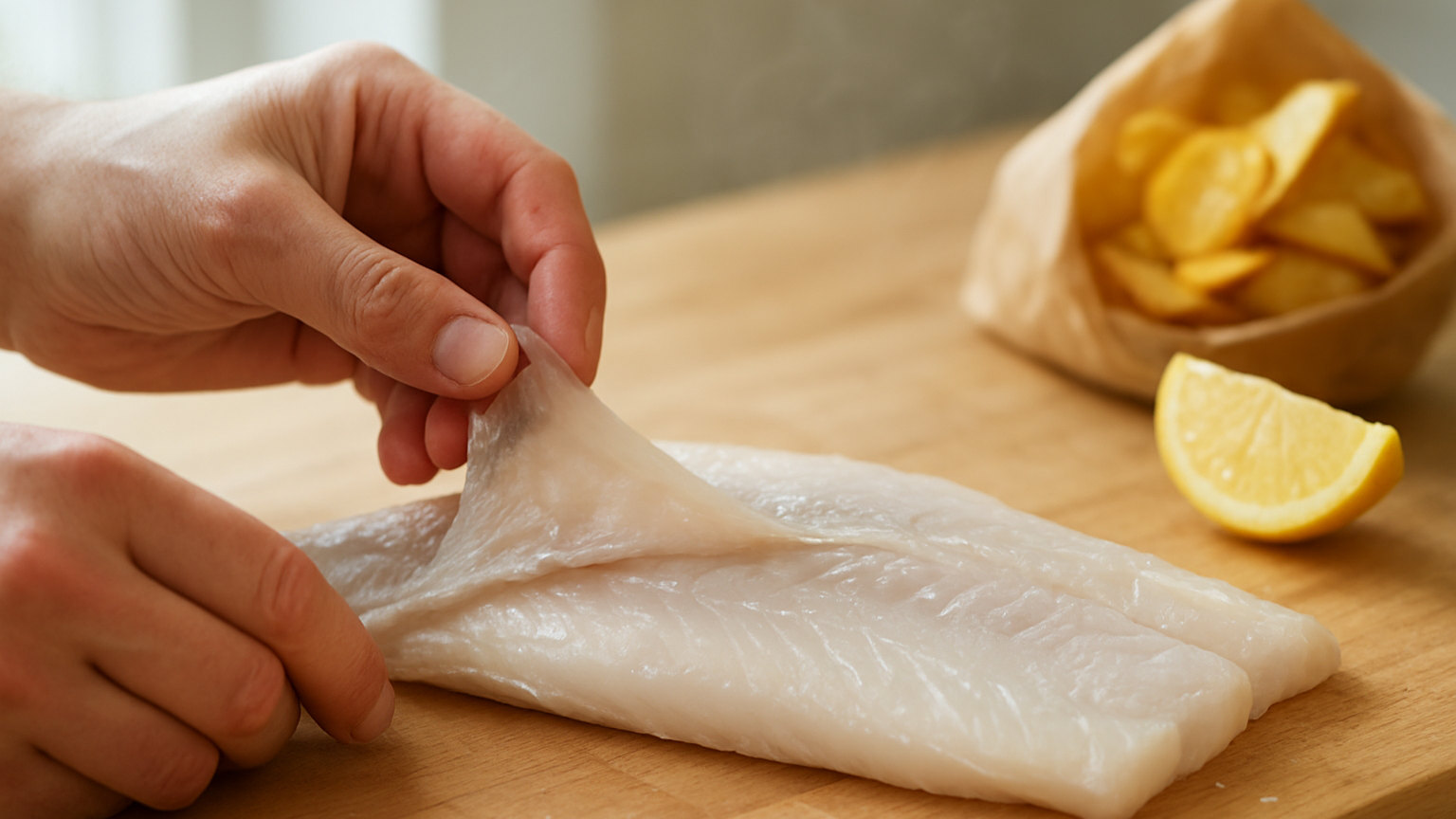
Skinning a fillet and removing its pin bones are the two bits of fish preparation that put people off cooking it at home. Both take about a minute once you know the trick, and both are worth learning even though a fishmonger will do them for free, because supermarket fillets often arrive with the bones still in.
What are pin bones?
A row of fine bones running down the centre line of the fillet, separate from the ribcage. They are left behind when a fish is filleted and have to be pulled out individually.
Salmon, cod, haddock and trout all have them. Flat fish generally do not.
How do you find them?
Run a fingertip along the centre of the fillet from the head end. You will feel the tips catching against your finger.
Draping the fillet skin side down over an upturned bowl pushes the bones proud and makes them easier to grip.
How do you remove them?
Pull in the direction the bone is lying, not straight up. Pin bones angle towards the head, so pulling upwards tears the flesh while pulling along the angle slides them out cleanly.
Use fish tweezers or clean long nosed pliers, gripping close to the flesh.
How do you skin a fillet?
- Lay the fillet skin side down with the tail end towards you.
- Make a small cut through the flesh at the tail, down to but not through the skin.
- Grip the flap of skin firmly, using a piece of kitchen paper or a little salt on your fingers.
- Angle the knife slightly downwards towards the skin.
- Push the knife away from you in a sawing motion while pulling the skin towards you.
- Keep the knife angle constant and the skin taut.
Why does the knife angle matter?
Angled too flat and you leave flesh on the skin. Angled too steep and you cut through the skin and lose your grip.
A slight downward angle towards the board is right, and the skin should come away almost clean.
What knife should you use?
A long thin flexible blade, since it follows the contour of the fillet. A filleting knife is ideal and a sharp carving knife will do.
A short stiff knife makes the job considerably harder.
Is it easier when the fish is cold?
Considerably. A well chilled fillet is firmer and holds its shape under the knife, while a fillet at room temperature is soft and drags.
Twenty minutes in the fridge before you start makes both jobs noticeably easier.
Should you always remove the skin?
No. Leave it on for pan frying and roasting, where it crisps and protects the flesh. Remove it for pies, cakes, curries and anything poached.
Skin left on in a sauce turns flabby and unpleasant.
Do all fish need pin boning?
Round fish do. Flat fish such as plaice and sole do not, and neither do very small fillets where the bones are soft enough to eat.
Whole small fish such as sardines and anchovies have edible bones once cooked.
Which side of the fillet has the bones?
They run through the thick end, roughly the front third of the fillet, and stop before the tail. There is no need to search the whole piece.
What do you do with the skin and bones?
Bones and heads make excellent stock in twenty minutes, far quicker than meat stock. Avoid oily fish, which makes the stock bitter.
Skin can be scraped clean, dried and fried into crisps, or discarded.
Can you eat around the pin bones?
In a thick fillet they are easy to feel and remove at the table, and many people do. In a fish cake, pie or curry they are a genuine hazard because they cannot be seen.
Always pin bone fish that is going into a mixed dish, particularly if children are eating it.
Is it worth asking the fishmonger?
Yes. They will skin, fillet and pin bone in seconds at no extra charge, and the bones can be bagged separately for stock if you ask.
Keep prepared fish cold on the way home and use it within a day.
See also Tartare Sauce and What Else Goes With Fish, or browse more Mains recipes.


