
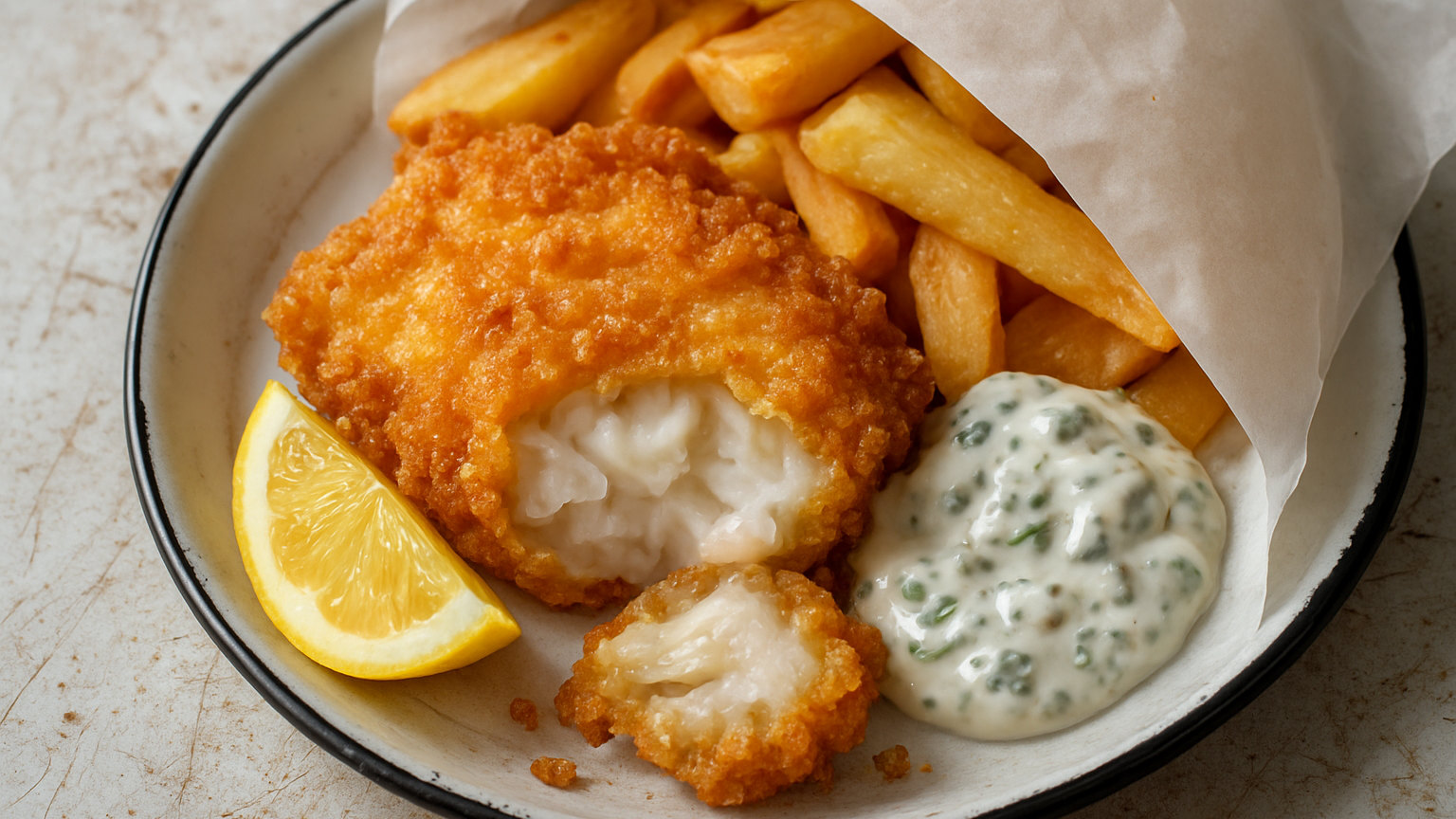
Most fish is lean and mildly flavoured, which is why almost every traditional accompaniment supplies either fat or acidity and usually both. Tartare sauce is mayonnaise with capers and gherkins, parsley sauce is butter and milk, and the wedge of lemon on the side is doing the same job as the vinegar on chip shop fish. Once that is clear the options make sense.
How do you make proper tartare sauce?
Stir 200g of good mayonnaise together with 2 tablespoons of chopped capers, 2 tablespoons of chopped gherkins, a finely chopped shallot, a large handful of chopped parsley and a squeeze of lemon.
Chop the capers and gherkins rather than leaving them whole. The point is that every spoonful carries acidity, and large pieces mean some mouthfuls are sharp and others are plain mayonnaise.
Can you make the mayonnaise too?
It takes five minutes with an egg yolk, a teaspoon of mustard and 200ml of oil whisked in very slowly. Use a neutral oil rather than olive, which is bitter when emulsified.
Homemade mayonnaise contains raw egg, so use eggs with the British Lion mark and avoid serving it to anyone in a vulnerable group.
What is parsley sauce for?
Poached and baked white fish, and smoked haddock in particular. It is a white sauce made with milk, butter and flour with a great deal of chopped parsley stirred in.
Use the fish poaching milk to make it, which is the traditional method and wastes nothing.
When does hollandaise make sense?
With salmon, sea trout and asparagus. It is butter and egg yolk with lemon, so it supplies exactly what a lean fish lacks.
It cannot be made far ahead and it splits if overheated, so it is a dish for when you have five spare minutes.
What about herb butters?
The simplest option and one of the best. Mash softened butter with parsley, lemon zest, garlic or anchovy, roll it in cling film and chill.
A slice melting over hot fish is a complete sauce with no cooking at all, and it freezes for three months.
Which sauce suits oily fish?
Something sharp rather than rich. Gooseberry sauce with mackerel is the classic English pairing, and horseradish suits smoked mackerel and trout.
Mustard, rhubarb and anything vinegary all work for the same reason.
Does mushy peas count?
Functionally, yes. Dried marrowfat peas soaked and cooked to a puree are the traditional partner to battered fish, and they provide the soft starchy element the plate needs.
They are quite different from crushed frozen peas, which are sweeter and greener.
What about curry sauce?
The chip shop version is a genuine British institution, particularly in the north, and it is a mild sweet sauce rather than a curry in any meaningful sense.
It suits chips more than fish, and it is entirely respectable.
What goes with battered fish specifically?
Tartare sauce, malt vinegar, mushy peas and a wedge of lemon. Ketchup and curry sauce are both entirely legitimate and widely eaten.
Bread and butter alongside is the traditional accompaniment in much of the north.
Which sauce suits a whole fish?
Very little. A whole fish cooked with lemon and herbs makes its own juices, and a spoonful of those with good olive oil is enough.
Salsa verde or a caper and brown butter sauce both work if you want something more.
How far ahead can these be made?
Tartare sauce keeps three days refrigerated and improves after an hour. Parsley sauce keeps two days and reheats gently with extra milk.
Hollandaise has to be made to order. Herb butter keeps two weeks in the fridge and three months frozen.
Is lemon enough on its own?
For a well cooked piece of fish with crisp skin, frequently yes. A wedge of lemon and good butter is a complete accompaniment.
Cool anything containing dairy or egg quickly, refrigerate within two hours and use within the times above, in line with Food Standards Agency guidance.
Next, try How to Skin and Pin Bone a Fish Fillet, or see the rest of our Mains recipes.


