
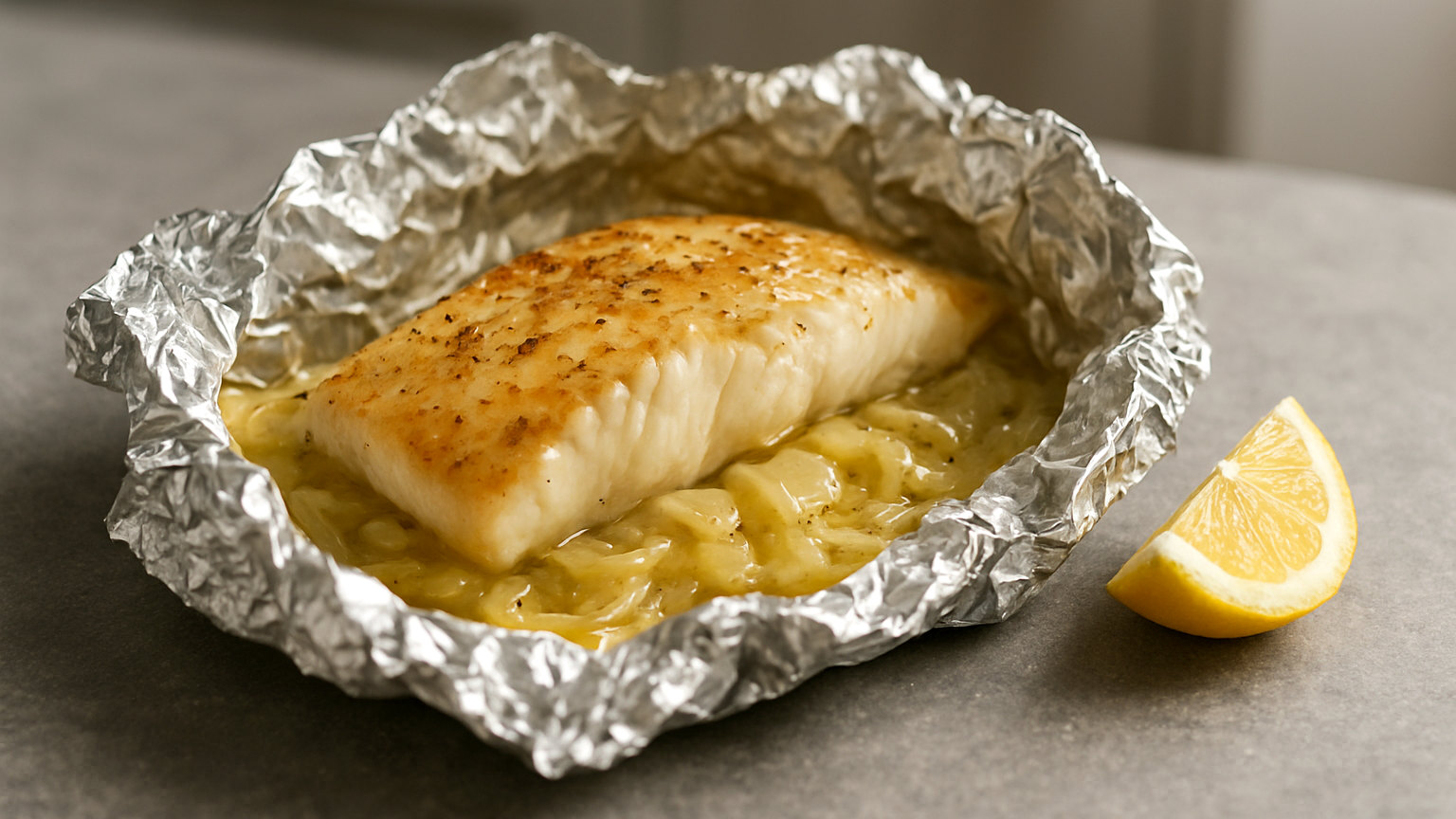
Cooking fish in a sealed parcel is the method to use if fish makes you nervous. The fish steams in its own juices and whatever else you have put in with it, so it stays moist, it cannot stick, and there is no pan to wash. It is also the easiest way to cook fish for several people at once, since each parcel can be assembled in advance.
What do you need for 2 people?
- 2 fish fillets, about 180g each, skin on or off
- 2 tablespoons olive oil or 25g butter
- Half a lemon, thinly sliced
- 2 spring onions or half a fennel bulb, thinly sliced
- 2 cloves of garlic, sliced
- A few sprigs of dill, parsley or thyme
- 2 tablespoons white wine or stock
- Salt and black pepper
How do you make it?
- Heat the oven to 190C fan, 210C conventional, gas mark 6.
- Cut two squares of foil or baking paper about 35cm across.
- Scatter the sliced vegetables in the centre of each and sit the fish on top.
- Season, add the lemon slices, garlic and herbs, and dot with butter or drizzle with oil.
- Spoon over a tablespoon of wine or stock.
- Bring the edges together and fold them over several times to seal, leaving room inside for steam.
- Bake on a tray for 12 to 15 minutes for a 3cm fillet.
- Open at the table, tipping the juices over the fish.
Leave air space inside the parcel. The fish is cooked by steam circulating around it, so a parcel wrapped tightly against the fillet simply bakes it and loses the main advantage of the method.
How long does it take?
About 12 to 15 minutes for a 3cm fillet, 10 for a thin one and up to 20 for a thick piece of salmon.
The parcel holds the heat, so err on the short side and open one to check rather than guessing.
Foil or baking paper?
Foil is easier to seal and holds its shape. Baking paper is the traditional French approach and puffs up dramatically, which looks better at the table.
Avoid putting foil in direct contact with anything very acidic for a long period, though for fifteen minutes it makes no practical difference.
Why does it not dry out?
The sealed parcel traps moisture, so the fish is surrounded by steam at around 100C rather than dry oven air at 190C.
That is a much gentler environment and it gives a far wider margin for error.
What else can go in?
Cherry tomatoes, olives, capers, sliced courgette, ginger and soy, or chorizo. Anything that will cook in the same fifteen minutes.
Hard vegetables such as potato and carrot need parboiling first, since they will not cook through in the time.
Can it be prepared ahead?
Assemble the parcels up to six hours ahead and keep them in the fridge. Add five minutes to the cooking time if they go in cold.
This makes it a genuinely useful method for having people round.
Can it be done on a barbecue?
Yes, and it is the easiest way to cook fish over coals since nothing touches the grill. Use foil and cook over medium heat for about 12 minutes.
Which fish suit it best?
Almost all of them, and it is particularly good for delicate fillets such as plaice and sea bass that would tear in a pan.
Salmon, cod and haddock all work, and thin fillets need watching since they cook in ten minutes.
Can you cook a whole fish this way?
Yes, and it is one of the best methods for one. A 700g fish needs about 25 minutes, and the parcel keeps it moist throughout.
Use a large enough sheet that the parcel is not stretched tight over the fish.
What should you serve with it?
New potatoes or bread to mop up the juices, and a green vegetable. The liquid in the parcel is the sauce.
Cool leftovers quickly, refrigerate within two hours and use within two days, in line with Food Standards Agency guidance.
For something along the same lines, see What to Do With Leftover Fish, or browse all our Mains recipes.


