
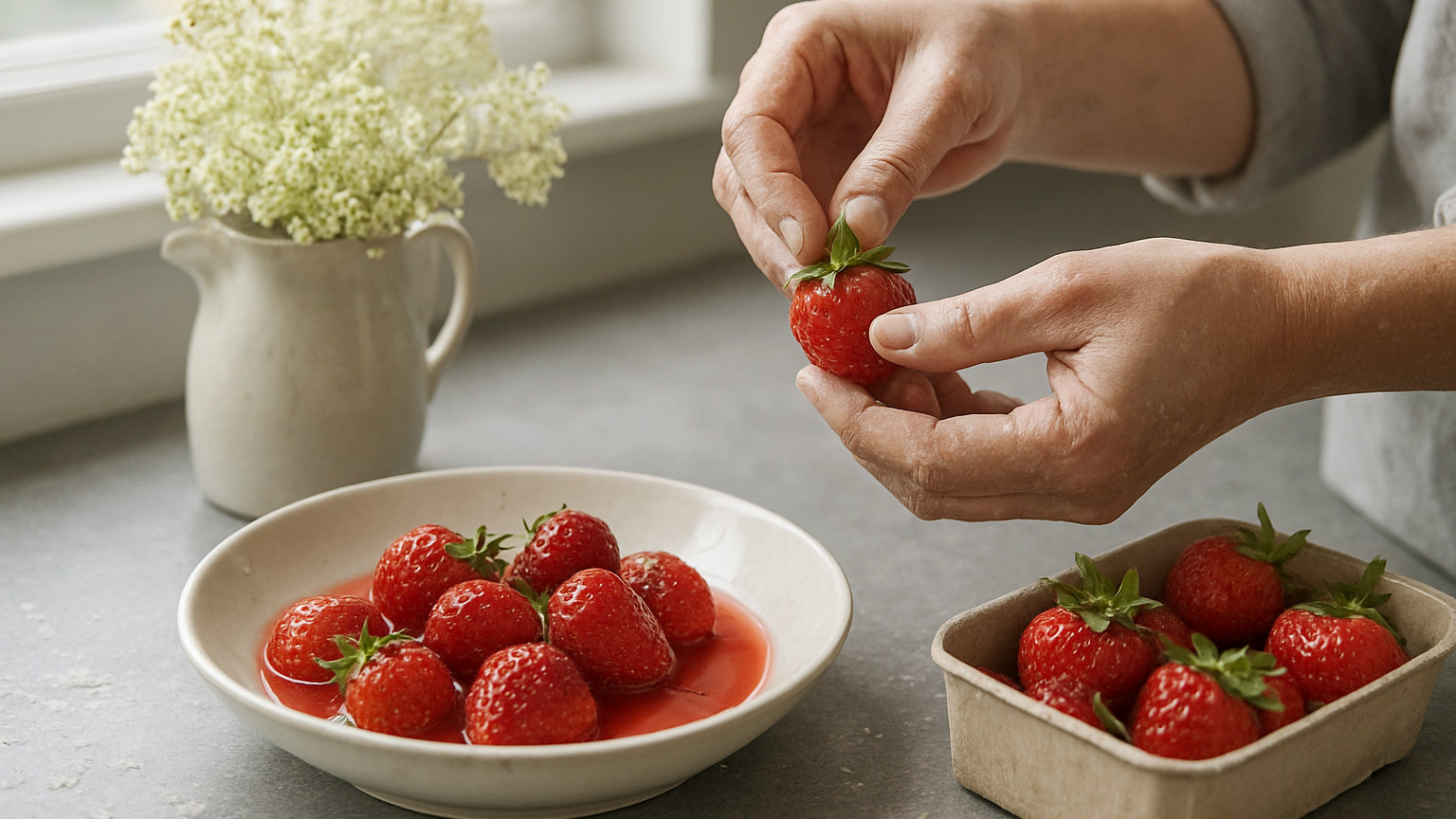
Strawberries and cream have been eaten at Wimbledon since the first championship in 1877, and the quantities are considerable: roughly thirty tonnes of strawberries over the fortnight, picked in Kent the previous day and delivered each morning. It is one of the few British food traditions that is both genuinely old and still working exactly as intended.
Why strawberries at Wimbledon?
The championship falls in late June and early July, which is precisely when English strawberries are at their best.
It was a fashionable summer fruit and the tournament was a fashionable summer event, so the two simply coincided.
How many are eaten?
Around thirty tonnes over the fortnight, along with several thousand litres of cream.
They are picked the day before and arrive each morning.
How do you choose good strawberries?
Smell them. A good strawberry announces itself and a poor one smells of nothing. Look for even red colour right up to the shoulders, with fresh green hulls.
White or pale shoulders mean the fruit was picked underripe and will not ripen further.
Which varieties are grown here?
Elsanta dominates commercially for its firmness and shelf life. Older varieties such as Cambridge Favourite have more flavour and travel badly.
Pick your own farms often grow the better tasting kinds.
Are they good for you?
Very high in vitamin C, higher by weight than oranges, and low in sugar for a fruit.
Should they be refrigerated?
Cold dulls the flavour considerably. Keep them in the fridge if you must, and take them out at least an hour before eating.
Never store them wet or sealed in plastic.
Should they be washed?
Rinse briefly in cold water just before use and dry gently. Washing them in advance makes them soft and watery.
Hull them after washing, not before, so they do not fill with water.
How many per person?
About 150g each, which is a good handful. Wimbledon serves ten to a portion, which is a modest bowl.
What is hulling?
Removing the green top and the white core beneath it, either with the point of a knife or a hulling tool.
A drinking straw pushed through from the tip works surprisingly well.
Is pick your own worth it?
Considerably, since the fruit is picked ripe and eaten within hours, and the varieties grown are often chosen for flavour rather than shelf life.
It is also the cheapest way to buy fruit for jam.
What cream should be used?
Single or pouring cream at Wimbledon, though whipped double cream and clotted cream are both common elsewhere.
Should they be hulled before serving?
For a bowl to eat with cream, yes. Left whole with the hull on they are easier to dip into sugar or chocolate.
Should sugar be added?
Good ripe strawberries need none. Slightly underripe fruit benefits from a light dusting an hour ahead, which draws out the juice.
A grind of black pepper or a splash of balsamic both work better than they sound.
When is the British season?
June to September under normal growing, with the peak in late June and July. Polytunnels have extended it considerably at both ends.
Why are they grown under polytunnels?
Tunnels protect the fruit from rain, which splits and rots it, and extend the season at both ends by several weeks.
Most commercial British strawberries are now grown this way.
Where are they grown?
Kent above all, along with Hampshire, Herefordshire and Scotland, where the long daylight suits them well.
Do they ripen after picking?
No. Strawberries are non climacteric, so they soften but never get sweeter once off the plant.
That is why a pale underripe strawberry is a lost cause.
What else goes with them?
Shortbread, meringue, elderflower cordial, or simply a bowl on their own.
They also work with mint, orange and a little black pepper.
How long do they keep?
Two days at most, refrigerated and dry. Remove any mouldy fruit immediately, since it spreads fast through a punnet.
For something along the same lines, see Strawberry Jam, or browse all our Seasonal recipes.