
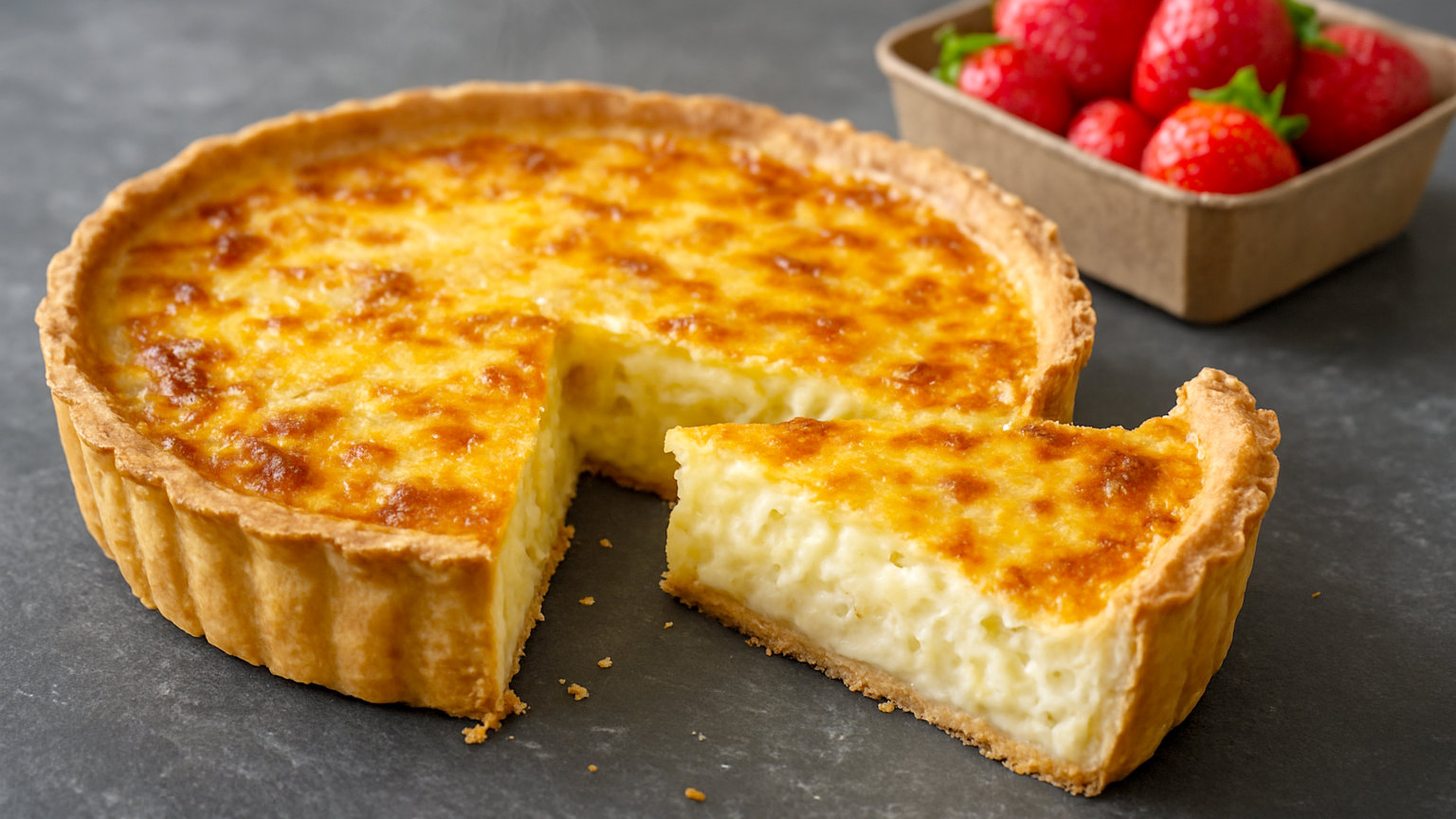
A quiche is a savoury egg custard baked in a pastry case, and it is one of the best things to take on a picnic because it cuts cleanly and is better at room temperature than hot. Two things make or break it: a properly blind baked case, and a custard that is rich enough to set softly rather than turning rubbery.
What do you need for a 23cm quiche?
- 350g shortcrust pastry
- 3 large onions, thinly sliced
- 25g butter and 1 tablespoon oil
- 3 eggs and 2 egg yolks
- 300ml double cream
- 150g mature cheddar, grated
- 1 teaspoon English mustard
- Salt, white pepper and a grating of nutmeg
How do you make it?
- Line a 23cm tin with pastry, leaving an overhang, and chill for 30 minutes.
- Line with paper and baking beans and bake at 180C fan for 20 minutes.
- Remove the beans and bake for 10 minutes more until dry and sandy.
- Brush the inside with beaten egg and return for 2 minutes to seal it.
- Meanwhile cook the onions slowly in butter and oil for 25 minutes until golden.
- Whisk the eggs, yolks and cream and season well.
- Scatter the onions and most of the cheese into the case, then pour in the custard.
- Bake at 150C fan for 30 to 35 minutes until just set with a slight wobble.
Seal the blind baked case with beaten egg before filling it. It forms a waterproof layer that stops the custard soaking into the pastry, which is the actual cause of a soggy bottom.
Why blind bake at all?
The filling is wet and bakes at a low temperature, which is nowhere near enough to cook raw pastry underneath it.
An unbaked case gives a pale, raw, soggy base every time.
What is the right custard ratio?
Roughly 300ml of cream to 3 whole eggs and 2 yolks, which sets softly and stays tender when cold.
More egg gives a firm, rubbery set closer to an omelette.
Should it be baked on a hot tray?
Yes. Preheating a baking tray and sitting the tin on it gives the base extra bottom heat, which helps keep the pastry crisp.
Why such a low oven?
Egg custard sets gently. A hot oven makes it puff, curdle and then collapse, leaving a grainy texture and weeping liquid.
150C fan for half an hour is right.
Why leave the pastry overhanging?
Pastry shrinks during blind baking. Trim it level only after baking, using a sharp knife.
Can you use shop bought pastry?
All butter shortcrust works perfectly well and saves half an hour. Blind bake it exactly the same way.
How do you know it is set?
The edges should be firm and the centre should wobble like a set jelly. It firms considerably as it cools.
Should it be eaten hot or cold?
Warm or at room temperature, which is when the texture and flavour are best. Cold from the fridge it is firm and muted.
Should the filling come to the top?
Fill to about 5mm below the rim, since the custard rises slightly. Overfilled quiches spill and weld themselves to the tin.
Pour the last of it in with the tin already on the oven shelf.
What else can go in?
Bacon and leek, smoked haddock, spinach and nutmeg, or roasted tomato.
Cook anything wet first and squeeze it dry.
Why cook the onions so slowly?
Twenty five minutes over a low heat turns them sweet and golden. Rushed over high heat they brown at the edges and stay harsh.
Their sweetness is what makes the quiche.
What is the difference from a tart?
Very little. Quiche specifically means a savoury egg custard tart, while a tart may have any filling.
How long does it keep?
Three days refrigerated and it freezes for a month.
Cool it quickly, refrigerate within two hours and keep it chilled at a picnic, in line with Food Standards Agency guidance.
If that was useful, Potato Salad covers related ground, and there is plenty more in Seasonal recipes.