
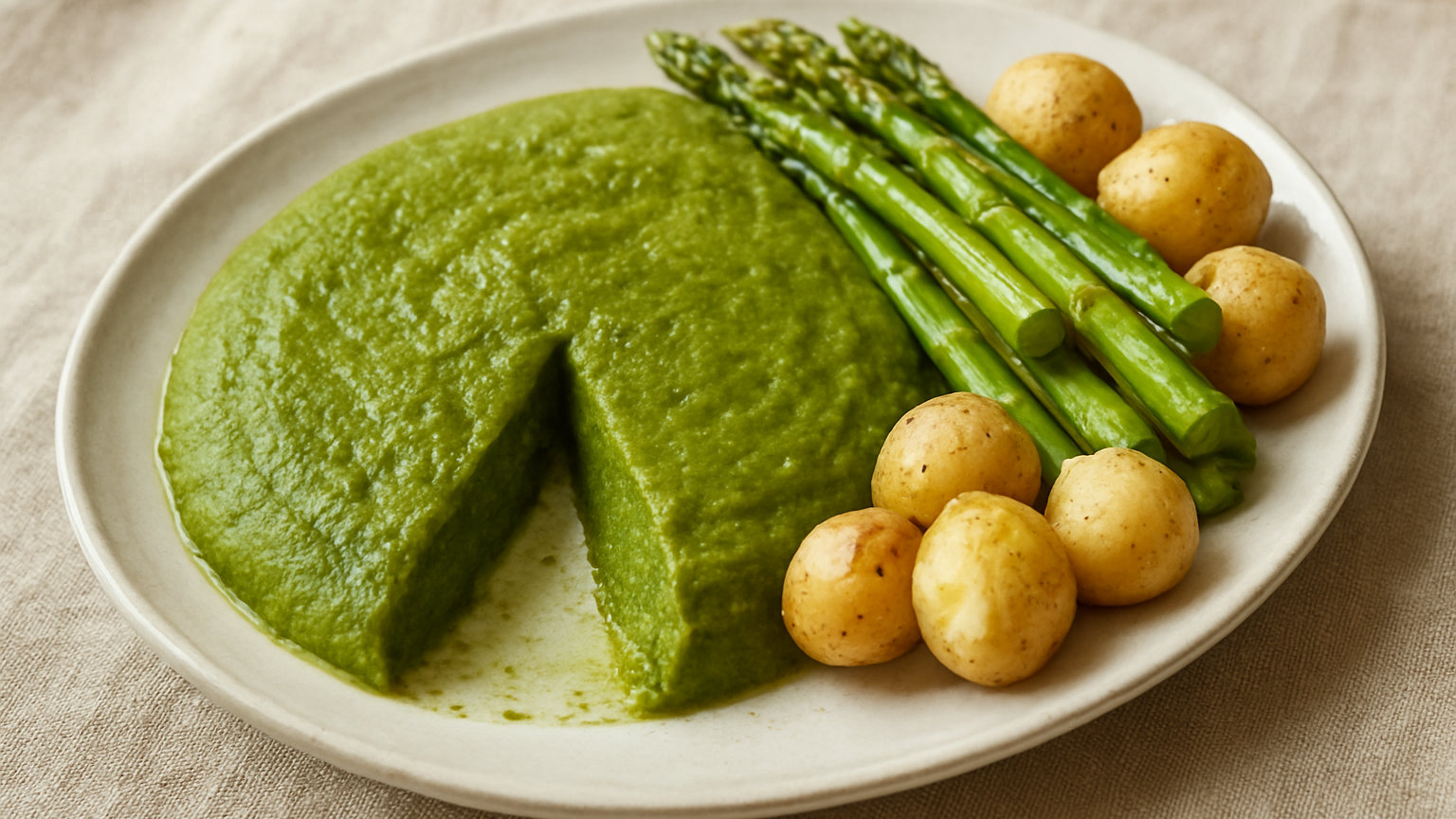
Sorrel is one of the few genuinely sharp leaves in British cooking, tasting distinctly of lemon because it contains oxalic acid. It is at its best in spring, and it behaves unlike any other green: within seconds of meeting heat it collapses from bright green to a dull khaki puree. Knowing that in advance saves disappointment.
What does sorrel taste like?
Sharply lemony and slightly metallic, quite unlike anything else in the salad drawer.
The sharpness comes from oxalic acid, the same compound found in rhubarb leaves, though the quantity in sorrel is far lower.
Why does it go khaki?
Its own acidity destroys the chlorophyll almost instantly when heated. Sorrel turns from bright green to olive brown in about ten seconds in a hot pan.
There is no way to prevent it, so either use it raw or accept the colour and treat it as a sauce.
How should it be used?
Raw in salads while young, or melted into cream to make a sauce for fish, eggs or chicken.
A sorrel sauce needs no lemon added, since the leaf provides it.
How should sorrel be prepared?
Strip the leaves from any tough central rib and shred them. Young leaves need nothing doing to them.
Is it safe to eat?
In normal culinary quantities yes. Very large amounts are not advisable, and anyone prone to kidney stones may wish to limit oxalate rich foods.
The same caution applies to spinach and rhubarb.
What else is sharp in spring?
Rhubarb, gooseberries at the very end of the season, and watercress, which is peppery rather than acidic.
All of them cut through the butter and cream that spring cooking otherwise leans on.
Can you forage it?
Common sorrel grows widely in meadows and grassland, with arrow shaped leaves. Wood sorrel is a different plant with clover like leaves and the same lemon taste.
Be certain of identification before picking anything.
What about mint?
It reappears in April and grows aggressively, which is why it is best kept in a pot. It is the traditional partner for lamb and new potatoes.
Use it raw or added at the very end.
What is chervil?
A delicate herb tasting faintly of aniseed and parsley, at its best in spring and easily lost in cooking.
Add it raw at the end, never during cooking.
What is lovage?
A tall perennial tasting strongly of celery, one of the first herbs to appear each spring.
Use it sparingly, since a little goes a long way in soups and stocks.
Do herbs have a season at all?
Considerably more than supermarket shelves suggest. Most soft herbs are at their best from late spring to early autumn and are far cheaper then.
Growing a pot of chives, parsley and mint covers most needs.
Which herbs come first?
- Chives, among the earliest to reappear
- Lovage and sorrel from March
- Mint from April
- Chervil and parsley through spring
- Tarragon and dill from late spring
Should herbs go in early or late?
Woody herbs such as rosemary and thyme early, soft herbs such as parsley, chervil and dill at the very end.
Soft herbs lose their aroma within a minute of heat.
Can sorrel be preserved?
It freezes as a cooked puree for three months, which is the practical way to keep it since the colour is already lost.
Raw leaves do not freeze or dry usefully.
What is French sorrel?
A cultivated variety with broader, rounder leaves and a milder flavour, easier to grow in a garden than the wild kind.
Both are used the same way.
Should herbs be chopped or torn?
Torn for delicate leaves such as chervil, chopped for parsley and chives. Bruising soft herbs with a blunt knife dulls them.
How should they be stored?
Soft herbs upright in a glass of water in the fridge, covered loosely. Sorrel wilts fast and should be used within two days.
For something along the same lines, see A Spring Menu for Entertaining, or browse all our Seasonal recipes.