
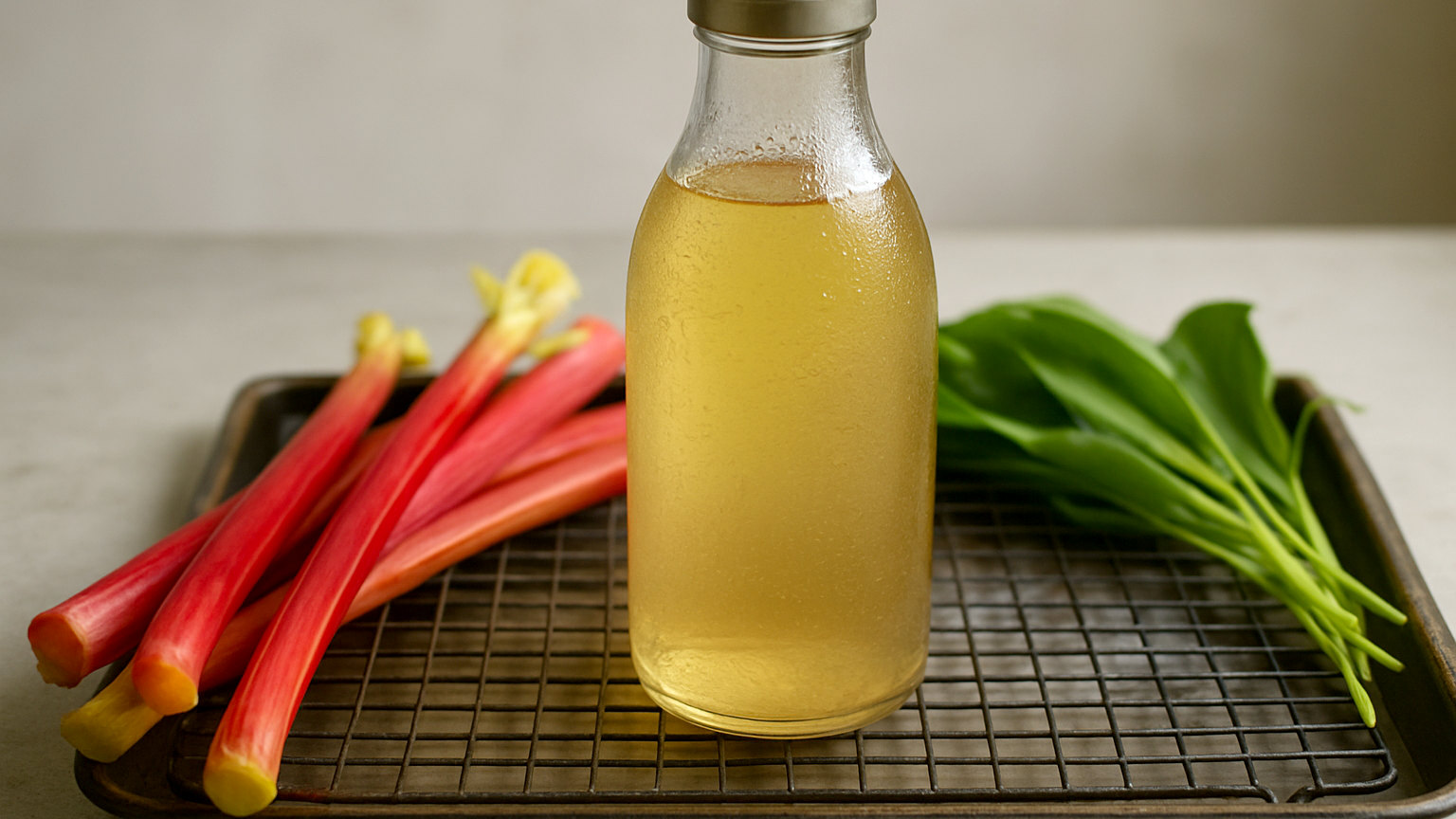
Elderflower cordial captures about three weeks at the very end of spring, when the hedgerows fill with flat creamy heads of blossom. The flowers give up their scent to sugar syrup readily, and the whole thing takes twenty minutes of work plus a day of steeping. Picking well matters more than anything in the method.
What do you need for about 2 litres?
- 25 to 30 elderflower heads
- 1.5kg caster or granulated sugar
- 1.5 litres water
- 3 unwaxed lemons, sliced
- 50g citric acid
How do you make it?
- Pick the flower heads on a dry sunny morning.
- Shake them to remove insects but do not wash them.
- Snip off as much thick green stalk as you can.
- Bring the water and sugar to the boil, stirring until dissolved.
- Take off the heat and stir in the citric acid.
- Add the flower heads and sliced lemons and push them under.
- Cover and leave for 24 to 48 hours at room temperature.
- Strain through muslin and bottle in sterilised bottles.
Do not wash the flowers. The scent sits in the pollen, and rinsing washes most of it away. Shake the heads to dislodge insects and accept that a few will end up in the syrup and be strained out.
When should you pick?
Late May to mid June, on a dry sunny morning after the dew has gone. The scent is strongest then.
Avoid flowers after rain, which washes out the pollen.
How do you identify elder?
A small tree or shrub with flat creamy white flower heads up to 20cm across, and leaves in opposite pairs with a serrated edge.
The flowers should smell sweet and slightly muscat. Anything smelling of cat or urine is past its best.
How long should it steep?
Twenty four hours is usually enough and forty eight gives a stronger scent. Beyond that it can turn stewed.
Why remove the stalks?
Green elder stalk is bitter and mildly toxic in quantity. Snip the heads off as close to the flowers as you can.
A few fine stems are unavoidable and fine.
Should the syrup be hot when the flowers go in?
Warm rather than boiling. Boiling syrup poured straight over the flowers can cook them and dull the fresh scent.
Let it cool for a few minutes first.
What does the citric acid do?
It balances the sweetness, brightens the flavour and acts as a preservative.
It is sold in chemists and online. Extra lemon juice is a partial substitute.
How should the bottles be prepared?
Washed in hot soapy water and dried in a 140C oven for 15 minutes, filled while still warm.
Can the sugar be reduced?
Not much, since sugar is doing the preserving as well as the sweetening. A lower sugar version must be frozen or used within days.
How is it served?
Diluted about one part to eight with still or sparkling water, or with gin, prosecco or over ice with mint.
Should it be sparkling or still?
Either. A separate elderflower fizz can be made by leaving the syrup with the flowers to ferment naturally, though that is harder to control.
Cordial diluted with sparkling water is far more reliable.
What else can you make?
Elderflower fritters, jelly, and later in the year elderberries for cordial and wine.
How many heads do you need?
Around 25 to 30 for two litres of cordial. Pick from several trees rather than stripping one.
Leave plenty of flowers so the tree can set elderberries in the autumn.
Why does it ferment?
Wild yeasts on the flowers can start working if the syrup is not acidic or sugary enough, or the bottles were not properly sterilised.
Keep it refrigerated and freeze what you will not use within six weeks.
How long does it keep?
Six weeks refrigerated, or six months frozen in plastic bottles with room to expand.
Discard any bottle that ferments, clouds or smells off, in line with Food Standards Agency guidance.
If that was useful, Mothering Sunday: What to Cook covers related ground, and there is plenty more in Seasonal recipes.