
Autumn is the main season for wild fungi in Britain, and it is the one area of foraging where getting it wrong has serious consequences. Several species growing in British woodland are lethal, some resemble edible mushrooms closely, and cooking does not make them safe. This article is about what to understand before picking anything.
How dangerous is it really?
The death cap causes the majority of fatal mushroom poisonings worldwide and grows commonly in British woodland. There is no antidote and symptoms are delayed by up to twelve hours, by which point serious liver damage may already have occurred.
Never eat any wild mushroom unless an experienced forager has identified it in person. Photographs, books and apps are not sufficient on their own.
What are the dangerous species?
Death cap, destroying angel, fool's funnel and several others are found here and can be fatal.
Some resemble field mushrooms or puffballs to an untrained eye, which is exactly why the identification has to be certain rather than probable.
Does cooking make anything safe?
Not the dangerous ones. The toxins in a death cap are unaffected by cooking, drying or freezing.
Some edible species do need cooking to be safe, which is a separate matter.
How should a beginner start?
A guided foray with a qualified mycologist, learning a small number of distinctive species thoroughly rather than many superficially.
Local wildlife trusts and fungus groups run them each autumn.
Which species are considered beginner friendly?
Chicken of the woods, giant puffball, chanterelle and cep are often cited as having few dangerous lookalikes.
Even so, each still needs to be confirmed by someone who knows them.
What is a cep?
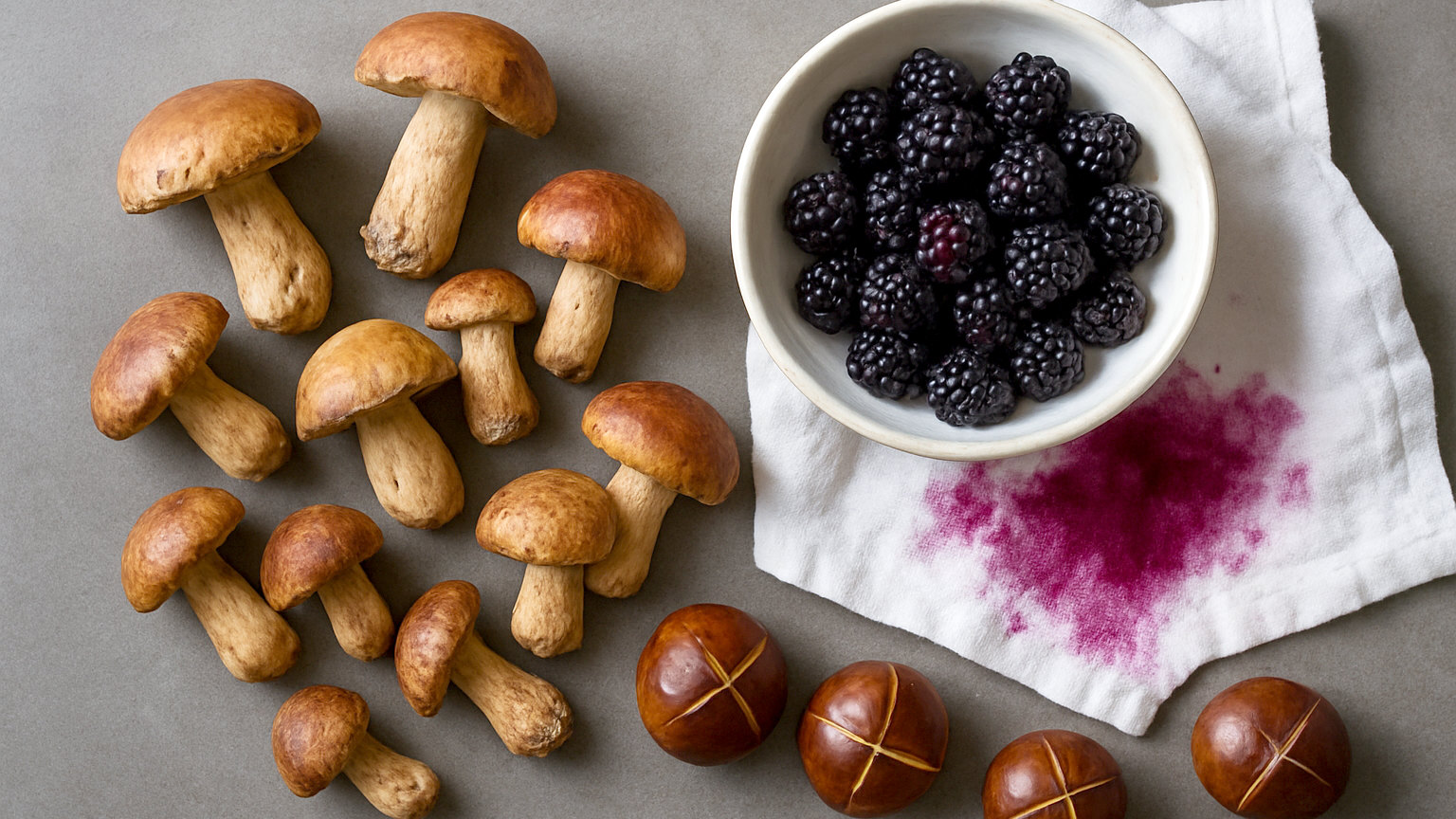
Boletus edulis, also called penny bun or porcini, a thick stemmed mushroom with a sponge underneath rather than gills.
It is among the most prized and dries exceptionally well.
Where do they grow?
Woodland, grassland and on dead wood, with many species associated with particular trees. Knowing the tree is part of the identification.
When is the season?
Late August to November, depending on rainfall. A wet September usually means a good year.
What is chicken of the woods?
A bright yellow bracket fungus growing on trees, with a firm texture. It disagrees with a minority of people even when correctly identified, so try a small amount first.
Avoid any growing on yew.
Are there rules about picking?
Many sites prohibit it entirely, including most nature reserves and some National Trust land. Permission is needed on private land.
Codes of practice advise picking only a small proportion of what is present.
Can they be dried or frozen?
Ceps dry exceptionally well and concentrate in flavour. Most others are better cooked and then frozen.
Never freeze them raw, since they turn to water.
How should they be cooked?
Dry fried first to drive off water, then finished in butter with garlic and parsley. Never wash them under a tap, since they absorb water.
Brush them clean instead.
What is the golden rule?
If there is any doubt at all, do not eat it. No mushroom is worth the risk, and the good ones will still be there next year.
Experienced foragers discard anything they are not completely certain of, which is why they stay experienced.
Can you learn from a book or an app?
They are useful for learning and not sufficient for deciding. Photographs cannot show smell, texture, spore print or how a mushroom bruises.
Several fatal poisonings have followed app identifications.
Should you pick with a knife or pull them?
Cutting leaves the mycelium intact, though seeing the whole base is often necessary for identification, so lift one carefully to check.
What about shop bought wild mushrooms?
Fishmongers, greengrocers and supermarkets sell identified wild mushrooms in season, which is the sensible route for most people.
If you suspect mushroom poisoning, seek urgent medical help and take a sample of what was eaten.
Next, try Sloe Gin, or see the rest of our Seasonal recipes.