
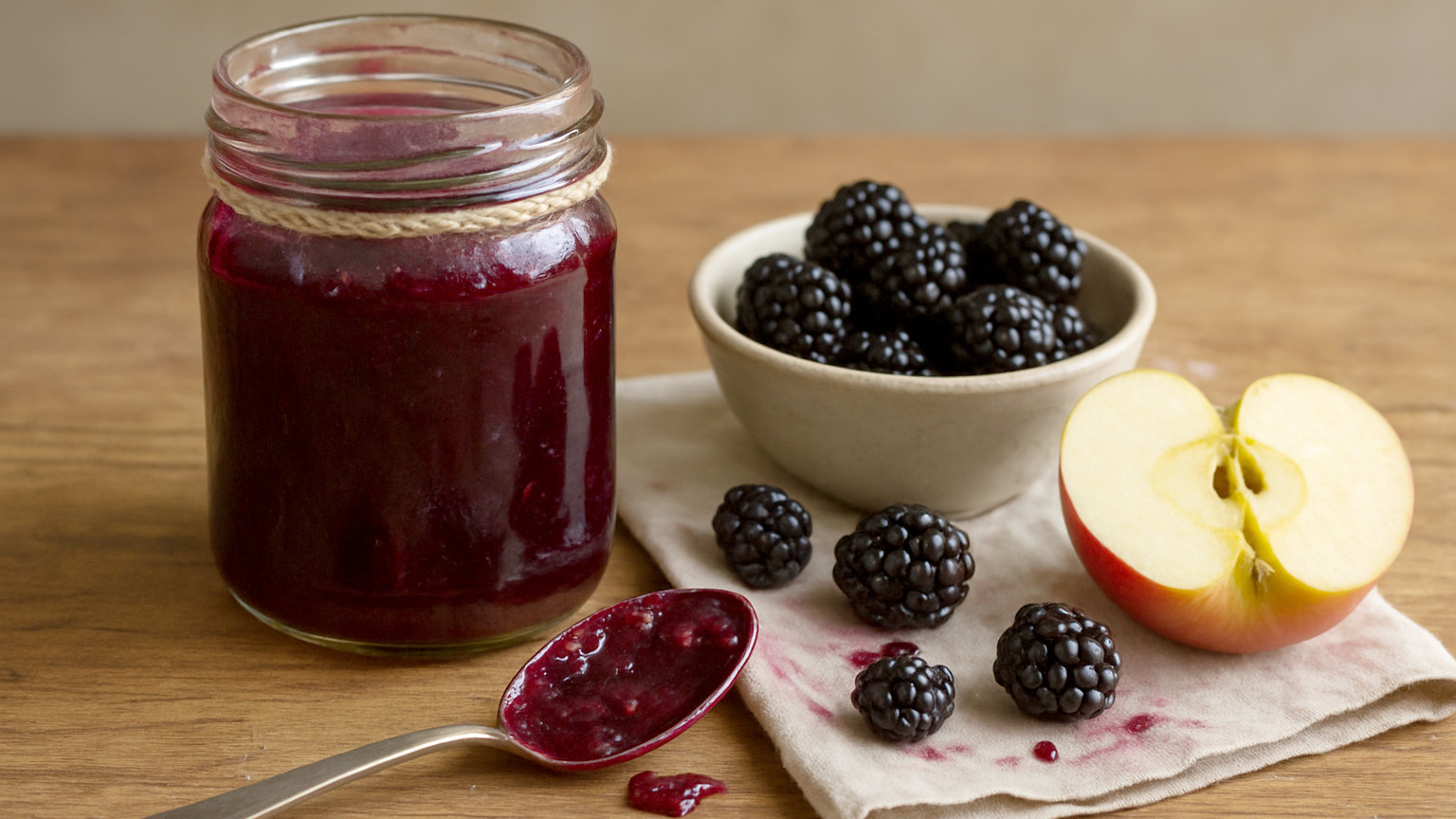
Damsons are small, dark and far too astringent to eat raw, and they make one of the best jams there is. They are high in both pectin and acid, so unlike strawberries they set easily without help. The only real question is the stones, and the answer is to let them float up and skim them off.
What do you need for about 5 jars?
- 1kg damsons, washed
- 1kg granulated sugar
- 150ml water
- A knob of butter, optional
How do you make it?
- Put a few saucers in the freezer.
- Put the damsons and water in a wide heavy pan.
- Simmer gently for 20 minutes until the fruit collapses.
- Add the sugar and stir over a low heat until fully dissolved.
- Bring to a rolling boil.
- Skim off the stones as they float to the surface.
- Boil hard for 10 to 15 minutes, testing on a cold saucer.
- Stand for 10 minutes, then pot into hot sterilised jars.
Let the stones float up and skim them off with a slotted spoon. Stoning a kilo of damsons by hand is an hour of work and the boiling does it for you in about two minutes.
How do you know you have them all?
Count roughly as you go, or weigh the skimmed stones and compare against the fruit count.
Warn anyone eating it that the odd stone may have escaped, particularly for children.
Why does it set so easily?
Damsons are high in pectin and acid, which are the two things a set needs alongside sugar.
No lemon juice or jam sugar is required.
Do they need extra water?
Only a little, about 150ml per kilo, to stop them catching before the juices run. Damsons release plenty of their own.
How is a damson different from a plum?
Damsons are smaller, darker, more oval and considerably more astringent. They are barely edible raw.
Plums are sweeter, lower in pectin and better eaten fresh.
How much does a kilo make?
About five 350g jars, which is a good year of jam for most households.
The recipe scales cleanly if you have a glut.
Where do damsons grow?
In old hedgerows and orchards, particularly in Westmorland, Shropshire and the Welsh borders.
The Lyth Valley in Cumbria is the best known area.
What is damson cheese?
A thick set fruit paste cooked down until it can be turned out and sliced, served with cold meat and cheese rather than as a jam.
It keeps for a year or more.
When are they in season?
September and early October, later than most plums.
How do you test for setting point?
Drop a teaspoon onto a frozen saucer, wait a minute and push it. If it wrinkles it is done. On a thermometer, 105C.
Is it very sharp?
Sharper than plum jam, which is the point of it. Equal weights of fruit and sugar balances it without losing the character.
What else can you make?
Damson gin, damson cheese which is a thick set paste eaten with meat and cheese, and chutney.
Damson cheese was traditionally served with roast lamb.
Should they be washed?
Rinse them and pick out leaves and stalks. There is no need to dry them, since water goes into the pan anyway.
Can you use plums instead?
Yes, though plums are lower in pectin and may need lemon juice. The stones float in the same way.
Why simmer the fruit before the sugar?
Sugar firms the skins, so damsons cooked with sugar from the start stay tough. Twenty minutes of gentle simmering breaks them down first.
The same principle applies to marmalade peel.
Should the jam be skimmed?
Skim the foam along with the stones. A knob of butter stirred in at the end disperses the rest.
How long does it keep?
A year unopened in a cool dark cupboard and a month refrigerated once opened.
Discard any jar showing mould, in line with Food Standards Agency guidance.
For something along the same lines, see Roast Pheasant, or browse all our Seasonal recipes.