
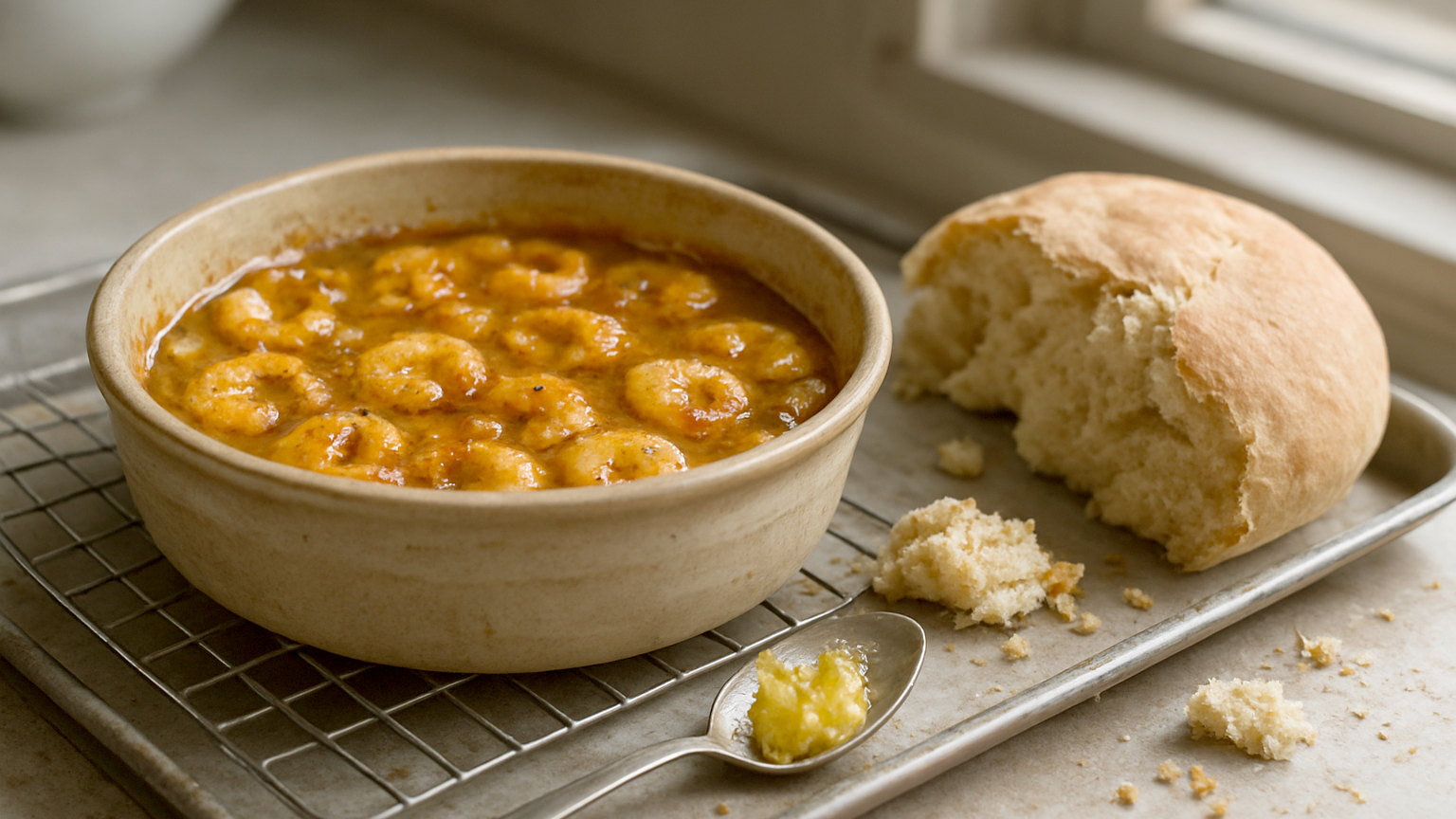
Potted shrimps are small brown shrimps set in spiced butter and served cold with toast. They come from Morecambe Bay, where brown shrimps have been fished and hand picked for generations. Potting in butter was originally a way of keeping them, and the butter has become as much the point of the dish as the shrimps.
What do you need for 4 people?
- 250g cooked peeled brown shrimps
- 200g unsalted butter
- Half a teaspoon of ground mace
- A good pinch of cayenne pepper
- A grating of nutmeg
- 1 bay leaf
- A squeeze of lemon and black pepper
- Hot toast to serve
How do you make them?
- Melt 150g of the butter gently with the bay leaf, mace, cayenne and nutmeg.
- Leave to infuse over the lowest heat for 10 minutes without browning.
- Remove the bay leaf and stir in the shrimps.
- Warm through for 2 minutes only.
- Add lemon and pepper, and salt only if needed.
- Divide between four ramekins and press down lightly.
- Clarify the remaining butter and pour a layer over each to seal.
- Chill for at least 4 hours until firmly set.
Warm the shrimps for two minutes and no more. They are already cooked and they toughen quickly. The butter should be warm enough to take on the spice, not hot enough to cook anything.
How do you clarify butter?
Melt it gently and leave it to settle. Skim the foam from the top and pour off the clear yellow fat, leaving the milky solids behind.
Clarified butter sets clear and keeps far longer than whole butter.
How do you peel brown shrimps?
By hand, and it is slow work, which is why they are usually bought ready peeled. Morecambe Bay picking was traditionally done by hand at home.
Why brown shrimps?
They are small, sweet and firm, quite different from the larger pink or tiger prawns. Morecambe Bay is the main British source.
Larger prawns are the wrong texture and go rubbery.
Should the butter be browned?
No. Melt it gently so it stays pale and clean tasting, since browned butter would overwhelm the delicate shrimps.
Why mace rather than nutmeg?
Mace is the outer covering of the nutmeg seed and is milder and more floral. It is the traditional spice for potting.
Both go in, and mace should dominate.
Do they need salt?
Very little. Brown shrimps are cooked in seawater and are already salty, so taste before adding any.
Use unsalted butter for the same reason.
Why seal them with butter?
It excludes air, which is what preserved them historically. A sealed pot keeps considerably longer than an unsealed one.
What size pots should you use?
Small ramekins of about 100ml, packed to within a centimetre of the rim so there is room for the butter seal.
Should they be served cold?
Take them out of the fridge 20 minutes before serving so the butter softens slightly.
Straight from the fridge the butter is hard and the flavour is muted.
Can other things be potted?
Crab, salmon, smoked mackerel, chicken liver and beef were all traditionally potted in butter for keeping.
The method is the same: cook, season, pack tightly and seal with clarified butter.
What should you serve with them?
Hot brown toast, lemon and cayenne. Nothing else is needed.
Where does Morecambe Bay come in?
The bay has vast shallow sands that suit brown shrimps, and they have been fished there for centuries, traditionally with horse drawn nets.
The sands are dangerous with fast tides and quicksand and should never be walked without a guide.
Can you use frozen shrimps?
Yes, and most brown shrimps are sold cooked and frozen. Defrost them in the fridge and pat them thoroughly dry first.
Wet shrimps make the butter cloudy and stop it setting cleanly.
How much per person?
About 60g of shrimps each as a starter, set in a small ramekin. It is very rich.
How long do they keep?
Three days refrigerated if properly sealed with butter, and they should be kept chilled throughout, in line with Food Standards Agency guidance on shellfish.
Next, try Lancashire Hotpot: The Traditional Recipe, or see the rest of our Regional recipes.


