
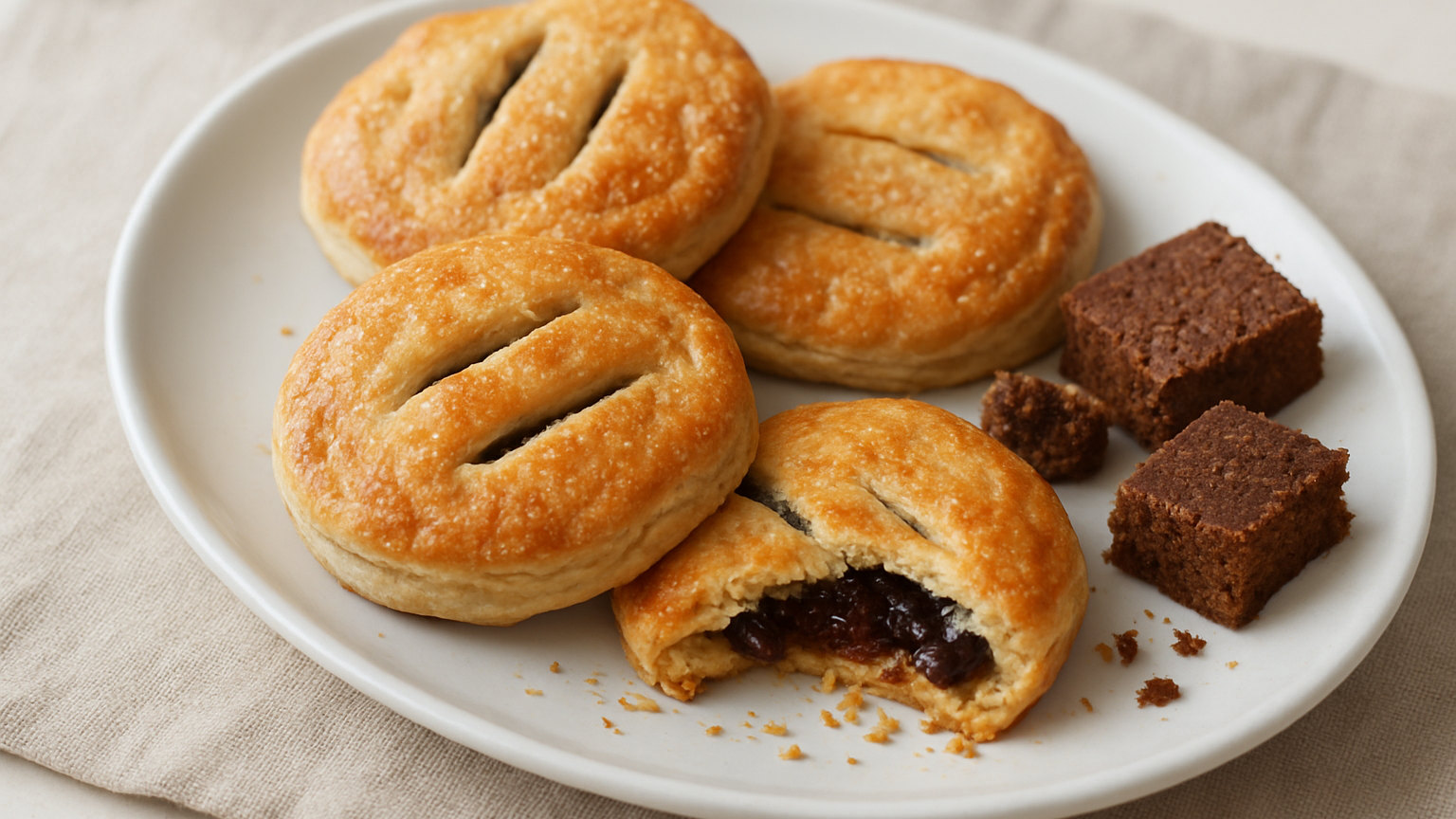
Eccles cakes are rounds of puff pastry filled with currants cooked in butter and sugar, flattened, slashed three times and baked until the tops caramelise. They come from Eccles in Lancashire, where they have been sold since the eighteenth century. The classic accompaniment in the north is a wedge of Lancashire cheese, which sounds odd and is very good.
What do you need for 8 cakes?
- 500g all butter puff pastry
- 50g butter
- 200g currants
- 75g dark brown soft sugar
- 1 teaspoon mixed spice and a good grating of nutmeg
- Zest of 1 lemon
- 1 egg white and demerara sugar for the tops
How do you make them?
- Melt the butter and stir in the currants, sugar, spices and lemon zest.
- Cool the filling completely.
- Roll the pastry thinly and cut 8 rounds about 12cm across.
- Put a heaped tablespoon of filling in the centre of each.
- Gather the edges over the filling and pinch firmly to seal.
- Turn each over so the seam is underneath and press into a flat round.
- Cut three slashes across the top.
- Brush with egg white, scatter with demerara and bake at 200C fan for 15 to 18 minutes.
Press them flat enough that the currants show through the pastry. An Eccles cake should be about 2cm deep, not a domed parcel. Flattening is what gives the caramelised, almost translucent top.
Why three slashes?
They let steam escape so the cakes do not burst, and three is the traditional number.
Cut through the pastry only, not into the filling.
How do they differ from Banbury cakes?
Eccles cakes are round and come from Lancashire. Banbury cakes are oval, from Oxfordshire, more heavily spiced and usually contain mixed peel.
The shape is the quickest way to tell them apart.
Should they be served warm?
Warm from the oven is best, when the sugar on top is still crisp and the filling soft. They are also good cold with cheese.
Reheat at 160C fan for five minutes.
What is a Chorley cake?
The Lancashire neighbour, made with shortcrust rather than puff pastry, flatter, less sweet and not sugared on top.
It is traditionally eaten buttered, which an Eccles cake is not.
Why egg white rather than whole egg?
It gives a crisp frosted finish with the sugar rather than a golden glaze, which is the traditional appearance.
Why must the filling be cold?
Warm filling melts the butter in the pastry before it reaches the oven, giving a greasy base and poor layers.
How do you seal them properly?
Gather the pastry edges up over the filling like a purse and pinch them together hard, then turn the cake seam side down so its own weight holds it shut.
Should the currants be soaked?
The melted butter does that job. Very dry currants can be soaked in hot tea for twenty minutes and patted dry first.
Why is the filling buttered?
Melted butter coats the currants and dissolves the sugar, so the filling becomes a sticky mass rather than loose dried fruit that would fall out.
It also stops the currants drying out and burning.
Why cheese with them?
A wedge of crumbly Lancashire against a sweet spiced pastry is a northern habit and the salt and acidity balance the sugar.
Wensleydale works equally well.
How much filling per cake?
A heaped tablespoon, about 40g. Overfilled cakes burst at the seam as the currants expand and the filling caramelises onto the tray.
A little leakage is normal and does no harm.
How thin should the pastry be?
About 3mm. The pastry is a wrapper rather than the substance of the cake, and thick pastry gives a doughy result.
Ready rolled all butter puff is a perfectly reasonable shortcut.
Where do they come from?
Eccles, near Manchester, where they were sold commercially from the 1790s onwards from a shop opposite the parish church.
The name is not protected, so they are made everywhere.
How long do they keep?
Three days in a tin, best warm from the oven. They freeze raw for three months and bake from frozen with 5 extra minutes.
If that was useful, Barm Cakes, Baps and Oven Bottoms covers related ground, and there is plenty more in Regional recipes.


