
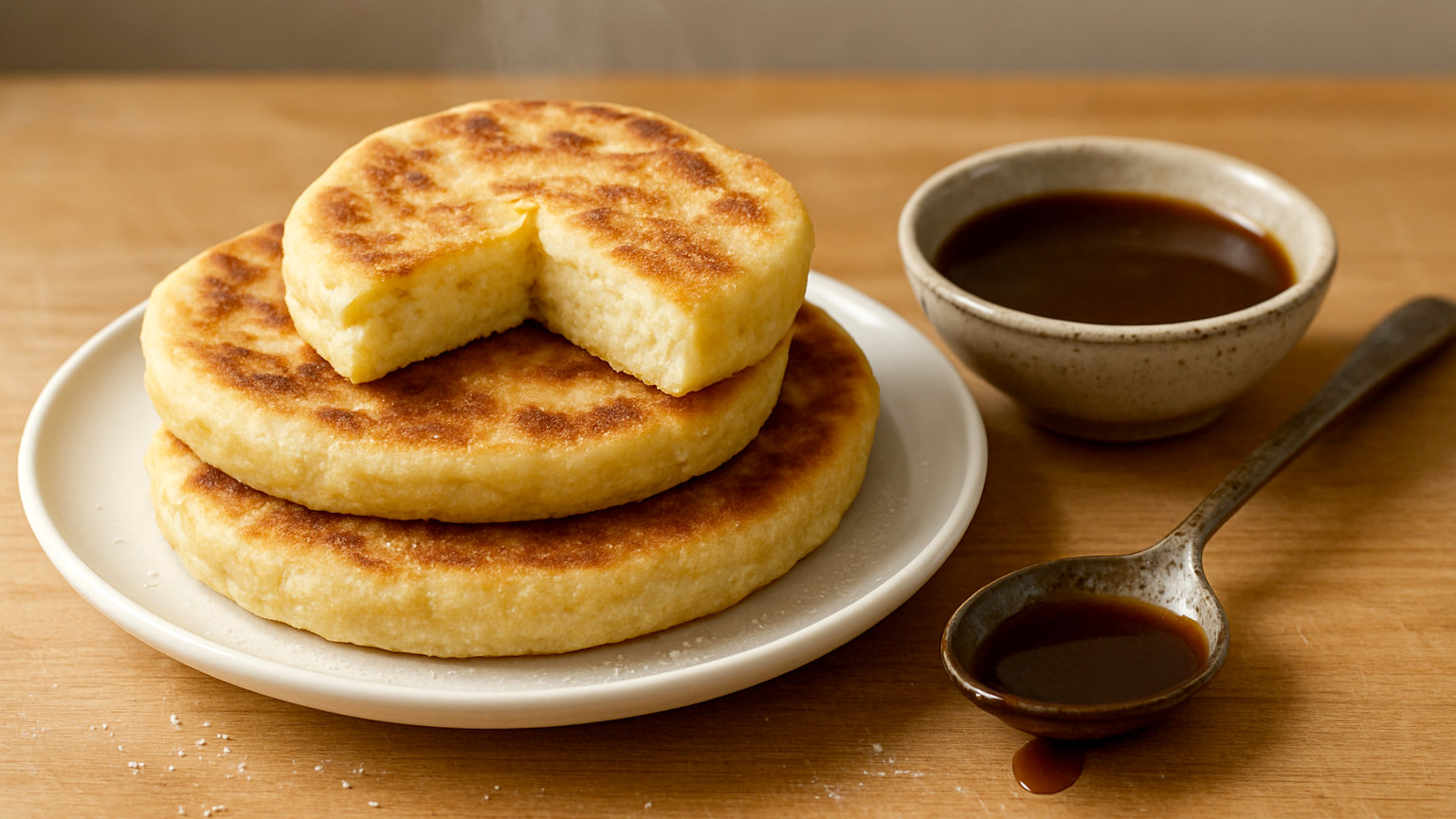
Tattie scones are flat potato cakes cooked on a dry girdle, a fixture of the Scottish breakfast and one of the best uses for leftover mash. They contain very little flour, which is the point: too much and they become heavy and taste of raw pastry rather than potato.
What do you need for 8 scones?
- 500g floury potatoes, peeled and boiled
- 50g butter
- 100g plain flour, plus extra for rolling
- Half a teaspoon of salt
- Half a teaspoon of baking powder, optional
How do you make them?
- Boil the potatoes until tender, drain and steam dry thoroughly.
- Mash them with the butter and salt while still hot, with no milk.
- Let them cool slightly but stay warm.
- Work in the flour quickly to make a soft dough.
- Roll out on a floured surface to about 5mm.
- Cut into rounds, or into a large circle divided into quarters.
- Cook on a dry girdle or heavy frying pan over a medium heat.
- Give them 3 to 4 minutes a side until browned in patches.
Work the flour in while the mash is still warm. Warm potato binds with the flour readily and cold mash needs considerably more flour to hold together, which gives a heavy, doughy scone.
What is the ratio?
Roughly one part flour to five parts cooked potato by weight. That is the minimum that will hold together.
More flour makes them easier to roll and worse to eat.
Why no milk in the mash?
The drier the mash the less flour is needed. Milk adds moisture that has to be compensated for.
Butter adds richness without the same problem.
Should the pan be greased?
No. They are cooked on a dry girdle, which is the traditional method, and they contain enough butter not to stick in a decent pan.
A light wipe of oil does no harm in a pan that catches.
Are they the same as potato farls?
Very close. Northern Irish potato bread is made the same way and cut into farls, and it appears in an Ulster fry exactly as tattie scones appear in a Scottish breakfast.
How thick should they be?
About 5mm. Thicker ones stay doughy in the middle and thinner ones dry out and crack.
Should they be cooked in advance?
They can be cooked, cooled and reheated in a frying pan, which is how they usually appear at breakfast.
Fried in bacon fat is considerably better than reheating them dry.
How are they eaten?
Fried in bacon fat as part of a Scottish breakfast, which is the classic use. Also buttered on their own, or with cheese.
They are reheated by frying rather than in a toaster.
How do you shape them?
Roll the dough into a circle about 20cm across and cut it into quarters, which are farls, or stamp out rounds with a cutter.
Farls are traditional and waste no dough.
Do they need baking powder?
Not traditionally. A pinch lightens them slightly and most old recipes leave it out.
Why cook them dry?
A dry pan gives the characteristic patchy browning and keeps them from becoming greasy. The fat comes later, when they are fried for breakfast.
They should be dry and slightly floury when they come off the girdle.
Can they be made with leftover mash?
Yes, and it is the usual way. Warm the mash gently first so it binds properly, and expect to need a little more flour if it contains milk.
Why are they called scones?
Scone in Scotland covers a wider range of griddle baked breads than it does in England, including tattie scones, soda scones and drop scones.
They are nothing like an English afternoon tea scone.
Which potatoes work best?
Floury varieties such as Maris Piper or King Edward, which mash dry and fluffy.
Waxy potatoes make a wet, sticky dough that needs too much flour.
How long do they keep?
Two days refrigerated and they freeze for three months, layered with paper.
Cook them from frozen in a hot dry pan, in line with Food Standards Agency guidance on reheating.
Next, try Burns Supper: What It Involves, or see the rest of our Regional recipes.


