
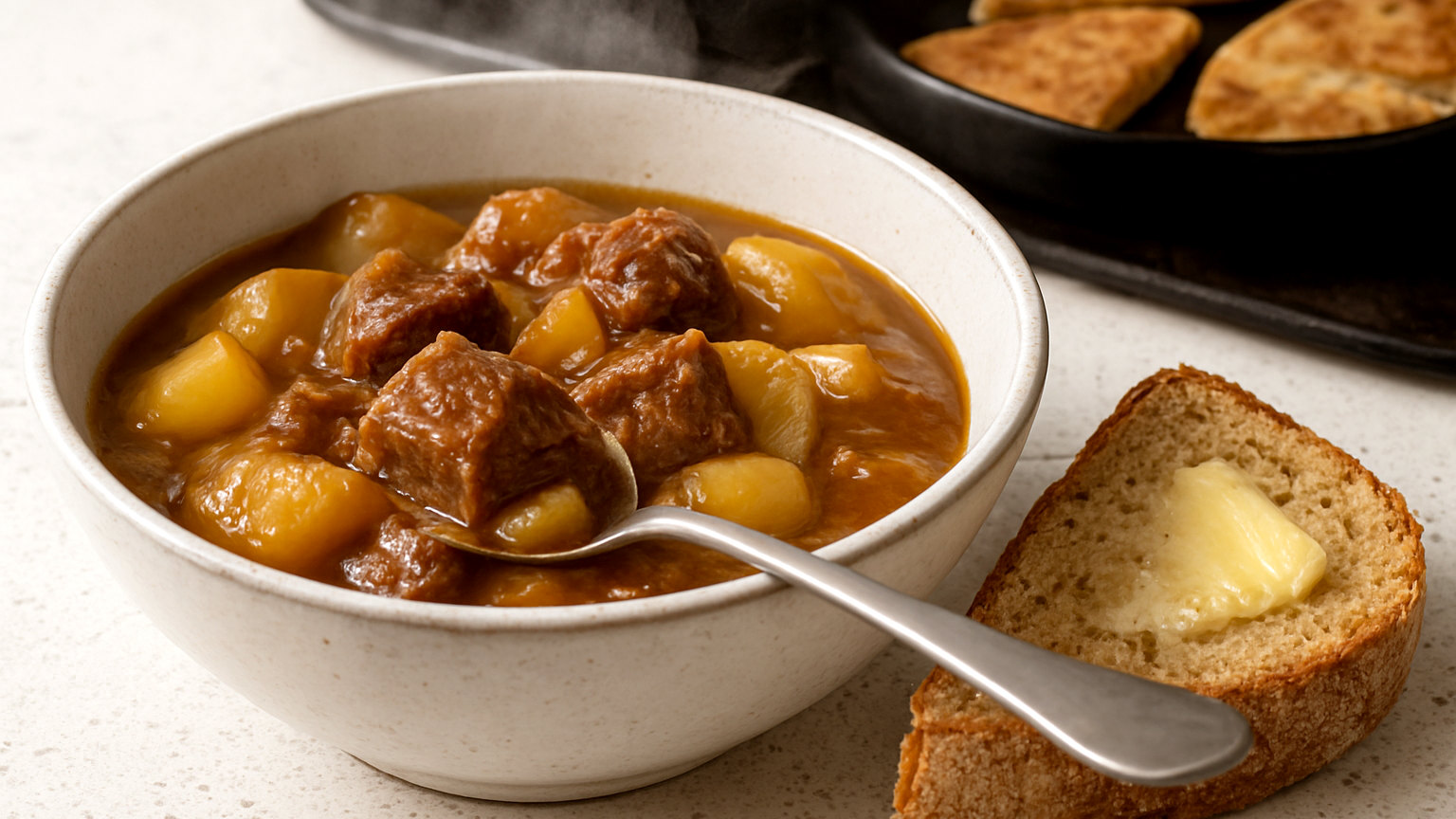
Irish stew is lamb or mutton, potato and onion, cooked slowly with water and nothing else. That is the traditional version and it generates a good deal of argument, since a great many people add carrot, barley and stock. Both versions are worth making. What they share is that the meat is not browned and the potato does the thickening.
What do you need for 6 people?
- 1.2kg lamb neck chops or shoulder on the bone
- 1.2kg floury potatoes, half sliced thickly and half left in large chunks
- 3 large onions, thickly sliced
- About 800ml water or light lamb stock
- 2 bay leaves and a few sprigs of thyme
- Salt and plenty of black pepper
- Chopped parsley to finish
How do you make it?
- Heat the oven to 150C fan, 170C conventional, gas mark 3.
- Layer half the sliced potato in the base of a heavy casserole.
- Add the lamb, onions, bay and thyme, seasoning heavily between layers.
- Top with the remaining potato, arranging the chunks on top.
- Pour in enough water to come about three quarters of the way up.
- Bring to a simmer on the hob, then cover tightly.
- Cook in the oven for 2 hours 30 minutes.
- Season again and finish with parsley.
Do not brown the meat. Irish stew is a white stew, and browning changes the flavour entirely. The pale, clean taste of the slowly simmered lamb is the point of the dish.
Why two kinds of potato?
The sliced potato at the bottom disintegrates and thickens the liquid. The chunks on top hold their shape and are served as potatoes.
Using only chunks gives a thin, watery stew.
Should there be carrots?
Not in the strict traditional version, which is lamb, potato and onion alone. Carrots and barley are common additions and many households consider them essential.
Neither camp is going to persuade the other.
Which cut of lamb?
Neck chops on the bone are the classic choice. Shoulder works and shank is excellent.
The bones are what give the liquid body, so avoid boneless cuts.
Lamb or mutton?
Mutton is traditional and considerably more flavourful. It needs an extra hour of cooking.
Hogget, between one and two years old, is a good middle ground.
How is it different from a hotpot?
Lancashire hotpot has a neatly arranged sliced potato crust browned on top and is often made with kidney. Irish stew has potato throughout and is not browned.
Does it need thickening?
No flour and no cornflour. The sliced potato at the base breaks down completely and thickens it, which is why the two potato treatment matters.
How is it different from cawl?
Cawl is soupier, contains leeks and a wider range of root vegetables, and is often served as two courses.
How much liquid should go in?
Enough to come about three quarters of the way up the ingredients. The potatoes and onions release a good deal more as they cook.
It should end up thick rather than soupy.
What should you serve with it?
Soda bread and butter, and nothing else. The potatoes are already in the pot.
Why is it cooked so slowly?
Neck and shoulder are full of connective tissue, which needs two and a half hours of gentle heat to break down into gelatine.
Rushed, the meat is tough and the liquid thin.
Should the fat be removed?
Chill it overnight and the fat sets on the surface and lifts off in a sheet. Leave a little for flavour.
This is another argument for making it a day ahead.
Can it be made on the hob?
Yes, on the lowest setting for the same time, though the oven is more even and needs no attention.
How long does it keep?
Three days refrigerated and it is better on the second day. It freezes for three months.
Cool it quickly, refrigerate within two hours and reheat once only until piping hot, in line with Food Standards Agency guidance.
For something along the same lines, see Comber Potatoes and Northern Irish Produce, or browse all our Regional recipes.


