
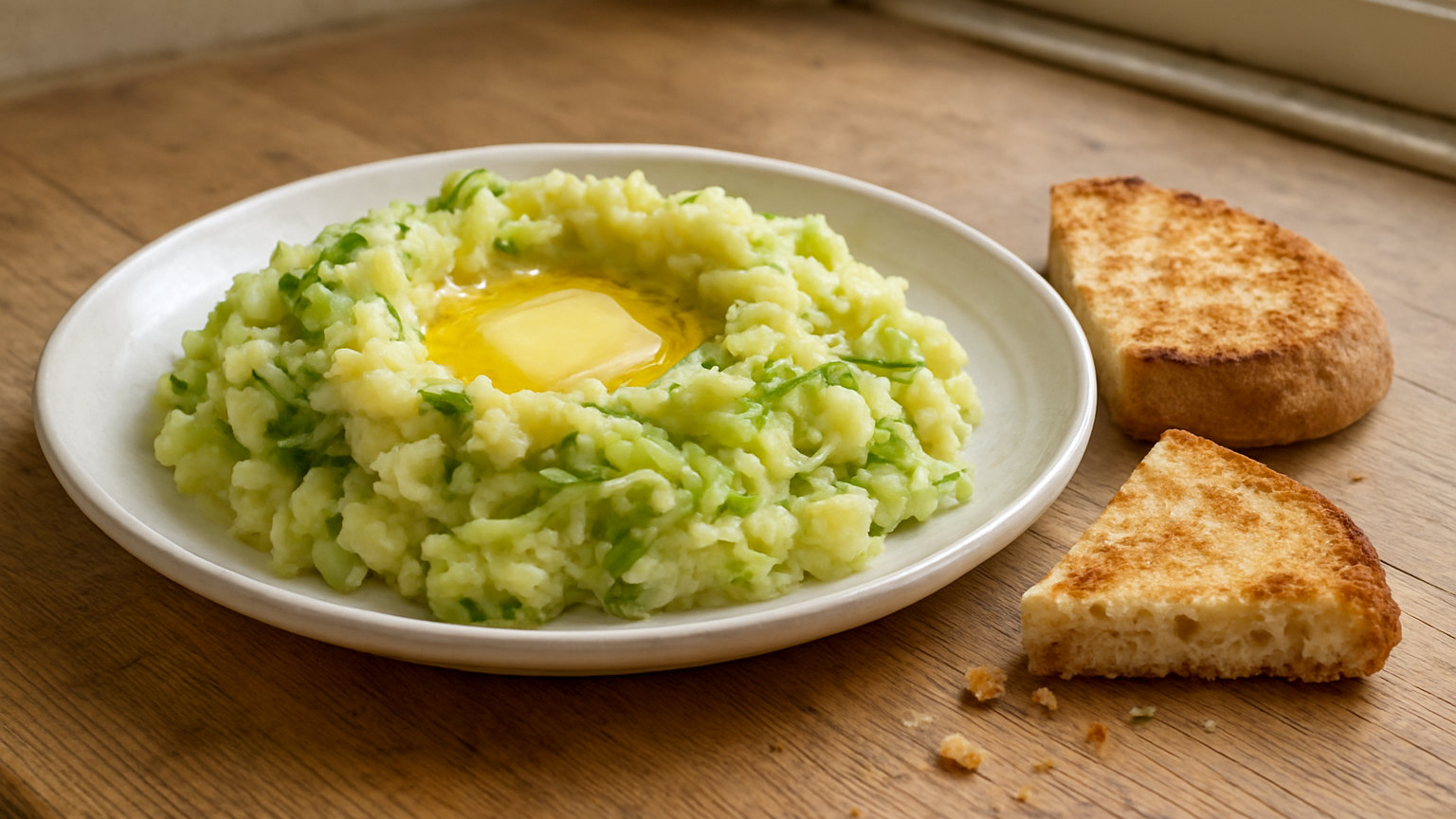
Champ and colcannon are the two great Irish potato dishes and they are frequently confused. Champ is mashed potato with spring onions, or scallions, steeped in hot milk. Colcannon contains cabbage or kale. Both are served in a mound with a well in the middle holding melted butter, and each forkful is dipped into it.
What do you need for 4 people?
- 1.2kg floury potatoes, peeled and quartered
- 250ml whole milk
- 1 bunch of spring onions, finely sliced, greens and whites
- 100g butter, plus more for the well
- For colcannon: 300g savoy cabbage or kale, finely shredded
- Salt and white pepper
How do you make champ?
- Boil the potatoes until tender, about 20 minutes.
- Meanwhile put the milk and sliced spring onions in a small pan.
- Bring to just below a simmer, then take off the heat and leave to steep for 10 minutes.
- Drain the potatoes and steam dry for 5 minutes.
- Mash them thoroughly with the butter.
- Beat in the hot milk and spring onions.
- Season with salt and white pepper.
- Pile into bowls, make a well in each and fill with butter.
Steep the spring onions in hot milk rather than stirring them in raw. The heat softens them and pushes the flavour through the whole dish, where raw scallions stay sharp and sit in it as separate pieces.
How do you make colcannon?
Cook the shredded cabbage or kale in boiling water for 4 minutes, drain thoroughly and squeeze out the water, then fold it into the finished mash.
Some versions cook it in butter instead, which is richer.
Why the well of butter?
It is the traditional way to serve both dishes, and it means each forkful is dipped rather than the butter being mixed evenly through.
It looks generous because it is.
Which potatoes should you use?
Floury varieties such as Kerr Pink, Maris Piper or King Edward, which mash light and fluffy.
Waxy potatoes go gluey when mashed.
Why steam the potatoes dry?
Wet potatoes give watery mash. Five minutes in the colander over the empty pan drives off the surface moisture.
Can it be made ahead?
The mash can be made an hour ahead and kept warm over a pan of hot water, though it is best fresh.
Add the butter well only at the moment of serving.
Should the milk be hot?
Always. Cold milk added to hot potato cools the mash and makes it heavy and slightly gluey.
Should the potatoes be riced?
A ricer or a mouli gives the lightest, smoothest result. A hand masher is perfectly adequate and a food processor ruins it entirely.
Never use a blender on potato, which turns the starch to glue.
What are scallions?
The Irish and Scottish name for spring onions, which is what the dish uses. Both the white and green parts go in.
Can kale be used instead of cabbage?
Yes, and curly kale or cavolo nero both work well. Strip the tough stalks and shred it finely, since kale needs longer than cabbage.
Squeeze it dry before it goes into the mash.
When is colcannon eaten?
Year round, and particularly at Halloween, when charms were traditionally hidden in it to tell fortunes.
What is the difference between them?
Champ has spring onions and no greens. Colcannon has cabbage or kale, and may or may not contain spring onions as well.
The two names are frequently used interchangeably, which is wrong but common.
How much butter is traditional?
A great deal. About 100g in the mash for four people, plus more melted in the well of each serving.
It is not a light dish and it is not meant to be.
What is it served with?
Bacon, sausages or a piece of ham, or on its own as a supper with the butter well.
How long does it keep?
Two days refrigerated. Leftovers fry into excellent potato cakes.
Cool quickly, refrigerate within two hours and reheat once only until piping hot, in line with Food Standards Agency guidance.
Worth reading next: Boxty. There is more in our Regional recipes.


