
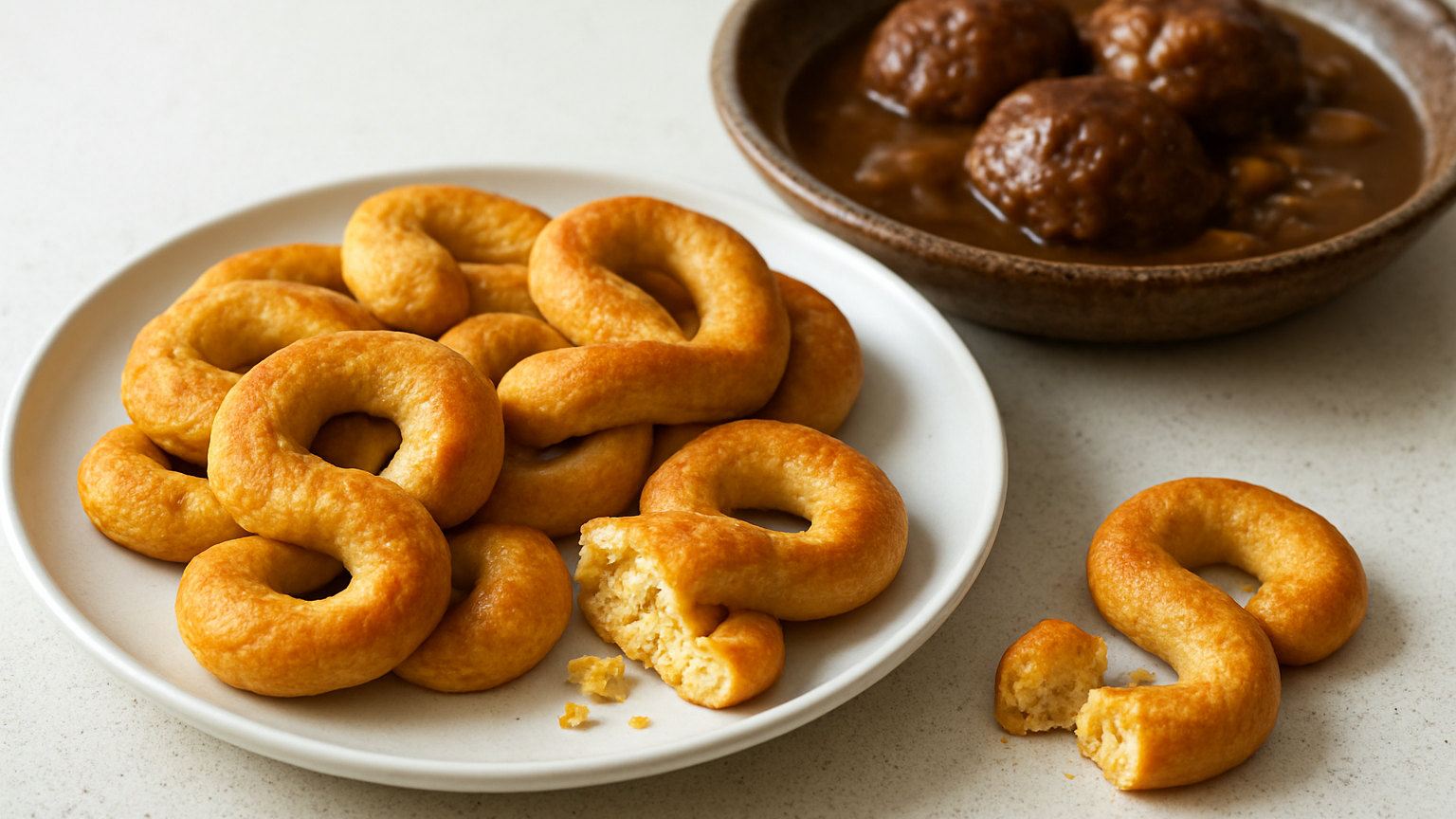
Bosworth jumbles are rich buttery biscuits flavoured with lemon and twisted into an S shape or a loose knot. The traditional story is that the recipe was found on Bosworth Field after the battle of 1485, dropped by the cook of Richard the Third. Jumbles of various kinds were made across England for centuries, so the Bosworth link is legend rather than record.
What do you need for about 24 biscuits?
- 225g butter, softened
- 225g caster sugar
- 1 egg, beaten
- 350g plain flour
- Zest and juice of 1 lemon
- 1 teaspoon caraway seeds, optional
- A pinch of salt
How do you make them?
- Cream the butter and sugar until pale and light.
- Beat in the egg, lemon zest and juice.
- Fold in the flour, salt and caraway to make a soft dough.
- Chill for at least 1 hour until firm.
- Heat the oven to 160C fan, 180C conventional, gas mark 4.
- Roll walnut sized pieces into ropes about 12cm long.
- Twist each into an S shape or loose knot on a lined tray.
- Bake for 12 to 15 minutes until pale gold at the edges.
Chill the dough hard before rolling. It is very rich in butter and warm dough cannot be rolled into ropes at all, let alone twisted into a shape that survives the oven.
What is a jumble?
An old English biscuit, made since at least the sixteenth century, characterised by being formed into knots, rings or twists.
The name may come from gemmel, an old word for a twin finger ring.
What is the Bosworth story?
Tradition holds that the recipe was found on the battlefield after Richard the Third was defeated in 1485, dropped by his cook.
It is a good story and there is no evidence for it.
How rich is the dough?
Very. Equal weights of butter and sugar to a larger quantity of flour, which is why chilling is essential before shaping.
It handles more like a shortbread than a biscuit dough.
Why the S shape?
It is the traditional form of a jumble and it is what identifies them. Rings and simple knots are equally correct.
Should they contain caraway?
Historic recipes frequently do. Caraway was far more common in English baking than it is now, and it gives a distinctly old fashioned flavour.
It can be left out entirely.
Why does the dough need to be soft?
A stiff dough cracks when twisted. It should be soft enough to roll into a rope and firm enough from chilling to hold the shape.
Do they spread in the oven?
A little, so leave a couple of centimetres between them. Well chilled dough spreads considerably less.
How are they different from Shrewsbury biscuits?
Jumbles are richer, twisted rather than cut, and contain no fruit. Shrewsbury biscuits are rolled, cut and usually studded with currants.
Can they be made as rings?
Yes, joining the ends of each rope into a circle. Rings, knots and S shapes are all traditional jumble forms.
Should they be pale?
Yes, coloured only at the edges. They firm as they cool, and a golden brown jumble has been overbaked.
Why lemon juice as well as zest?
The zest gives the aroma and the juice sharpens the flavour and loosens the dough slightly, which helps with rolling.
Can they be iced?
A thin lemon glaze is a modern addition. Traditionally they are dusted with sugar or left plain.
How long should they be?
Roll each piece into a rope about 12cm long and 1cm thick before twisting, which gives a biscuit that holds together.
Thinner ropes break during shaping and thicker ones stay soft in the middle.
Where is Bosworth Field?
Near Market Bosworth in Leicestershire, where the Battle of Bosworth was fought in 1485, ending the Wars of the Roses.
There is a visitor centre on the site.
How long do they keep?
Two weeks in an airtight tin and they freeze as shaped raw biscuits for three months.
For something along the same lines, see Shropshire Fidget Pie, or browse all our Regional recipes.


