
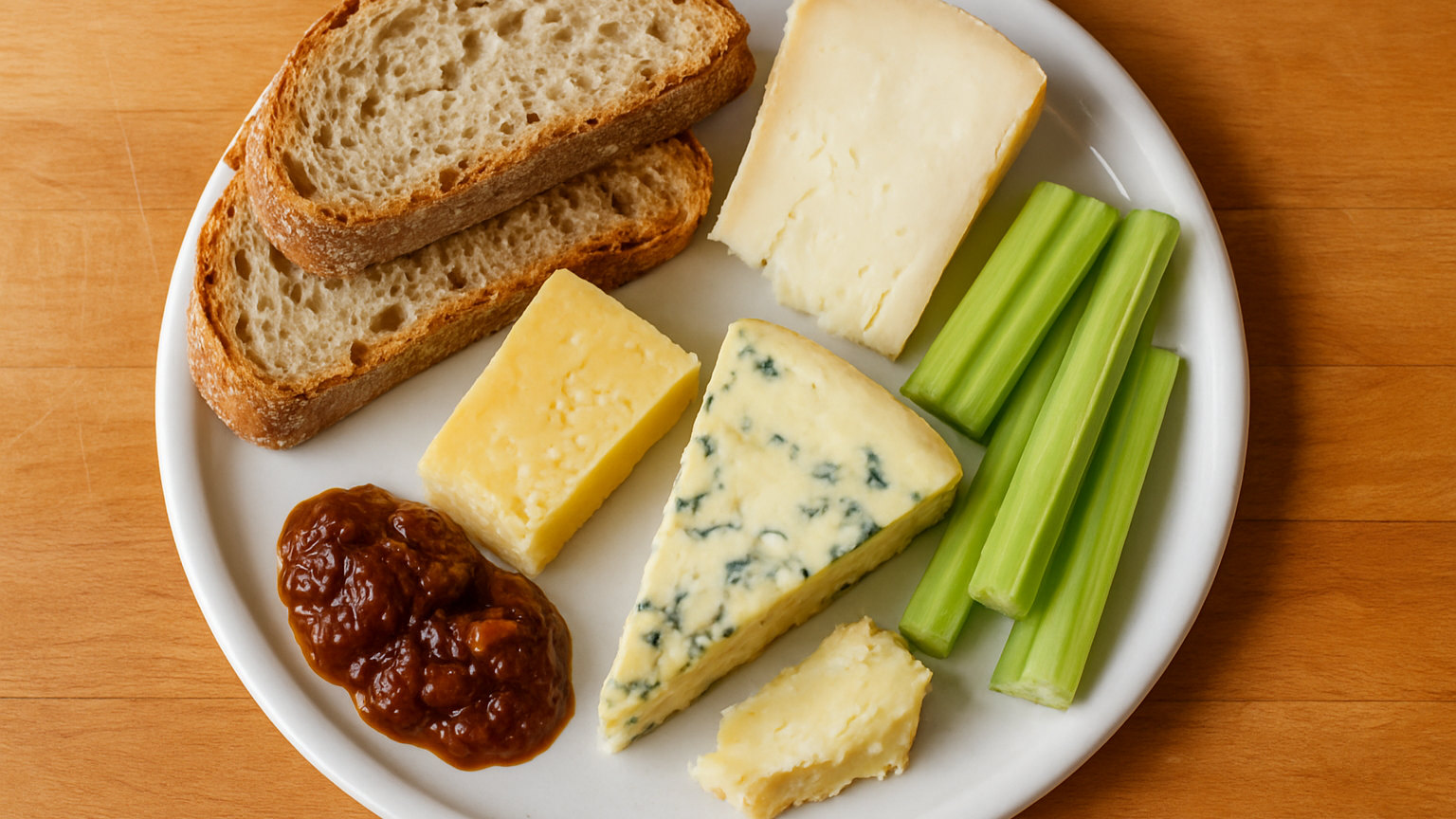
English cheese is far wider than the block of cheddar in most fridges. The territorial cheeses, named after the counties that made them, each have a distinct texture and flavour, and several hold protected status that ties them to a specific area and method. Knowing four or five of them makes a considerably better cheese board.
What is cheddar?
Originally from Somerset and now made worldwide, since the name is not protected. West Country Farmhouse Cheddar is protected and must be made in Somerset, Devon, Dorset or Cornwall.
Mature cheddar is firm, savoury and sharp. Cheddaring, the process of stacking and turning curd, is what gives it its texture.
What is Stilton?
Stilton can only be made in Derbyshire, Leicestershire and Nottinghamshire. It holds protected status and, oddly, cannot legally be made in the Nottinghamshire village of Stilton itself.
Blue Stilton is rich and salty with blue veining. White Stilton is the young unveined cheese, mild and crumbly.
What is Wensleydale like?
A Yorkshire cheese, crumbly, moist and mildly acidic with a fresh, slightly lemony flavour.
Yorkshire Wensleydale holds protected status. It is traditionally eaten with fruit cake or apple pie.
What about Lancashire?
Three types exist. Creamy Lancashire is young and buttery, tasty Lancashire is matured and sharper, and crumbly Lancashire is a more modern, drier style.
Creamy Lancashire is the best melting cheese in England and is what a proper cheese on toast wants.
What is Cheshire?
One of the oldest named English cheeses, mentioned in the Domesday Book. Crumbly, slightly salty and moist, from the salt rich pastures of the county.
It comes in white, red and blue versions.
How should cheese be stored?
Wrapped in waxed paper in the fridge, not cling film, which makes it sweat. Rewrap it each time.
Keep strong blues separately, since they flavour everything around them.
Which soft cheeses are worth trying?
Tunworth from Hampshire is a camembert style cheese widely rated as one of the best in the country. Baron Bigod from Suffolk is a brie style raw milk cheese.
Both are modern rather than historic and both are excellent.
How should cheese be cut?
So each person gets a share of rind and centre. Wedges from a round, slices from a log, and a spoon for anything very ripe.
What other blues are there?
Shropshire Blue, which is orange coloured and despite the name was created in Scotland. Cornish Blue and Dorset Blue Vinny are both worth knowing.
What happened to farmhouse cheese?
Wartime rationing all but ended it, and by 1945 only a handful of farms still made traditional cheese. The revival began in the 1980s.
Most territorial cheeses sold now are creamery made, with a smaller number of farmhouse producers.
What is Red Leicester?
A firm cheese coloured with annatto, a natural plant dye. It is milder and nuttier than cheddar and melts well.
The colour tells you nothing about the strength.
Is unpasteurised cheese safe?
Raw milk cheeses are widely sold and enjoyed, though the Food Standards Agency advises that pregnant women avoid unpasteurised soft and blue cheeses.
Hard raw milk cheeses such as farmhouse cheddar carry a lower risk.
How much cheese per person?
About 100g each for a cheese course, spread across four or five varieties.
How should a cheese board be built?
Four or five cheeses with contrast: something hard, something blue, something soft and something crumbly.
Take them out of the fridge an hour before serving, since cold cheese tastes of very little.
What is a territorial cheese?
The traditional English cheeses named after the counties where they were made: Cheshire, Lancashire, Wensleydale, Derby, Leicester, Gloucester and cheddar.
Most nearly disappeared during wartime rationing, when creameries were required to make a single standard cheese.
What should go with them?
Oatcakes or plain crackers, celery, apple, grapes and a chutney or quince paste.
Keep cheese refrigerated and wrapped in waxed paper rather than cling film, in line with Food Standards Agency guidance.
Next, try The Full English Breakfast, or see the rest of our Regional recipes.


