
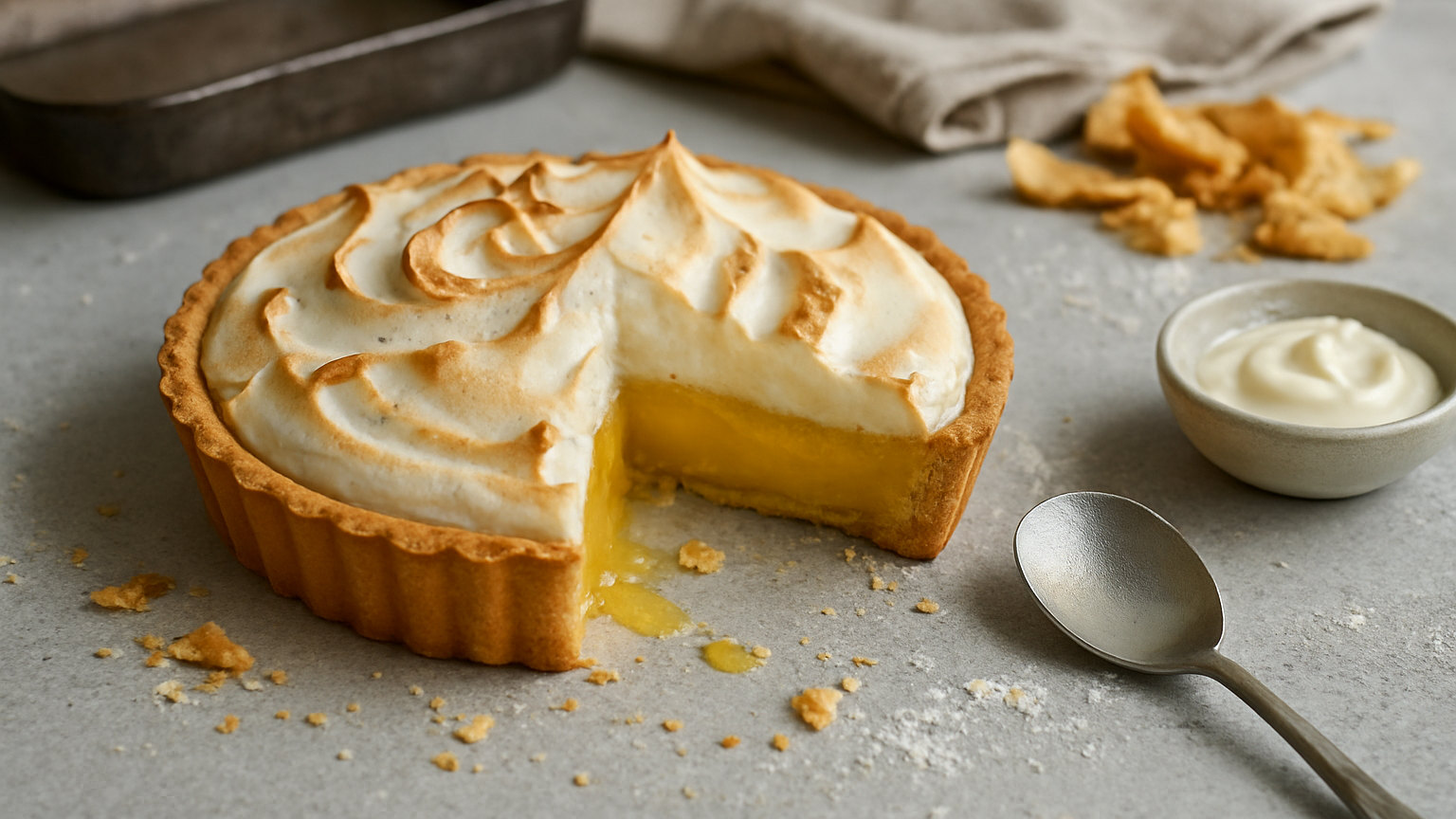
A weeping lemon meringue is actually two separate problems that get the same name. Liquid pooling between the meringue and the filling is one fault. Golden beads of syrup sitting on the surface is another. They have different causes and different fixes, and knowing which you have is the first step.
What causes liquid underneath?
Meringue spread onto cold filling. The underside never gets hot enough to cook, so it stays raw and gradually separates into liquid.
The filling must be hot when the meringue goes on. Heat rising from below cooks the base of the meringue, which is the layer the oven cannot reach.
What causes beads on top?
Undissolved sugar. If the sugar has not fully dissolved into the egg white, it draws moisture out during baking and forms syrupy droplets on the surface.
Add the sugar a tablespoon at a time and whisk for at least twenty seconds between each addition.
How do you know the sugar has dissolved?
Rub a little meringue between finger and thumb. If it feels gritty the sugar is still there and it needs more whisking.
It should feel completely smooth.
Does the type of sugar matter?
Caster sugar dissolves far more readily than granulated, which is why it is specified. Granulated sugar is the commonest cause of beading.
Icing sugar dissolves instantly but gives a softer, less stable meringue.
Why does it shrink away from the edge?
The meringue was not sealed to the pastry. It contracts as it bakes, and if it is not anchored all the way round it pulls inwards and liquid collects in the gap.
Spread it right to the pastry rim and press it gently against it.
Was it underbaked?
A meringue browned quickly in a hot oven has a cooked shell over a raw interior, which then collapses and weeps.
Bake at 150C fan for 25 to 30 minutes, which cooks it through while colouring it gently.
Does cornflour help?
A teaspoon whisked in at the end stabilises the foam and reduces both weeping and beading noticeably.
A teaspoon of white wine vinegar or lemon juice does a similar job by strengthening the protein structure.
Is Italian meringue more stable?
Considerably, since the sugar goes in as a hot syrup that cooks the whites as it is whisked. It rarely weeps and holds its shape for a day or more.
It needs a thermometer and is more work, which is why the simpler version remains standard at home.
Does humidity matter?
Meringue absorbs moisture from the air, so a damp day makes every meringue problem worse.
There is not much to be done about it beyond baking slightly longer and serving sooner.
Should the whites be at room temperature?
They whisk to a greater volume when not fridge cold, so take them out half an hour ahead. Older whites also whip better than very fresh ones.
How should it be stored?
At cool room temperature for a few hours. Refrigeration makes meringue weep faster, since the cold draws moisture out.
If it must be refrigerated because of the filling, expect the meringue to soften.
How long should you whisk the whites?
To soft peaks before any sugar goes in, then to stiff and glossy afterwards. Overwhisked whites look dry and grainy and collapse in the oven.
The bowl must be scrupulously clean, since any trace of fat or yolk stops the whites whipping.
Does the ratio of sugar matter?
Around 50g of sugar per egg white is standard for a soft meringue topping. Less than that gives an unstable foam that weeps readily.
More gives a firmer, sweeter meringue closer to a pavlova.
Can a weeping meringue be saved?
No. Once the liquid has separated it cannot be reincorporated, and the tart will still taste fine.
Cool leftovers quickly, refrigerate within two hours and use within two days, in line with Food Standards Agency guidance.
Worth reading next: Lemon Meringue Pie. There is more in our Puddings recipes.

