
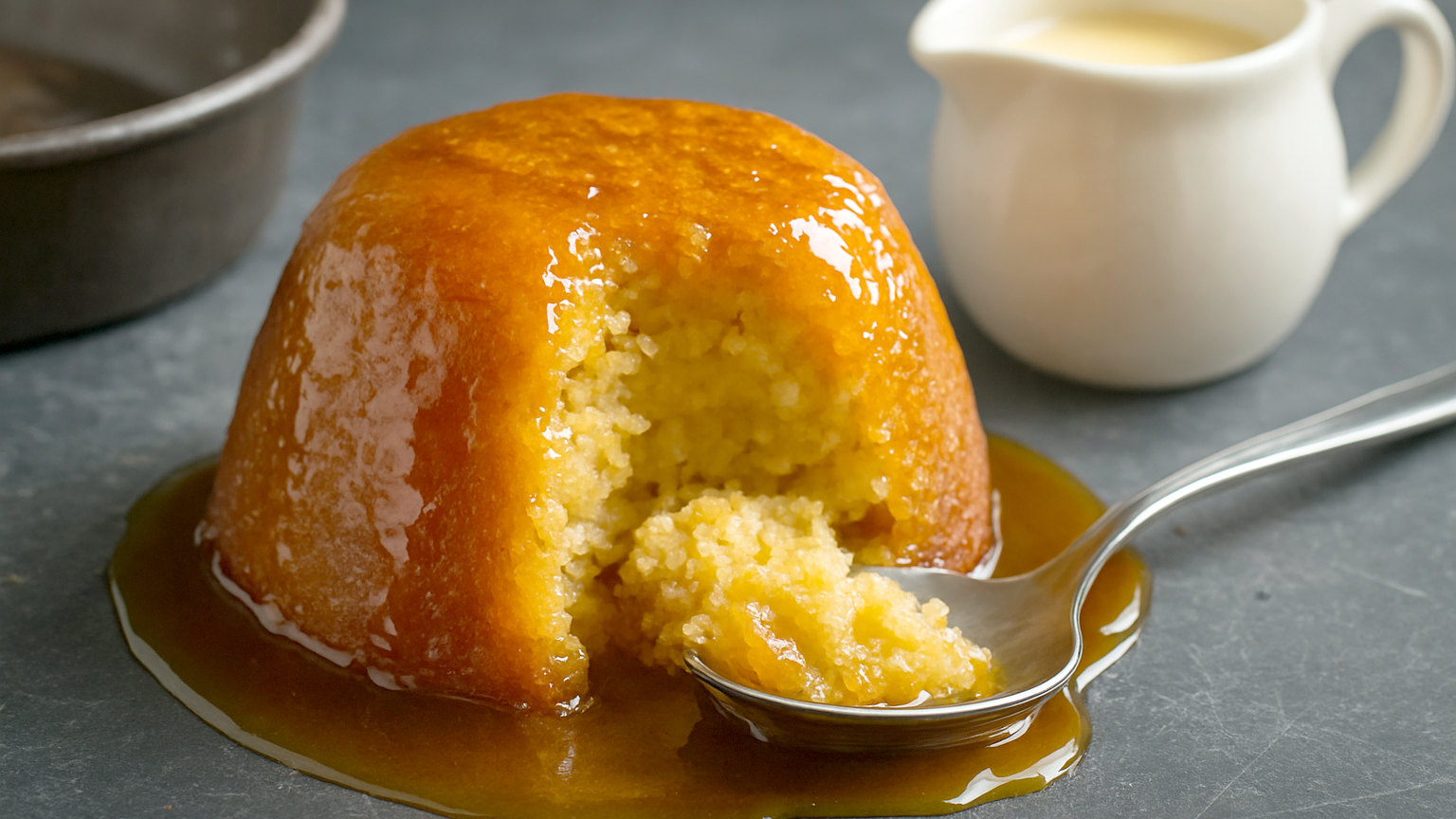
Treacle sponge is made with golden syrup rather than black treacle, which confuses everyone at least once. It is one of the lightest steamed puddings, because the sponge is a straightforward creamed mixture rather than a suet one, and the two hours of gentle steam produce a texture no oven can match. The syrup in the base becomes the sauce when it is turned out.
What do you need for 6 people?
- 6 tablespoons golden syrup
- 2 tablespoons fresh white breadcrumbs
- Zest and juice of half a lemon
- 175g softened butter, plus more for the basin
- 175g caster sugar
- 3 eggs
- 175g self raising flour
- 2 tablespoons milk
How do you make it?
- Butter a 1.2 litre pudding basin thoroughly.
- Mix 4 tablespoons of syrup with the breadcrumbs and lemon juice and spoon into the base.
- Beat the butter and sugar until pale and light.
- Add the eggs one at a time, with a spoonful of flour if it curdles.
- Fold in the remaining flour and the lemon zest, then loosen with the milk to a dropping consistency.
- Spoon into the basin over the syrup and level the top.
- Cover with pleated baking paper and foil, tied with string.
- Steam for 1 hour 45 minutes to 2 hours, topping up the water as needed.
The breadcrumbs stop the syrup vanishing into the sponge. Without them the syrup is absorbed during the long steam and there is nothing left to run down the sides when it is turned out.
Why pleat the covering?
The pudding rises as it cooks, and a pleat folded across the paper and foil gives it room to expand without splitting the cover or being squashed flat.
Make the pleat about 2cm deep across the centre.
Why both paper and foil?
Paper against the pudding stops the foil reacting with the acidic syrup, and the foil provides a waterproof layer over the top.
Tie the string tightly under the rim and make a handle across the top for lifting it out.
How do you steam it?
Sit the basin on an upturned saucer or a trivet in a large pan, and pour in boiling water to come halfway up the sides.
Cover the pan, keep the water at a steady simmer and check the level every forty minutes.
What happens if the water boils dry?
The pan scorches and the pudding stops cooking. Set a timer to check it, and always top up with boiling water rather than cold.
Cold water drops the temperature and adds to the cooking time.
How do you know it is done?
A skewer pushed into the centre should come out clean, and the sponge should be well risen and springy.
If it needs longer, re cover it and give it another twenty minutes.
Why does the sponge come out dense?
Usually the mixture was too stiff or the water was not simmering steadily. The batter should drop off a spoon readily rather than needing to be scraped.
A pan that has gone off the boil for a long period is the other cause.
How do you turn it out?
Let it settle for five minutes, run a knife around the edge, then invert a deep plate over the basin and turn the whole thing over.
Use a plate with a rim, since the syrup runs.
What is the difference from black treacle?
Golden syrup is light, sweet and mild. Black treacle is dark, bitter and far stronger, and a pudding made with it alone is unpleasantly intense.
A tablespoon of black treacle mixed into the golden syrup gives a deeper flavour without overwhelming it.
What size basin do you need?
A 1.2 litre basin for six people, filled no more than two thirds. The sponge needs room to rise.
Overfilling is the usual reason a pudding pushes its cover off during steaming.
Can it be made ahead?
Steam it a day ahead, cool, and re steam for 30 minutes to serve. It also freezes cooked in the basin for three months.
Cool leftovers quickly, refrigerate within two hours and use within three days.
If that was useful, Lemon and Marmalade Sponge Pudding covers related ground, and there is plenty more in Puddings recipes.

