
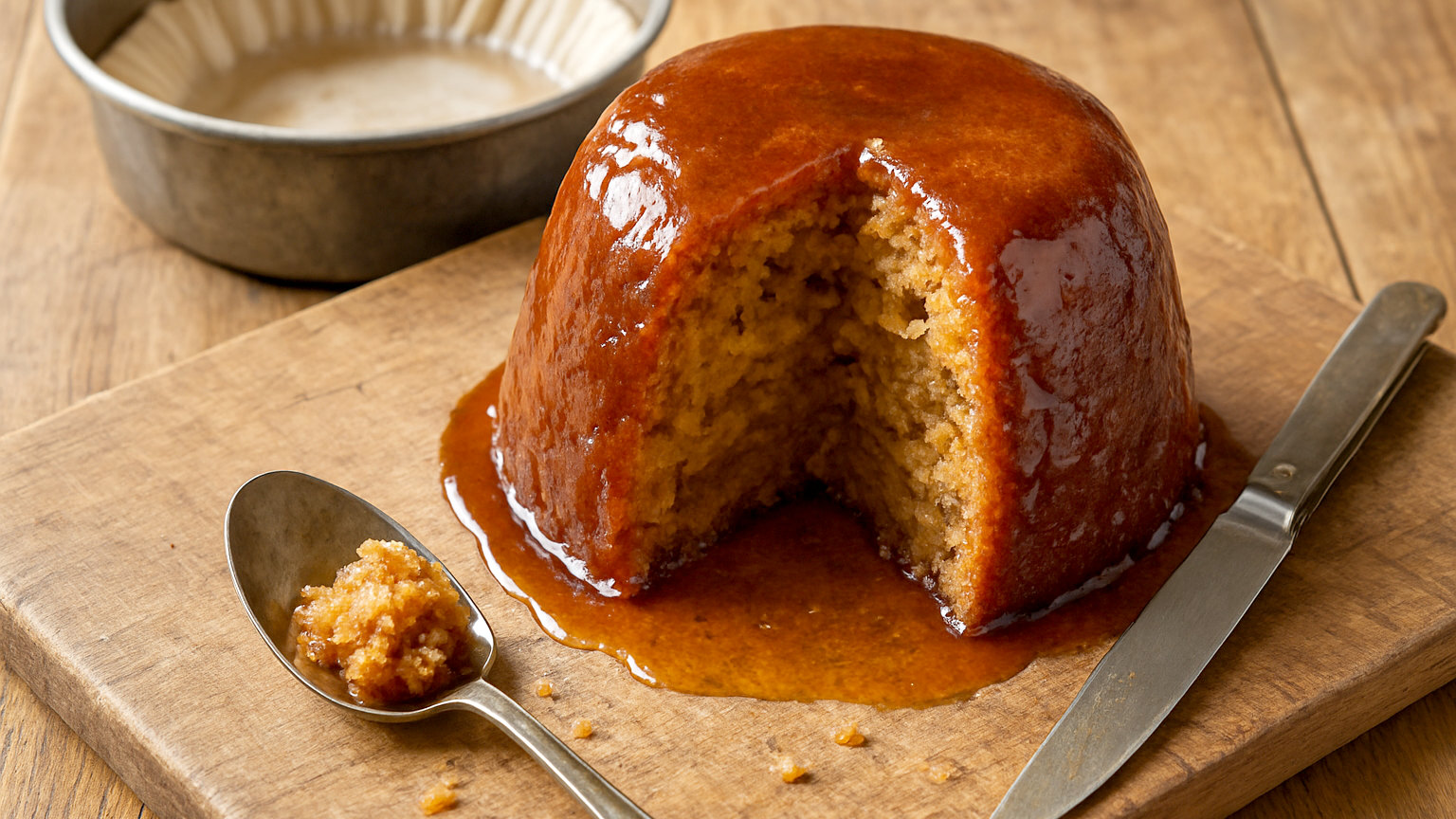
Suet pastry is unlike any other British pastry. It is soft, slightly spongy and it can survive three hours of steaming without disintegrating, which is exactly what shortcrust and puff cannot do. The reason is suet itself, a hard fat with a much higher melting point than butter, which stays solid long enough for the flour around it to set.
What is suet?
The hard white fat from around the kidneys of beef or mutton. Sold shredded and coated in a little flour so it stays separate.
Its melting point is around 45C, well above butter. That means it is still solid when the pastry around it has begun to set, and when it finally melts it leaves small pockets that make the crust light.
What do you need?
- 250g self raising flour
- 125g shredded suet
- Half a teaspoon of salt for savoury, or 50g sugar for sweet
- About 150ml cold water
How do you make it?
- Mix the flour, suet and salt or sugar in a bowl.
- Add the water gradually, stirring with a knife.
- Bring together into a soft dough, handling it as little as possible.
- Use it immediately rather than resting it.
What is the ratio?
Two parts flour to one part suet by weight, which is easy to remember and scales cleanly.
Water is roughly 60 per cent of the flour weight, added gradually since flours vary.
Why self raising flour?
Suet pastry relies on chemical raising as well as the pockets left by the melting fat. Plain flour gives a dense, heavy crust.
If you only have plain flour, add three teaspoons of baking powder per 250g.
Should it be rested?
No, unlike shortcrust. The raising agent starts working as soon as the water goes in, so the pastry should be used straight away.
This is one of the few pastries that does not want a rest.
Why can it not be baked?
Dry oven heat drives the moisture out before the suet has melted, giving a hard, greasy crust. Steam keeps it moist while it cooks through.
Jam roly poly can be baked, though the texture is quite different and firmer.
How do you line a basin with it?
Cut off a quarter for the lid. Roll the rest into a circle, then cut out a quarter segment and use the remaining three quarters, overlapping the cut edges, to line the basin smoothly.
Press the seams together firmly and leave a little overhang for sealing the lid.
Is vegetarian suet the same?
It is made from vegetable fat, usually palm or sunflower, and behaves almost identically. Substitute it by weight with no other change.
Frozen butter grated coarsely is the other alternative, giving a richer but slightly denser crust.
Is there a vegan version?
Vegetable suet is usually vegan, so the pastry itself needs no other change. Check the pack, since some brands contain dairy.
Use plant milk or water to bind and the result is very close to the original.
What is it used for?
Steak and kidney pudding, jam roly poly, spotted dick, Sussex pond pudding, Bedfordshire clangers and dumplings.
The savoury and sweet versions are the same pastry with salt or sugar, which is why the technique transfers.
Does it work for savoury dishes?
It is the pastry for steak and kidney pudding, which is arguably its best use. Leave out the sugar and add salt and pepper.
Dumplings for a stew are the same mixture with more liquid and no lining involved.
How thick should it be rolled?
About 5mm for lining a basin and slightly thicker for a lid. Thinner and it tears under a heavy filling.
Keep it even, since a thin patch will leak.
Can it be made ahead?
The dry mixture keeps a week in a jar. Once the water is in it should be used within the hour.
Suet itself keeps for months in the fridge and freezes indefinitely.
Worth reading next: Jam Roly Poly. There is more in our Puddings recipes.

