
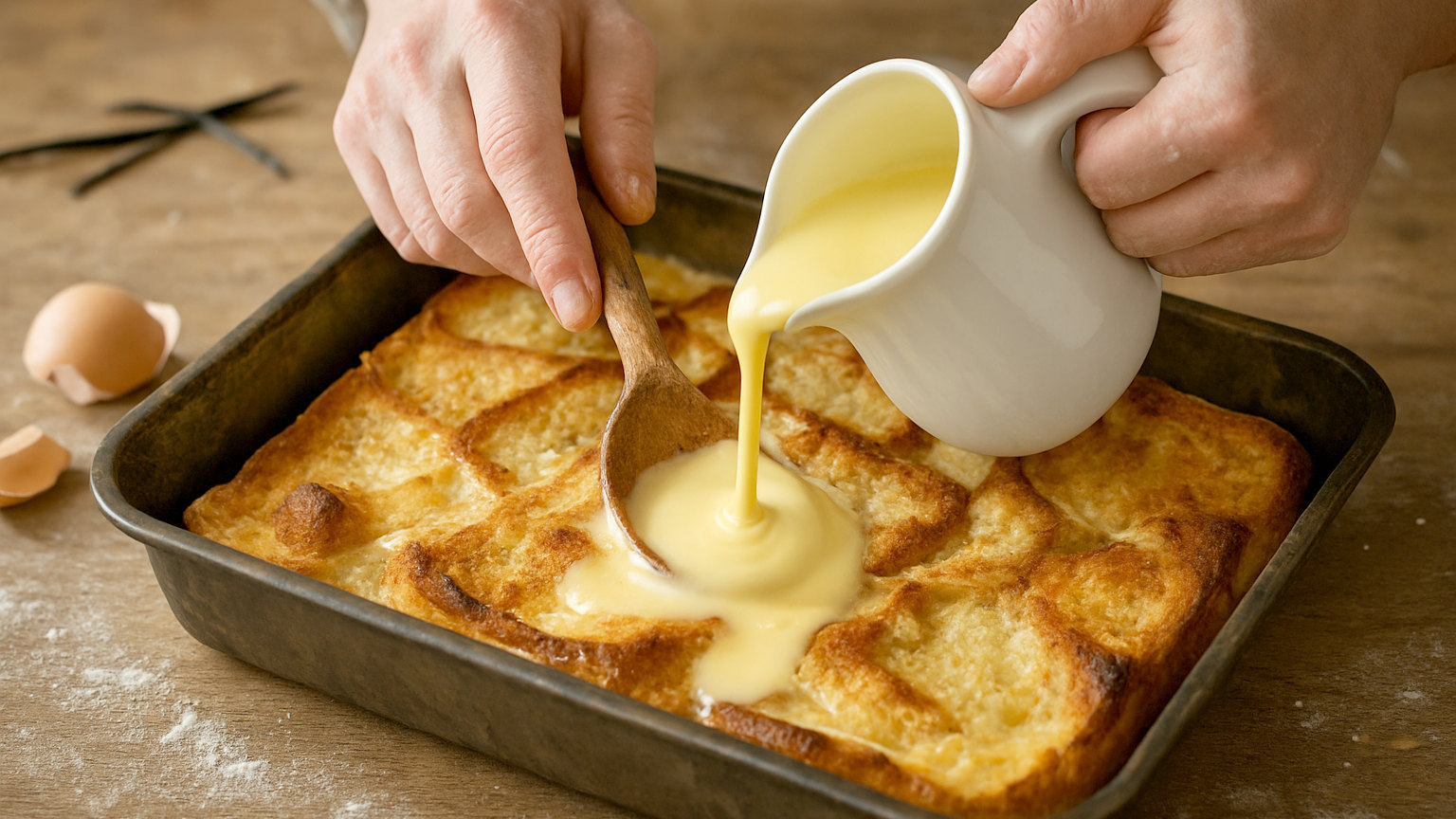
Bread and butter pudding is buttered bread layered in a dish with dried fruit, covered with custard and baked. Its whole character comes from the soaking. Given half an hour before it goes in the oven, the bread absorbs the custard and bakes into something soft and set. Baked immediately, it stays as bread sitting in liquid.
What do you need for 6 people?
- 8 to 10 slices of white bread, slightly stale, crusts on
- 75g softened butter
- 100g sultanas or raisins
- Zest of 1 lemon or orange
- 500ml whole milk and 200ml double cream
- 4 eggs and 2 egg yolks
- 100g caster sugar
- 1 teaspoon vanilla extract
- Nutmeg and 2 tablespoons demerara sugar
How do you make it?
- Butter the bread generously and cut each slice into triangles.
- Butter a 2 litre baking dish.
- Layer the bread overlapping, scattering sultanas and zest between the layers.
- Whisk the eggs, yolks, sugar and vanilla together.
- Warm the milk and cream and pour onto the eggs, whisking, then strain.
- Pour over the bread and press it down gently.
- Leave to soak for 30 minutes.
- Grate over nutmeg, scatter with demerara and bake at 160C fan for 40 to 45 minutes.
Leave the top layer of bread proud of the custard. The exposed edges crisp and brown while everything beneath sets soft, and that contrast is what makes the pudding.
Which bread should you use?
A plain white tin loaf, a day or two old. Stale bread absorbs custard far better than fresh.
Brioche and panettone both make richer versions. Sourdough is too strongly flavoured.
Should the crusts come off?
No. They crisp on top and give structure, and removing them is unnecessary work.
How long should it soak?
Thirty minutes at least, and an hour is better. The bread should be visibly swollen and heavy.
It can be assembled and refrigerated overnight, which gives the best result of all.
What is the custard ratio?
About 700ml of liquid to six eggs, which sets softly without being rubbery.
More eggs gives a firmer, more custardy pudding and fewer gives a wetter one.
Can it be made with leftover bread?
That is what it is for. Ends of loaves, stale rolls, hot cross buns and croissants all work, and a mixture is fine.
Very rich breads need less butter.
Does it need a water bath?
Not usually, since the bread insulates the custard. If your oven runs hot, sitting the dish in a tin of hot water gives a gentler set.
How do you know it is baked?
Puffed and golden on top and just set in the middle, with a slight wobble. It firms as it cools.
Overbaked, the custard weeps and the pudding sits in liquid.
Should the bread be buttered on both sides?
One side is enough, and the butter should be soft enough to spread without tearing the bread.
Butter every slice, since it is what stops the bread turning to paste in the custard.
How deep should the dish be?
Around 5cm, with three or four layers of bread. A deeper dish leaves the middle wet while the top burns.
What can you add?
Marmalade spread on the bread, a splash of whisky, chopped dried apricots, or chocolate for a modern version.
Soaking the sultanas in tea or brandy first stops them drying out.
Why does it weep liquid?
Overbaking. The egg proteins tighten and squeeze out the milk, exactly as in a curdled custard.
Take it out while the centre still has a slight wobble.
Can it be made ahead?
Assemble it and refrigerate overnight, which improves the soaking considerably, then bake from cold with an extra 10 minutes.
It is one of the better puddings for having people round.
How long does it keep?
Two days refrigerated. Reheat portions at 150C fan for 15 minutes.
Cool quickly and refrigerate within two hours, in line with Food Standards Agency guidance.
For something along the same lines, see Baked Rice Pudding, or browse all our Puddings recipes.

