
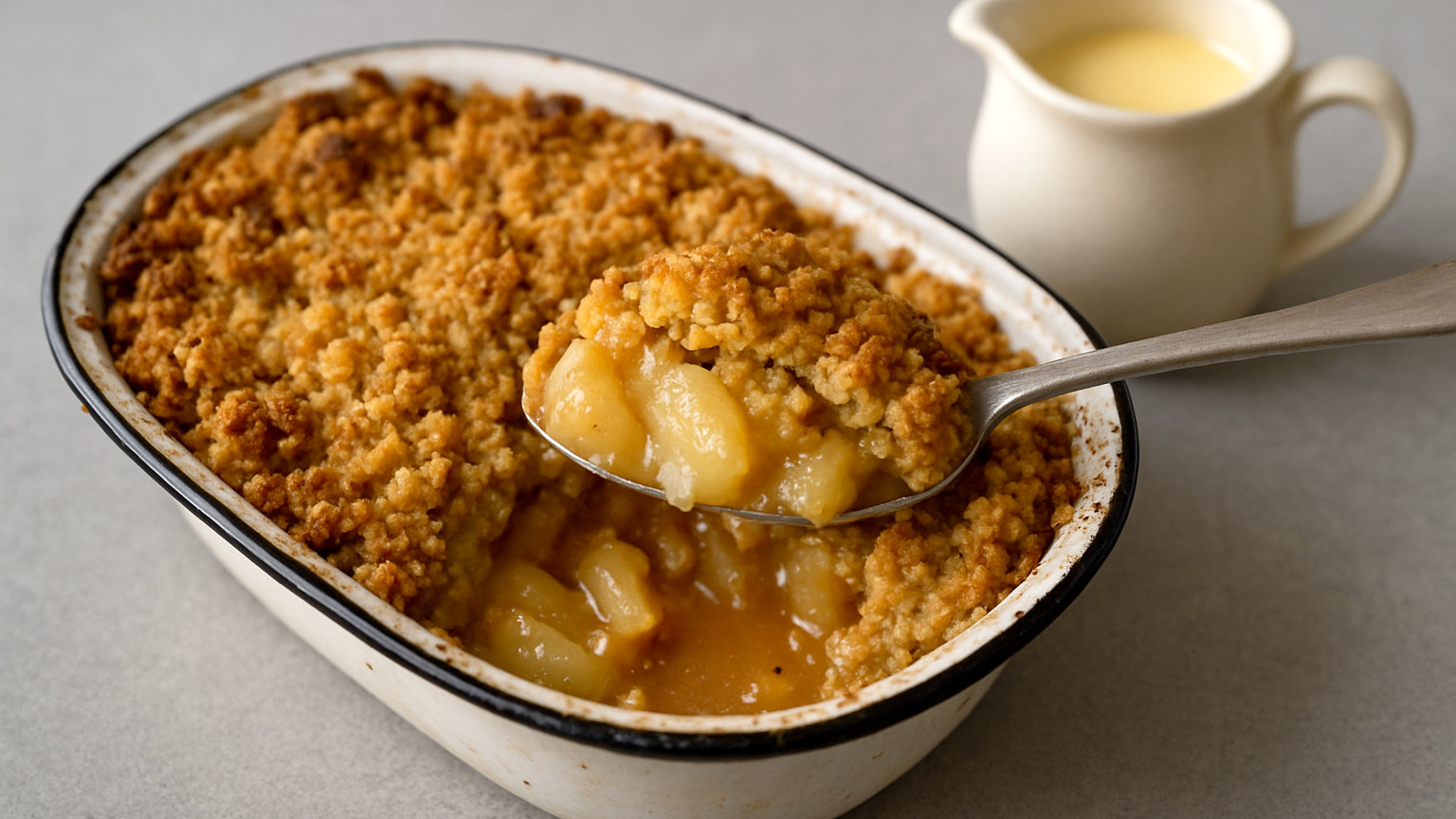
Pears make a gentler crumble than apples and they need slightly different handling. A ripe pear is mostly water and collapses to a thin puree in the oven, which is why pear crumbles are so often disappointing. Slightly underripe fruit holds its shape, and ginger gives the finished pudding the definition that pears on their own lack.
What do you need for 6 people?
- 900g pears, slightly underripe, peeled, cored and cut into chunks
- 60g caster sugar
- 3 balls of stem ginger, chopped, plus 2 tablespoons of the syrup
- 1 teaspoon ground ginger
- 2 teaspoons cornflour and the juice of half a lemon
- 175g plain flour and 25g ground almonds
- 100g cold butter, diced
- 75g demerara sugar
- 50g chopped hazelnuts, toasted
How do you make it?
- Toss the pears with the lemon juice, caster sugar, cornflour, stem ginger, syrup and ground ginger.
- Tip into a baking dish, leaving 2cm at the top.
- Rub the butter into the flour and ground almonds until it resembles coarse breadcrumbs.
- Stir in the demerara sugar and toasted hazelnuts.
- Scatter loosely over the fruit without pressing down.
- Bake at 180C fan for 40 to 45 minutes until golden and bubbling.
- Rest for 10 minutes before serving.
Use pears that are still firm to the touch. A pear ripe enough to eat raw has nothing left to give in the oven, and the crumble ends up sitting on a thin sweet liquid rather than on fruit.
Which pears should you use?
Conference is the most widely available British variety and holds its shape well. Comice is sweeter and softer and needs to be firmer still.
Williams pears collapse readily and are better eaten raw.
How do you tell if a pear is ready?
Press gently at the neck near the stalk, which softens first. For cooking you want it still firm there.
Pears ripen from the inside out, so a pear that feels soft all over is already past its best.
Why do they need less sugar?
Pears are considerably sweeter and less acidic than apples, so 60g per kilo is often enough. Too much sugar makes the crumble cloying.
The lemon juice matters more here than the sugar, since it gives the sharpness the fruit lacks.
Why ginger?
Pears are mild and slightly floral, and ginger gives them heat and definition. Stem ginger in syrup is the best form since it brings both.
Ground ginger alone works and is less interesting. Fresh grated ginger is sharper and worth trying.
Why hazelnuts?
They are the traditional British nut for autumn fruit and they suit pears particularly. Toasting them first is worth the five minutes.
Walnuts and almonds both work if hazelnuts are not to hand.
How do you stop them browning?
Toss the cut pears in lemon juice as you go, which slows the discolouration considerably and adds the acidity the fruit needs anyway.
Pears brown faster than apples, so prepare them last if you are making several things.
When are pears in season?
British pears run from September to November, with Conference the mainstay. They store reasonably well into the new year.
Buy them firm and let them ripen at home, since shop ripened pears are often bruised.
Should they be pre cooked?
Not if they are firm. Forty five minutes in the oven softens pears completely, and pre cooking would leave a puree.
Very hard pears can be given ten minutes in a pan with butter first.
Why the ground almonds in the topping?
They absorb some of the liquid pears release and give a richer topping that browns well, which suits a fruit this wet.
What else can go in?
Blackberries, a handful of dried cranberries, or a couple of apples to firm up the base. Chocolate chips in the topping suit pears surprisingly well.
Cool leftovers quickly, refrigerate within two hours and use within three days, in line with Food Standards Agency guidance.
See also Gooseberry Crumble With Elderflower, or browse more Puddings recipes.

