
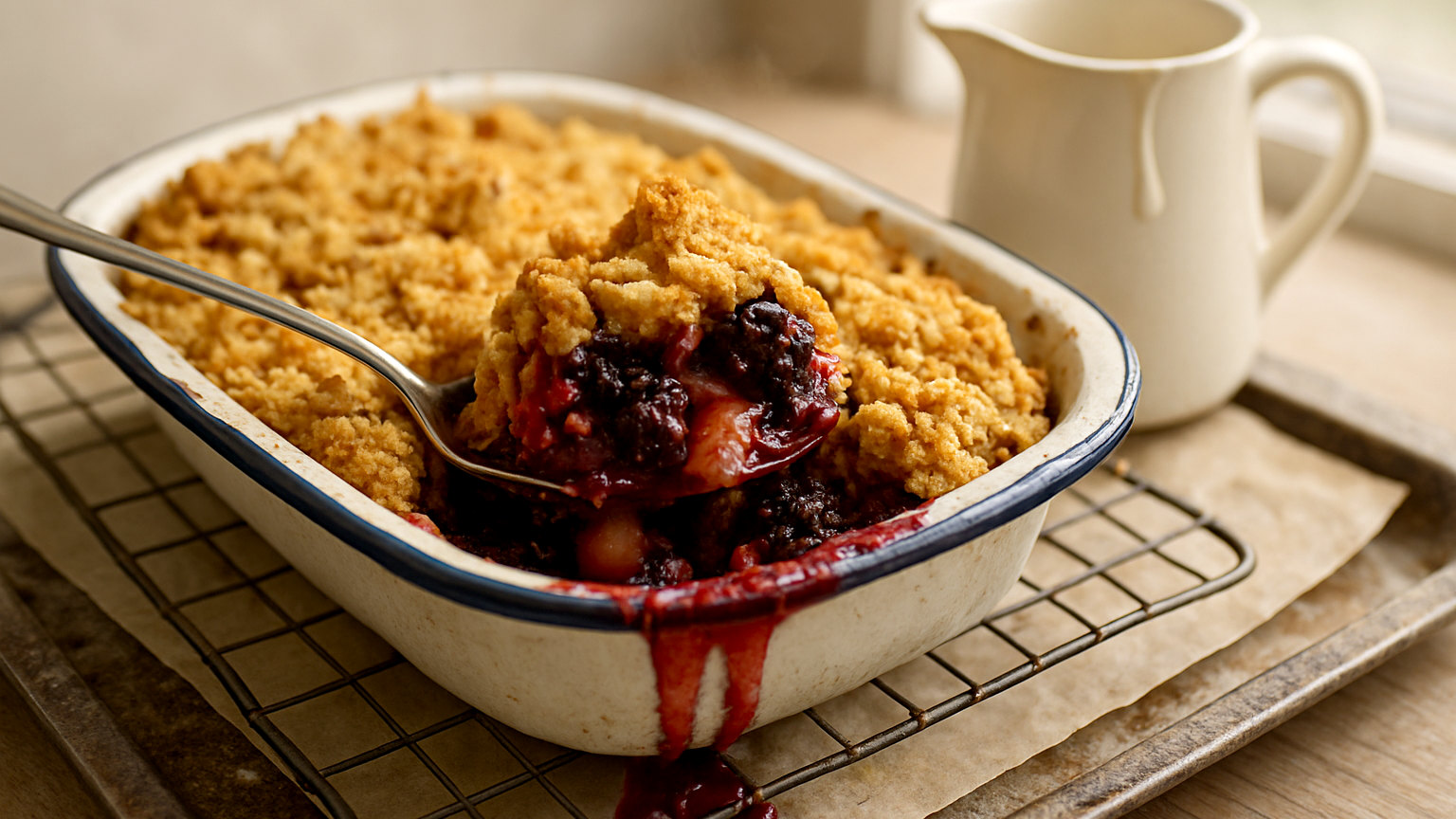
Blackberry and apple is the classic British autumn pudding and it works for a practical reason as well as a traditional one. Blackberries collapse and release a great deal of juice, while apples absorb liquid and provide structure. Each compensates for the other, which is why the combination has lasted and why blackberries alone make a difficult crumble.
What do you need for 6 people?
- 500g Bramley apples, peeled, cored and cut into chunks
- 350g blackberries, fresh or frozen
- 100g caster sugar
- 2 teaspoons cornflour
- Half a teaspoon of ground cinnamon, optional
- 200g plain flour
- 100g cold butter, diced
- 75g demerara sugar
- 50g rolled oats or flaked almonds
How do you make it?
- Toss the apples with the caster sugar, cornflour and cinnamon.
- Fold in the blackberries gently so they do not break up.
- Tip into a baking dish, leaving 2cm at the top.
- Rub the butter into the flour until it resembles coarse breadcrumbs.
- Stir in the demerara sugar and oats.
- Scatter loosely over the fruit without pressing it down.
- Bake at 180C fan for 40 to 45 minutes until golden and bubbling at the edges.
- Rest for 10 minutes before serving.
Fold the blackberries in rather than stirring. They are fragile and crushed berries release all their juice at once, which is what floods the dish and stains the topping purple before it has set.
What is the right ratio?
Roughly three parts apple to two parts blackberry by weight. More blackberry than that and the crumble becomes very wet.
Blackberries are also considerably more intense, so they carry further than the quantity suggests.
When should you pick blackberries?
Late August through to early October in most of Britain. The earliest berries at the tip of each cluster ripen first and are the sweetest.
Tradition holds that they should not be picked after Michaelmas at the end of September, which reflects the fact that later berries are watery and often mouldy.
Can you use frozen blackberries?
Yes, and they work well. Use them straight from frozen rather than defrosting, since thawed berries collapse and release their juice immediately.
Add an extra teaspoon of cornflour to allow for the additional liquid.
Do the apples need cooking first?
Not with Bramleys, which collapse readily in the oven. Firm eating apples benefit from ten minutes in a pan first.
Why does the topping go purple?
Blackberry juice bubbles up through the crumble and stains it, which is normal and looks rather good. It happens more if the berries have been crushed.
A slightly deeper dish and gentler folding keeps more of the juice at the bottom.
How much sugar does it need?
About 100g for this quantity, though it depends on the berries. Wild blackberries vary enormously in sweetness depending on the summer.
Taste a few before deciding and adjust upwards if they are sharp.
Should you wash foraged blackberries?
Rinse them briefly in cold water and drain well, picking out any leaves or unripe berries. Do not soak them, since they absorb water readily.
Pick away from busy roads and above dog height, which is the usual sensible advice.
What else can go in?
A handful of elderberries, a few chopped hazelnuts in the topping, or a spoonful of blackberry jam if the fruit is underripe.
Cinnamon is traditional. A little grated lemon zest lifts it if the berries are very sweet.
What should you serve with it?
Custard, cream or vanilla ice cream. The contrast of something cold against hot fruit is a large part of the appeal.
Clotted cream is worth it if the crumble is the centrepiece rather than an everyday pudding.
Can it be made ahead or frozen?
Assemble it a day ahead and bake from cold with an extra 10 minutes, or freeze it unbaked for three months and bake from frozen at 170C fan for about 65 minutes.
Cool leftovers quickly, refrigerate within two hours and use within three days.
For something along the same lines, see Apple Crumble: The Classic Recipe and the Ratio, or browse all our Puddings recipes.

