
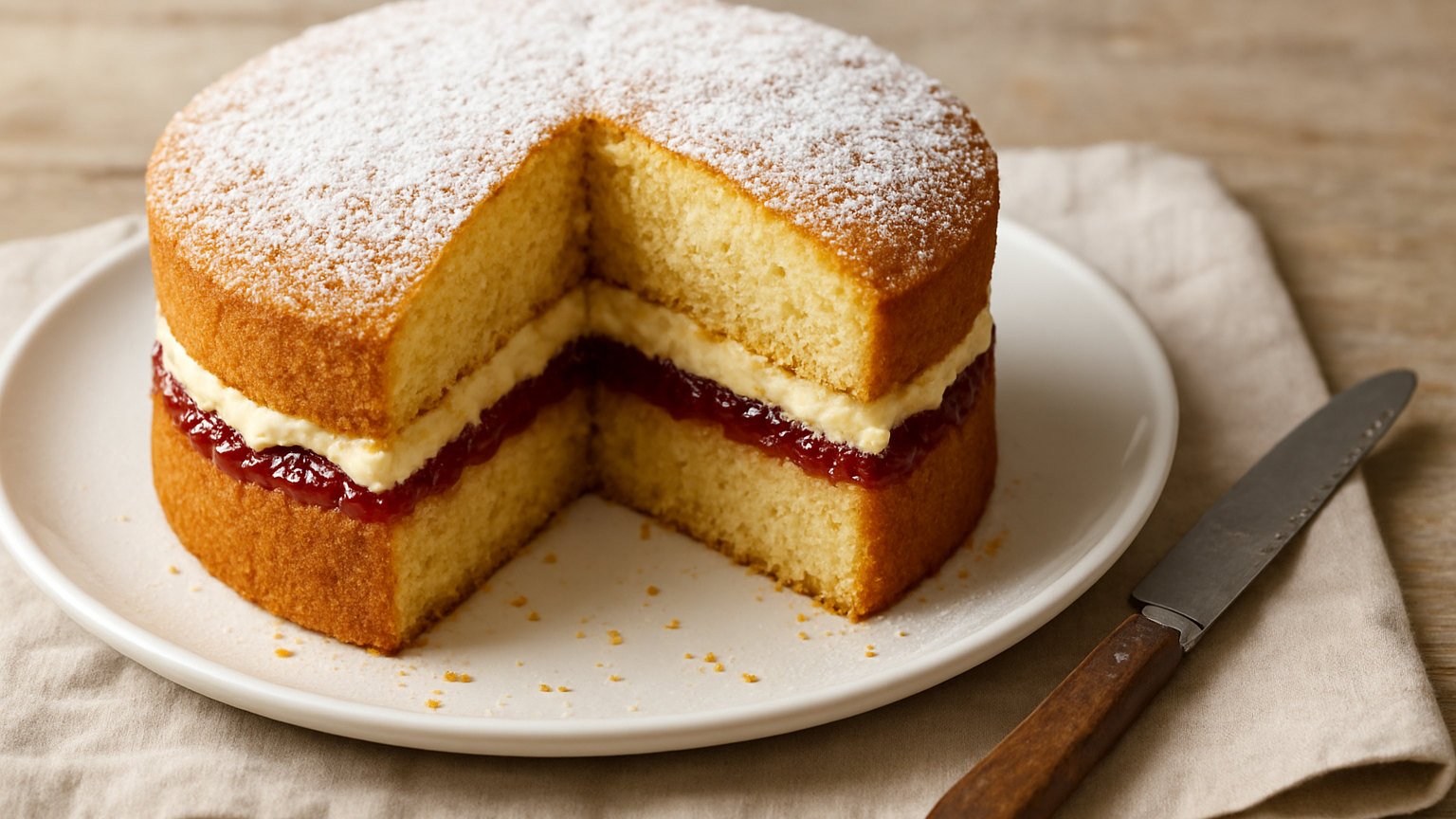
A Victoria sponge is the cake every other British sponge is measured against, and the recipe is a ratio rather than a list of quantities. Equal weights of butter, sugar, eggs and self raising flour, with the eggs deciding the total. Weigh the eggs in their shells, use that number for each of the other three, and the cake will work at any size.
What do you need for a 20cm cake?
- 4 eggs, weighed in their shells, usually about 225g
- 225g softened butter
- 225g caster sugar
- 225g self raising flour
- 1 teaspoon baking powder
- 1 teaspoon vanilla extract
- 1 to 2 tablespoons milk
- To fill: 6 tablespoons raspberry jam and 300ml whipped double cream
How do you make it?
- Heat the oven to 160C fan, 180C conventional, gas mark 4.
- Grease and line the bases of two 20cm sandwich tins.
- Beat the butter and sugar for 4 minutes until pale and noticeably lighter.
- Add the eggs one at a time, beating well between each.
- If the mixture curdles, add a spoonful of the flour.
- Fold in the flour and baking powder with a large metal spoon.
- Add the vanilla and enough milk to reach a soft dropping consistency.
- Divide between the tins and bake for 22 to 25 minutes.
Weigh the eggs before anything else. Eggs vary from about 50g to 70g each, so four eggs can be anywhere between 200g and 280g, and matching the other ingredients to the actual weight is what makes the ratio reliable.
Why cream the butter and sugar for so long?
The sugar crystals cut air pockets into the butter, and those pockets are what the cake rises on. Four minutes with an electric whisk is not excessive.
The mixture should go from yellow to almost white and increase visibly in volume.
Why does it curdle?
Cold eggs added too fast to creamed butter split the emulsion. The mixture looks grainy and separated.
Have the eggs at room temperature, add them one at a time, and add a spoonful of flour if it splits. A curdled mixture bakes into a slightly denser cake but is not ruined.
What is dropping consistency?
The mixture should fall off a spoon within about two seconds when the spoon is tapped on the side of the bowl.
Too stiff and the cake will be dry and peaked. Add milk a tablespoon at a time.
Why fold rather than beat in the flour?
Beating develops gluten and knocks out the air you spent four minutes creating. Use a large metal spoon and cut down through the mixture, turning it over.
Stop as soon as no dry flour is visible.
How do you know it is baked?
It should be risen, golden and shrinking very slightly from the sides of the tin, and springy when pressed lightly in the centre.
A skewer into the middle should come out clean. Start checking at 22 minutes.
Should it be jam only or jam and cream?
The Women's Institute version is jam alone, with the sponge dusted in caster sugar. Jam and cream is the more common modern version.
Both are correct and people hold views. Buttercream is a third option and is sweeter.
Why did it dome in the middle?
The oven was too hot, so the edges set before the centre had finished rising. 160C fan is right for a sponge.
Level the top with a serrated knife if it happens, or turn the layer upside down.
Why did it sink in the middle?
Usually the oven door was opened before the structure had set, or the mixture was too loose. Leave it alone for the first twenty minutes.
Too much raising agent causes the same fault, since the cake rises faster than it can support.
Should the tins be lined?
Grease the sides and line the bases with a disc of baking paper. Sponge sticks readily and a lined base means it lifts out cleanly every time.
Can it be made ahead or frozen?
The unfilled sponges keep two days in a tin and freeze for three months, wrapped individually.
Fill it on the day. Once cream is in, keep it refrigerated and eat within two days, in line with Food Standards Agency guidance.
For something along the same lines, see Chocolate Sponge Cake, or browse all our Puddings recipes.

