
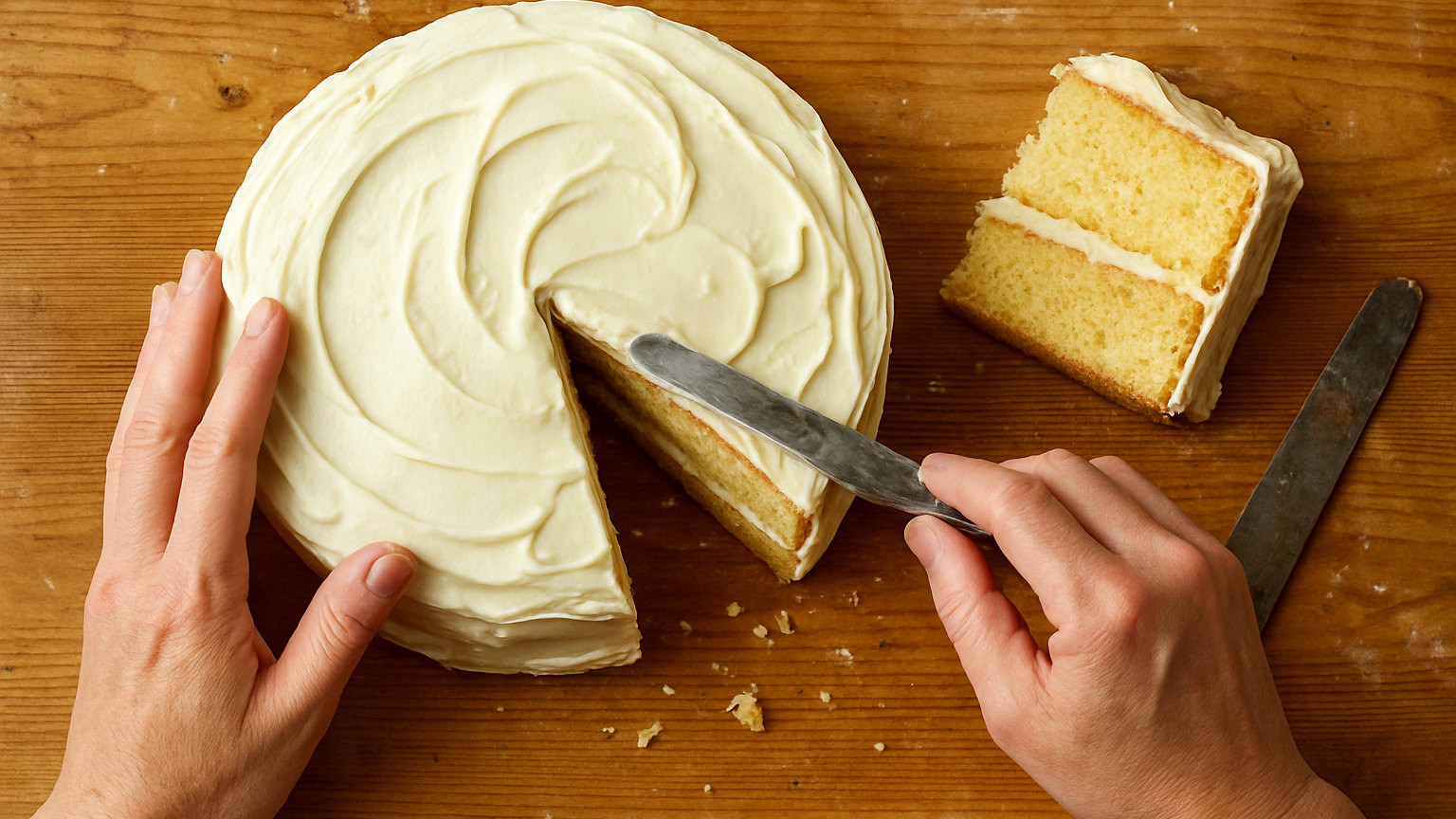
Most cakes are stored badly, usually by being put in the fridge. Cold accelerates the process by which starch recrystallises and bread and cake go stale, so a plain sponge in the fridge dries out faster than one left in a tin on the worktop. The fridge is for perishable fillings, not for cake.
What is the general rule?
Room temperature in an airtight tin, unless there is something perishable on it. Cream, cream cheese icing and fresh fruit all mean refrigeration. Buttercream, jam, glace icing and ganache do not.
Wait until the cake is completely cold before it goes in the tin, since trapped steam makes it soggy.
How long does each type keep?
- Whisked fatless sponge: 1 to 2 days
- Creamed butter sponge: 2 to 3 days
- Oil based cake such as carrot: 4 to 5 days
- Melted cakes such as ginger: up to 2 weeks and improving
- Rich fruit cake: months, if fed and wrapped
Why does the fridge make it worse?
Starch retrogradation, the process that stales baked goods, happens fastest at fridge temperatures. It is slower at room temperature and slower still below freezing.
That is why freezing works well and chilling does not.
How should a cut cake be stored?
Press a piece of baking paper against the cut surface, or stand the cake on the cut side. Exposed crumb dries within hours.
A tin is better than a covered plate, which lets air circulate.
Can you freeze a plain sponge?
Very well, for three months. Wrap each layer separately in cling film then foil, so you can take out one at a time.
Freezing unfilled layers is far more useful than freezing an assembled cake.
Can you freeze an iced cake?
Buttercream and ganache freeze well. Open freeze the cake until the icing is firm, then wrap it, so the wrapping does not mark the surface.
Cream cheese icing and whipped cream both suffer and are better added after defrosting.
How do you defrost one?
Overnight at room temperature, still wrapped. Unwrapping it frozen causes condensation to form on the surface and makes the icing wet.
Slices defrost in about an hour.
How should a fruit cake be stored?
Wrapped in baking paper then foil, in a tin, in a cool cupboard. Fed with a tablespoon of brandy every week or two if it is maturing.
It keeps for months and is the one cake that genuinely improves with time.
Can you freeze slices?
Yes, and it is often the most practical form. Wrap individually and take out one at a time, which stops a whole cake being eaten because it needed using up.
Does a cake tin need to be airtight?
As close as possible. A tin with a loose lid is little better than leaving the cake out, and a well sealed plastic box works just as well as a traditional tin.
What matters is keeping air off the cut surfaces.
What about cupcakes and traybakes?
Both freeze for three months. Freeze traybakes whole and uncut, since cut edges dry out.
Ice them after defrosting rather than before.
Should a cake be wrapped or open?
Wrapped or boxed. Air is what dries it, so a tin with a close fitting lid is better than a cake dome or a plate under a cloth.
Wrap fruit cakes in paper first, then foil, since the acid in the fruit reacts with foil directly.
Can you store two cakes together?
Better not to. Moisture moves between them, so a moist cake dries and a dry one goes soft. Keep them in separate tins.
The same applies to storing cakes with biscuits, which turns the biscuits soft.
How do you refresh a stale cake?
Twenty seconds in a microwave softens a slice noticeably, though it firms up again quickly as it cools.
Brushing with sugar syrup is the more lasting fix. Cakes with cream or cream cheese icing should be kept refrigerated and used within three days, in line with Food Standards Agency guidance.
Worth reading next: Mini Battenberg Cakes. There is more in our Puddings recipes.

