
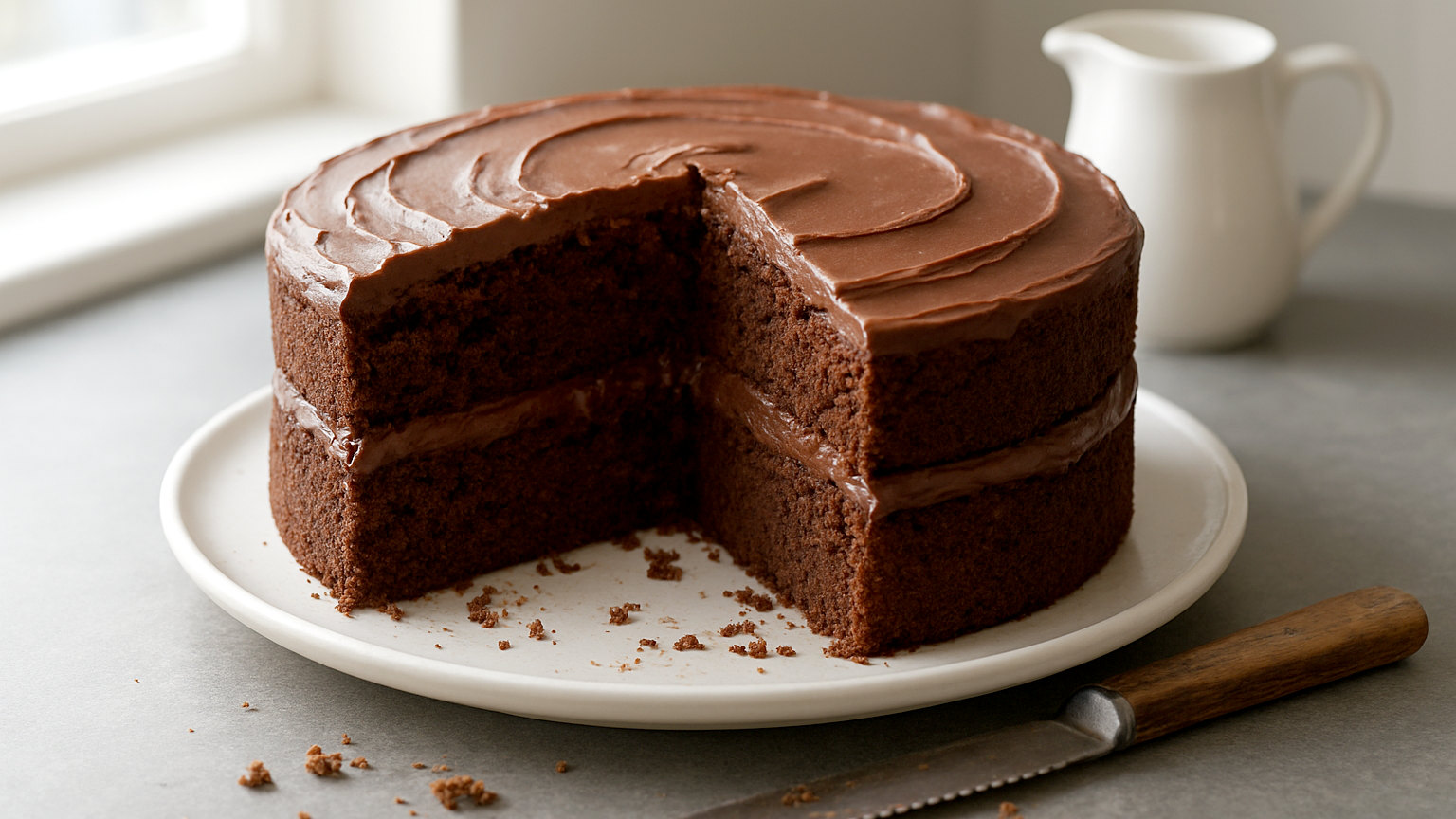
The difference between a good chocolate cake and a dull one is usually how the cocoa was treated. Cocoa powder mixed dry into flour tastes muted, while cocoa whisked into boiling water first releases far more flavour. Combined with an oil based batter, which keeps the cake soft, that one step makes more difference than the quality of the cocoa itself.
What do you need for a 20cm cake?
- 75g cocoa powder and 175ml boiling water
- 200g plain flour
- 350g caster sugar
- 1 and a half teaspoons bicarbonate of soda
- Half a teaspoon of salt
- 175ml sunflower oil
- 3 eggs and 175ml buttermilk
- 2 teaspoons vanilla extract
- For the ganache: 250g dark chocolate and 250ml double cream
How do you make it?
- Heat the oven to 160C fan and line two 20cm sandwich tins.
- Whisk the cocoa into the boiling water until smooth and leave to cool for 10 minutes.
- Combine the flour, sugar, bicarbonate of soda and salt in a large bowl.
- Whisk the oil, eggs, buttermilk and vanilla together.
- Add the wet ingredients to the dry, then whisk in the cocoa mixture.
- The batter will be very thin, which is correct.
- Divide between the tins and bake for 30 to 35 minutes.
- Cool completely before covering with ganache.
The batter should pour like single cream. It looks far too loose to work and it is not a mistake. Thin batters produce a lighter, moister crumb in a cake raised chemically rather than by creaming.
What does blooming the cocoa do?
Hot liquid dissolves the cocoa solids and releases aromatic compounds that stay locked up when the powder is used dry.
Coffee instead of water intensifies it further without making the cake taste of coffee.
Why bicarbonate of soda rather than baking powder?
Cocoa and buttermilk are both acidic, so bicarbonate of soda reacts with them to give lift. Baking powder is unnecessary here.
It also deepens the colour of the crumb.
What if you have no buttermilk?
Add a tablespoon of lemon juice or white vinegar to 175ml of whole milk and leave it for 10 minutes to thicken.
Plain yoghurt thinned with milk also works.
Which cocoa should you use?
A good quality unsweetened cocoa powder, not drinking chocolate, which is mostly sugar and milk powder.
Dutch processed cocoa is darker and milder. Natural cocoa is sharper and reacts more strongly with the bicarbonate.
How do you make the ganache?
Heat the cream until steaming, pour it over finely chopped chocolate, wait two minutes, then stir slowly from the centre until glossy.
Let it cool and thicken to a spreadable consistency before using it.
Can you use melted chocolate instead of cocoa?
Not as a straight swap, since chocolate brings sugar and cocoa butter and would change the whole balance. Cocoa gives a stronger chocolate flavour per gram.
Use chocolate in the ganache and cocoa in the cake, which is what this recipe does.
Why is my cake dry?
Almost always overbaking. A chocolate cake is dark so you cannot judge it by colour, and a few extra minutes make a real difference.
Start checking at 28 minutes and take it out when a skewer has a few moist crumbs on it.
Can it be made as a traybake?
Yes, in a 23cm square tin for about 35 minutes. The thin batter suits a traybake well and it cuts cleanly once iced.
Halve the ganache quantity if you are only covering the top.
What size tins does this fill?
Two 20cm sandwich tins, or a single deep 20cm tin baked for about 50 minutes and split.
The deep version needs a lower oven at 150C fan so the middle cooks before the edges dry.
Can it be made ahead or frozen?
The sponges keep three days in a tin and freeze for three months. Iced, it keeps three days at cool room temperature.
It is arguably better on the second day once the crumb has settled.
See also Chocolate Cake Slices, or browse more Puddings recipes.

