
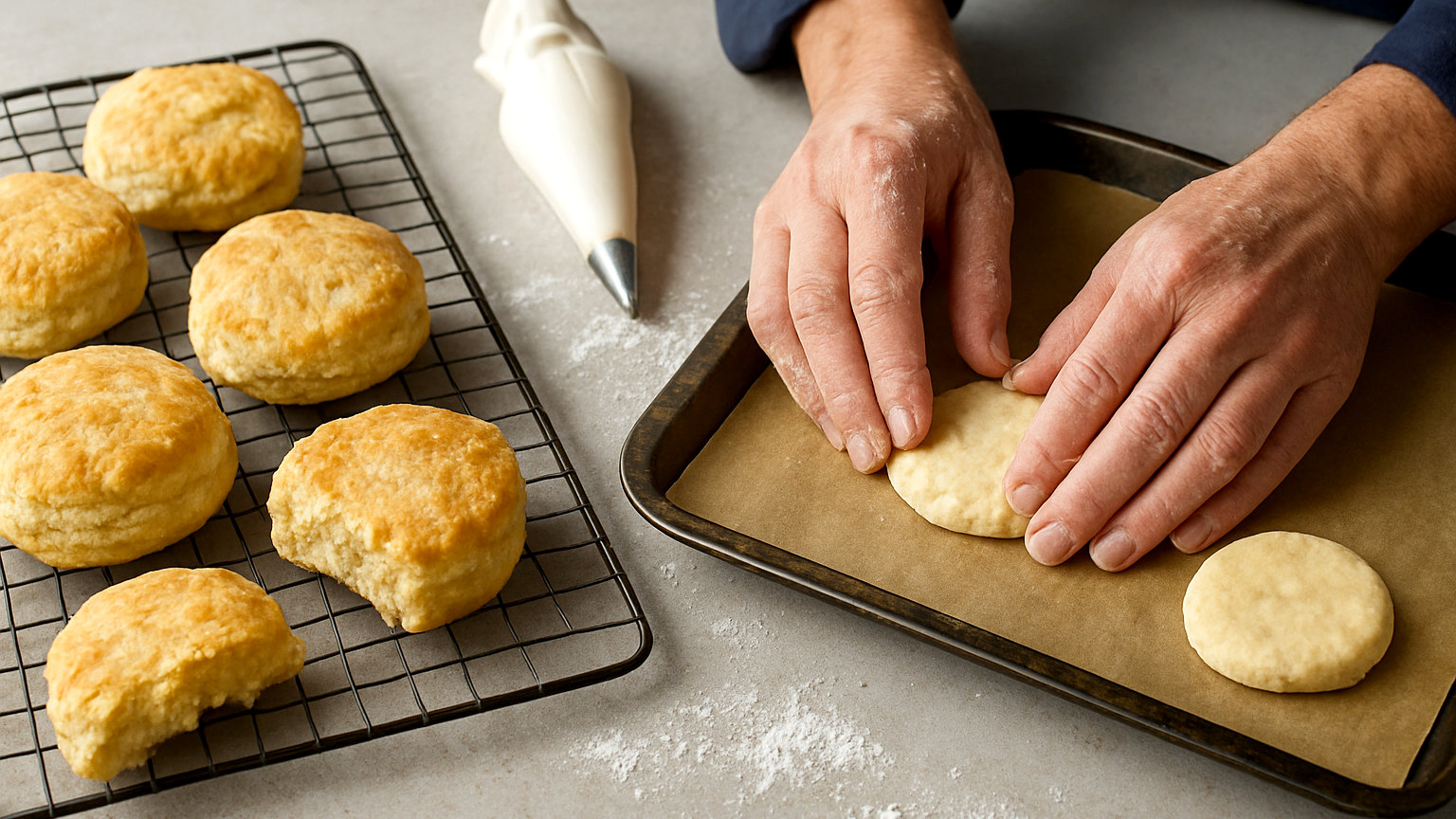
A biscuit spreads because the fat melts before the structure has set, and the flour and egg cannot hold the shape. Everything that causes excessive spreading is a variation on that, which makes it straightforward to work through. Some spread is intended in most recipes, so the question is usually how to control it rather than eliminate it.
Was the dough warm?
The most common cause by a long way. Warm butter starts melting the moment the tray goes in, so the biscuit flows outwards before the flour has set around it.
Chill the shaped biscuits for twenty minutes before baking. This alone solves most spreading problems.
Was the tray warm?
Putting dough onto a tray that has just come out of the oven starts melting the butter before it reaches the heat.
Use two trays and let each cool fully between batches, or run the hot one under cold water and dry it.
Was the tray greased?
Extra fat on the tray gives the biscuit something to slide on. Baking paper or a silicone mat is better than butter.
Most biscuit doughs contain enough fat that nothing else is needed.
Was there too much sugar?
Sugar liquefies as it heats and encourages spread. A biscuit with a high sugar to flour ratio will always be thin and crisp.
White sugar spreads more than brown, which holds moisture and sets sooner.
Was the butter creamed too much?
Unlike a cake, biscuits do not want a great deal of air beaten in. Over creaming makes the dough soft and airy, and it collapses outwards.
Beat until just combined for shortbread and biscuits, rather than until pale and fluffy.
Was there too much raising agent?
Bicarbonate of soda encourages spread as well as lift. Too much gives a thin biscuit with a soapy aftertaste.
Measure it properly rather than using a heaped spoon.
Does the type of fat matter?
Butter contains water and melts over a range of temperatures, so it spreads more than a hard vegetable fat, which stays solid longer.
Baking spreads with a high water content spread most of all and are a poor choice for biscuits.
Was the flour measured accurately?
Too little flour and there is not enough structure. Weigh it rather than using cups or spoons.
This is the most likely culprit if you have adapted a recipe from American measures.
Were they spaced far enough apart?
Even a biscuit that spreads correctly needs room. Allow 5cm for most doughs and 10cm for ginger biscuits and brandy snaps.
Bake in batches rather than crowding a tray, since merged biscuits cannot be separated once cooled.
Was the oven hot enough?
A cool oven gives the butter time to melt and flow before the biscuit sets. Most biscuits want 170C fan.
An oven thermometer settles the question, since domestic ovens are often well out.
Was the butter melted rather than softened?
Melted butter spreads considerably more than creamed butter, since it is already liquid when the biscuit goes into the oven.
Some recipes use it deliberately for a denser, chewier biscuit, but swapping one for the other changes the result significantly.
How do you rescue a spreading batch?
Chill the remaining dough hard, add a tablespoon of flour, and space the biscuits further apart.
Biscuits that have merged can be cut apart with a knife while still warm.
Does the baking paper make a difference?
Silicone mats grip slightly more than paper and reduce spread a little. Both are better than a greased tray.
A dark tray also cooks faster, which sets the biscuit sooner and limits spreading.
Can you use a cutter to reshape them?
A round cutter pressed over each biscuit within a minute of it leaving the oven pushes it back into shape while it is still soft.
Swirl the cutter gently rather than pressing straight down.
When is spreading correct?
Ginger biscuits, brandy snaps and thin cookies are all supposed to spread considerably. Shortbread and piped biscuits are not.
Check what the recipe expects before treating it as a fault.
Worth reading next: How to Store Biscuits and Keep Them Crisp. There is more in our Puddings recipes.

