
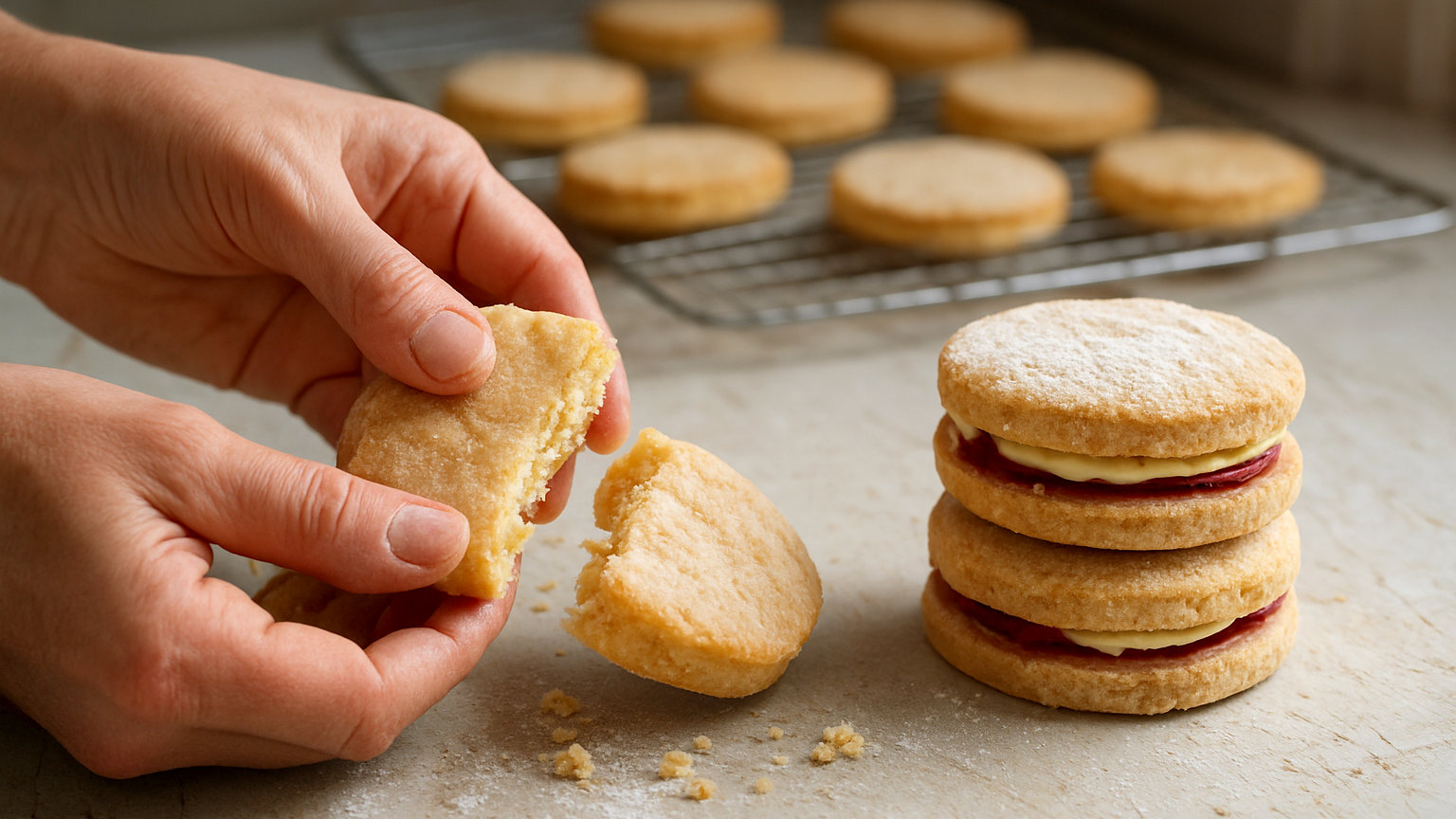
Shortbread is three ingredients in a fixed ratio and it is the purest test of butter in British baking. One part sugar, two parts butter, three parts flour by weight. There are no eggs, no raising agent and no liquid, so everything depends on the quality of the butter and on handling the dough as little as possible.
What do you need for 12 pieces?
- 100g caster sugar
- 200g softened butter, good quality and unsalted
- 250g plain flour
- 50g cornflour or rice flour
- Half a teaspoon of fine salt
- Caster sugar for dusting
How do you make it?
- Heat the oven to 150C fan, 170C conventional, gas mark 3.
- Beat the butter and sugar together only until combined, not until fluffy.
- Sift in the flours and salt and work them in with a spoon or your fingertips.
- Stop as soon as it comes together into a dough.
- Press into a lined 20cm square tin, or roll and cut into rounds.
- Prick all over with a fork.
- Chill for 30 minutes.
- Bake for 35 to 40 minutes until pale gold, not brown.
- Dust with caster sugar and mark into pieces while still hot.
Do not cream the butter and sugar until light. Air beaten in makes shortbread rise and then crumble oddly. It should be combined and no more, which is the opposite of what you do for a cake.
What is the ratio?
One part sugar, two parts butter, three parts flour. That is 100g, 200g and 300g including the cornflour.
It scales cleanly and is worth memorising, since it is one of the few recipes you never need to look up.
Why add cornflour or rice flour?
Both contain no gluten, so replacing some of the plain flour makes the biscuit shorter and more crumbly.
Rice flour also adds a slight sandiness that is traditional in Scottish shortbread. Cornflour gives a softer, meltier result.
Why does it need to be pale?
Shortbread should be the colour of pale straw. Browned shortbread tastes of toasted flour rather than butter, which is the whole point of it.
A low oven for a long time is what achieves that.
Why prick it with a fork?
It lets steam escape so the shortbread stays flat and dense rather than puffing up in the middle.
It is also traditional decoration and costs nothing.
Why mark it while hot?
Shortbread is soft when it comes out and sets hard as it cools. Cut it hot and it separates cleanly. Cut it cold and it shatters.
Score the lines, then let it cool completely before lifting the pieces out.
Does the butter matter?
More than in almost anything else, since there is nothing to hide behind. Use a good quality butter you would happily eat on toast.
Unsalted with salt added separately gives you control over the seasoning.
What shapes are traditional?
Fingers cut from a rectangular tin, rounds, or petticoat tails, which are wedges cut from a large disc with a scalloped edge.
All three are the same dough in different forms.
What can you add?
Lemon zest, lavender, chopped stem ginger, or the seeds of a vanilla pod. Dipping one end in dark chocolate is a good finish.
Keep additions small, since the butter should still be the dominant flavour.
Why chill before baking?
Cold dough holds its shape, so the shortbread keeps clean edges rather than spreading and losing its cut pattern.
Half an hour is enough, and shaped rounds can be chilled on the tray they will bake on.
Should it be salted?
Half a teaspoon of fine salt in this quantity, which is not enough to taste as salt but makes the butter taste more of itself.
Unsalted shortbread tastes flat and slightly greasy.
How long does it keep?
Two weeks in an airtight tin, which is longer than most biscuits because there is no moisture in it.
The raw dough freezes for three months and bakes from frozen with an extra five minutes.
Next, try Millionaire's Shortbread, or see the rest of our Puddings recipes.

