
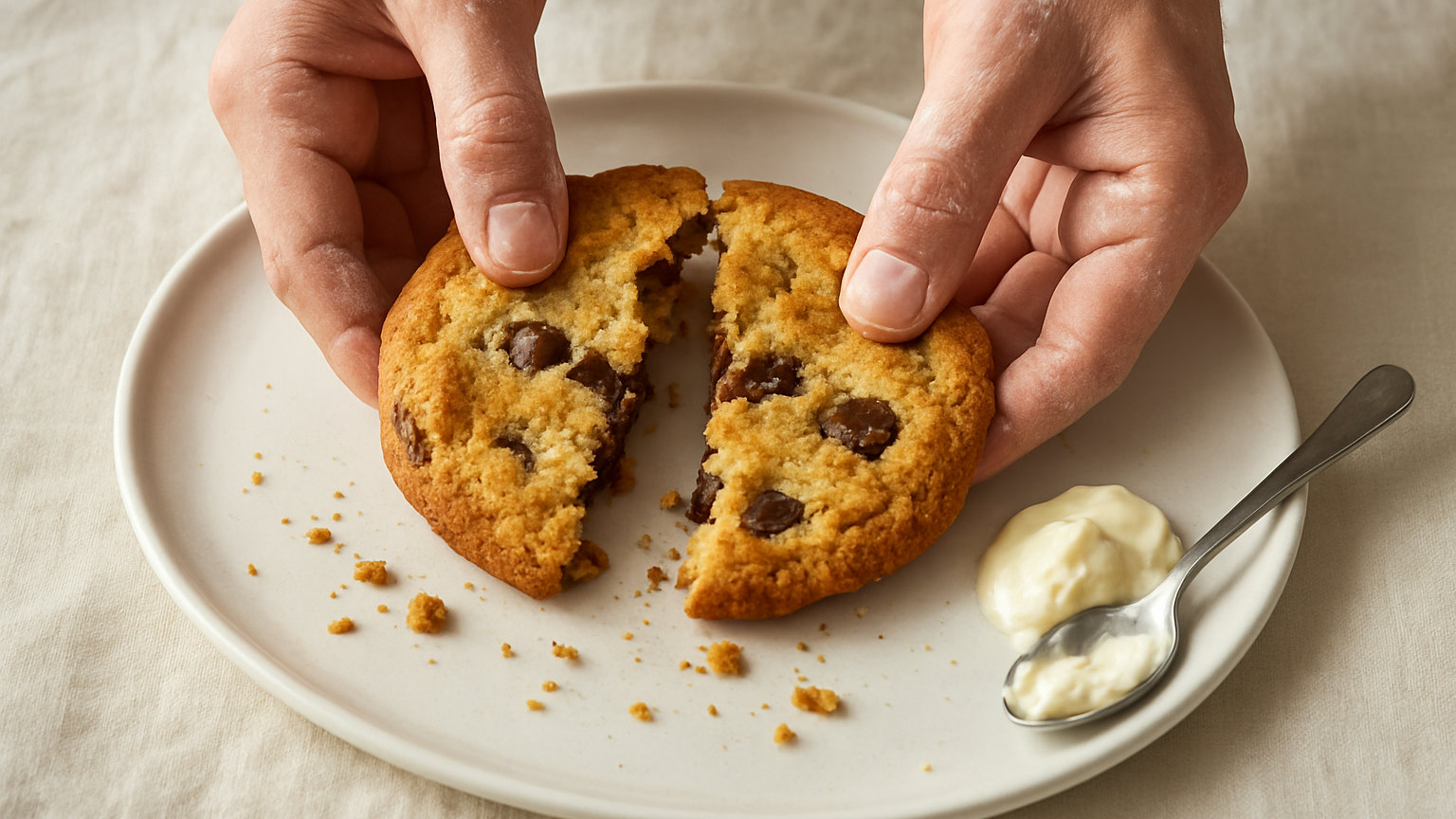
A good chocolate chip cookie has crisp edges and a soft, slightly underdone middle, and three things produce that. Chopped chocolate rather than chips, a high proportion of brown sugar, and taking them out of the oven before they look ready. Resting the dough overnight improves them further, which is the step most people skip.
What do you need for 16 cookies?
- 175g softened butter
- 150g light brown soft sugar and 75g caster sugar
- 1 egg and 1 egg yolk
- 2 teaspoons vanilla extract
- 275g plain flour
- 1 teaspoon bicarbonate of soda
- Half a teaspoon of fine salt
- 250g dark chocolate, roughly chopped
- Flaky salt for the tops
How do you make them?
- Beat the butter and both sugars until just combined, about 2 minutes.
- Beat in the egg, yolk and vanilla.
- Fold in the flour, bicarbonate of soda and salt until just combined.
- Stir in the chopped chocolate.
- Chill the dough for at least 2 hours, or overnight.
- Heat the oven to 170C fan and line two trays.
- Roll into balls of about 55g and space well apart.
- Bake for 10 to 12 minutes until the edges are set and the middles still look soft.
Take them out while the centres look underdone. They continue cooking on the hot tray for several minutes, and a cookie that looks finished in the oven will be hard once cool.
Why chop chocolate instead of using chips?
Chips contain stabilisers that help them hold their shape, so they stay as discrete lumps. Chopped chocolate melts into pools and shards through the cookie.
It also gives a mix of large and small pieces, which is more interesting.
Why rest the dough?
The flour hydrates fully and the sugars dissolve, which deepens the flavour and gives a chewier texture. It also reduces spreading.
Two hours makes a difference and overnight makes more. Twenty four to thirty six hours is often cited as the optimum.
Why mostly brown sugar?
Brown sugar contains molasses, which is acidic and holds moisture, giving a chewier cookie. White sugar gives crispness and spread.
Two thirds brown to one third white is a good balance.
Why an extra egg yolk?
It adds fat and richness without the water that a whole egg brings, which makes the cookie softer and more tender.
How big should they be?
About 55g each, which is larger than most home recipes. A bigger cookie can have crisp edges and a soft middle, which a small thin one cannot.
Should they be flattened?
No. Leave them as balls and let the heat spread them, which gives a thicker centre and crisper edges.
Pressing them down produces a uniformly flat, crisp biscuit.
Why the salt on top?
Flaky salt on a sweet biscuit sharpens the chocolate and stops it being cloying. A small pinch on each before baking is enough.
Should the trays be lined?
With baking paper rather than greased, since extra fat on the tray encourages spreading. A cold tray is better than a warm one.
Let trays cool between batches rather than putting dough onto a hot one.
Why did they spread too much?
Warm dough, too much sugar, or butter that had started to melt. Chilling the rolled balls for twenty minutes before baking fixes most of it.
Which chocolate should you use?
Dark chocolate around 60 to 70 per cent balances the sweetness of the dough. Milk chocolate makes a very sweet cookie.
A mixture of dark and milk is a reasonable compromise if you are feeding children.
Why bicarbonate of soda rather than baking powder?
It reacts with the acidic brown sugar, encourages spread and helps the edges brown and crisp.
Baking powder would give a cakier, puffier cookie.
How long do they keep?
Four days in a tin, and they are best on the first day. The raw dough balls freeze for three months and bake from frozen with two extra minutes.
Freezing portioned dough means fresh cookies in fifteen minutes whenever you want them.
If that was useful, Chocolate Viennese Whirls covers related ground, and there is plenty more in Puddings recipes.

