
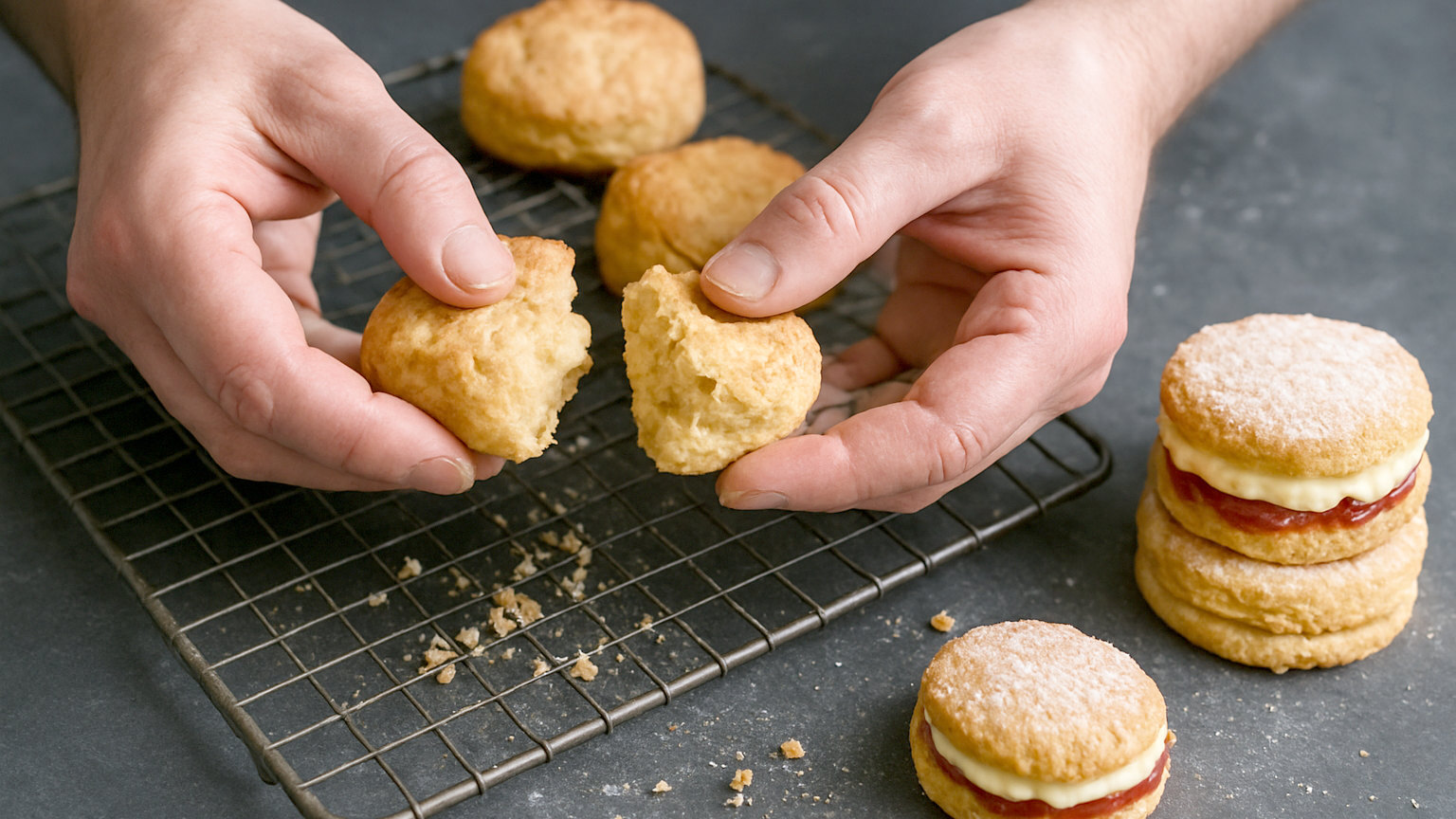
Whether a biscuit is chewy or crisp comes down to how much moisture is left in it and how the sugars behave. Four or five variables control that, and each can be adjusted independently. Understanding which lever does what means you can take a recipe you like and move it towards the texture you actually want.
What makes a biscuit crisp?
Low moisture. A biscuit that is baked longer, rolled thinner, made with white sugar and low in egg will be crisp.
Crispness also depends on staying dry afterwards, which is why storage matters as much as baking.
What makes one chewy?
Retained moisture and the right sugars. Brown sugar, golden syrup, honey and extra egg yolk all hold water in the finished biscuit.
Brown sugar is the single biggest lever. Molasses is hygroscopic, so it attracts and holds moisture, and swapping white for brown will noticeably soften almost any biscuit.
How does baking time change it?
More than anything else. The same ginger biscuit is chewy at ten minutes and snaps at fourteen.
If you want to change one thing, change this before adjusting the recipe.
Does thickness matter?
A thick biscuit keeps a soft middle while the edges crisp. A thin one dries all the way through and is uniformly crisp.
That is why a good chewy cookie is large and thick rather than small and thin.
What do eggs do?
Whites add water and give a crisper, drier biscuit. Yolks add fat and give a softer, richer one.
An extra yolk is a common trick for a chewier cookie.
Does the fat matter?
Butter contains water, which turns to steam and helps a biscuit spread and crisp. Melted butter gives a denser, chewier result than creamed.
All fat and no liquid gives shortbread, which is short and crumbly rather than either chewy or snapping.
Does thickness change the baking time?
Considerably. A 1cm cookie needs two or three minutes longer than a 5mm one, and the extra time is what lets the edges crisp while the middle stays soft.
Keep them an even thickness so they finish together.
What about the flour?
More flour gives a cakier, softer biscuit. Less gives a thinner, crisper one. Plain flour gives crispness and self raising gives a puffier texture.
Strong bread flour develops more gluten and produces a chewier biscuit, which some cookie recipes use deliberately.
What does bicarbonate of soda do to texture?
It raises the pH, which encourages browning and spread and gives a coarser, more open crumb. Baking powder gives a lighter, cakier biscuit.
Most chewy cookie recipes use bicarbonate for this reason.
Does resting the dough change it?
Yes. Resting overnight hydrates the flour fully and dissolves the sugar, which deepens flavour and gives a chewier texture.
It also reduces spread, so the biscuits are thicker.
Does golden syrup behave like brown sugar?
Yes, and more strongly. It is an invert sugar, which holds moisture particularly well, and it is why flapjacks and ginger biscuits stay chewy.
Honey does the same and brings its own flavour.
Why do chewy biscuits go hard?
They lose moisture to the air. Keeping them in a genuinely airtight tin with a slice of bread slows it considerably.
Does the sugar type change colour too?
Brown sugar browns faster and gives a darker biscuit, which can make it look done before it is.
Judge by the edges rather than the overall colour with brown sugar doughs.
Can one recipe do both?
Often, yes. Many biscuit doughs give a chewy result at the shorter end of the baking range and a crisp one at the longer end.
Bake half the tray for two minutes less and compare.
Why do crisp biscuits go soft?
They absorb moisture from the air, which is the opposite problem and needs the same solution: an airtight tin, stored separately from soft biscuits.
Refreshing them at 150C fan for five minutes drives the moisture back out.
If that was useful, Biscuit Dough You Can Freeze covers related ground, and there is plenty more in Puddings recipes.

