
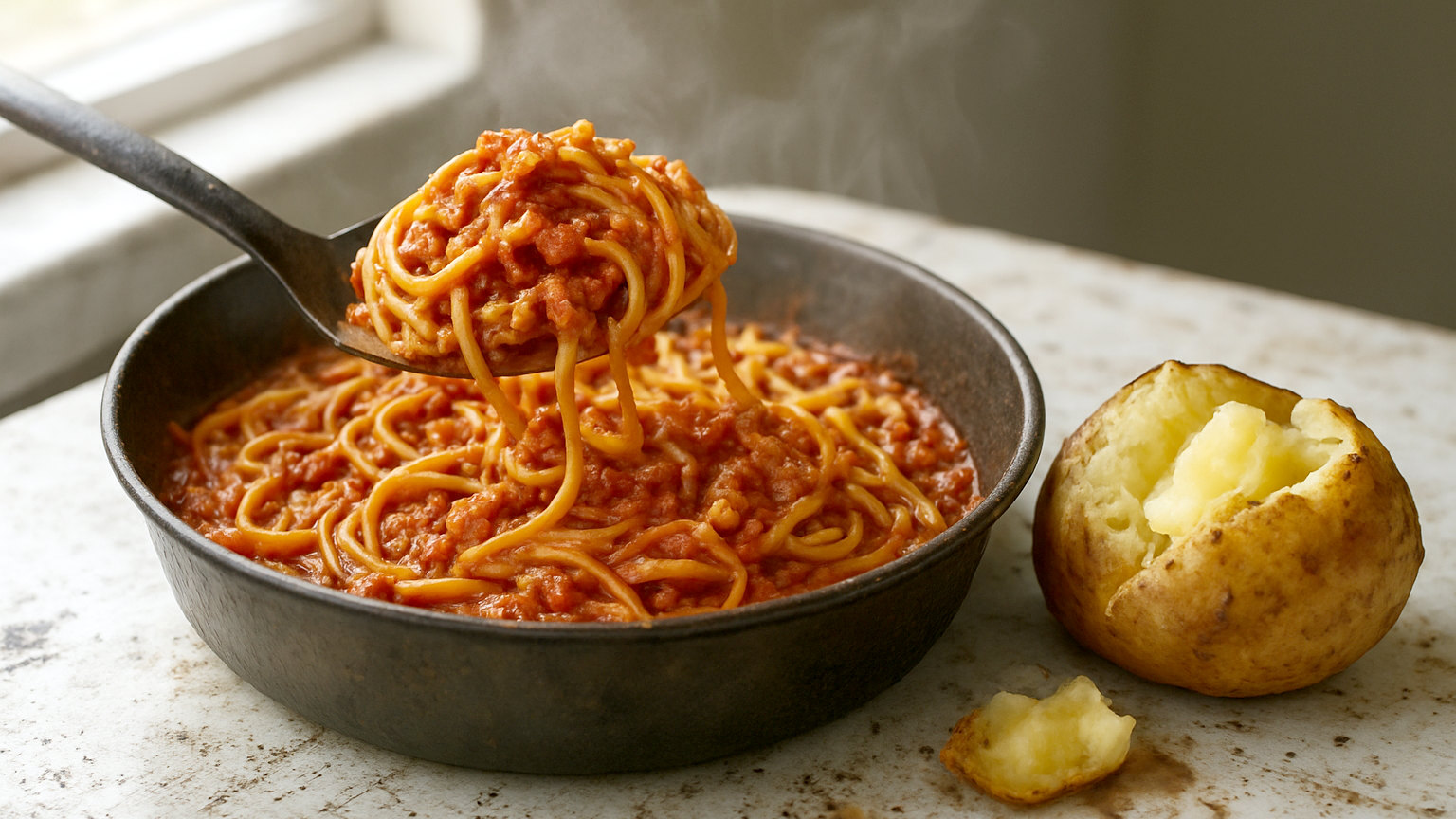
Most quick pasta dishes follow the same shape, and once you can see it you stop needing a recipe for them. There is a fat, something savoury and salty, something sharp or fresh, and a splash of the water the pasta cooked in to bring it together. Everything else is which specific ingredients happen to be in the cupboard.
What is the basic formula?
- A fat: olive oil, butter, bacon fat or cream
- An aromatic: garlic, onion, shallot or chilli
- Something savoury: anchovy, bacon, cheese, tinned tuna, olives or mushrooms
- Something sharp or fresh: lemon, capers, tomatoes, parsley or rocket
- Pasta water to emulsify it
Why does the pasta water matter?
It is starchy and salty, and it turns oil and cheese into a sauce. Without it the fat sits separately and slides to the bottom of the bowl instead of clinging to the pasta.
Reserve a mugful before draining, which is the step everyone forgets once the colander is in the sink.
Should the pasta finish in the sauce?
Always. Drain it a minute early, tip it into the pan with the sauce and a splash of water, and toss over the heat for a minute.
The pasta absorbs the sauce and the starch thickens it. Serving a naked pile of pasta with sauce spooned on top is the most common British habit and the easiest to improve on.
How salty should the water be?
Well salted, around a tablespoon per four litres. It is the only chance to season the pasta itself.
Most of it goes down the drain, so it is less salt than it sounds.
What combinations work?
Garlic, chilli and olive oil with parsley. Anchovy, garlic and breadcrumbs. Bacon, egg and parmesan. Tinned tuna, lemon, capers and rocket. Butter, sage and parmesan.
All five take about the time the pasta takes to boil.
How do you build a sauce in the pan?
Start the fat and aromatics as soon as the water goes on, so the sauce is ready when the pasta is. Nothing here needs more than the ten minutes the pasta takes.
Turn the heat off under the sauce while you drain, then bring it back for the final toss.
Which shape should you use?
Long thin shapes for oily sauces that coat, tubes and shells for chunky sauces that need catching, and small shapes for soups.
In practice whatever is in the cupboard is fine.
How much pasta per person?
About 100g dried for a main course and 75g if there is a starter or a substantial sauce.
Does the sauce need cooking long?
Rarely. Most of these are built in the pan while the pasta boils, so eight to ten minutes is the whole cooking time.
Anything that needs longer is a ragu rather than a weeknight pasta.
Should you add oil to the water?
No. It does not stop the pasta sticking and it coats the strands so the sauce cannot cling to them.
Stirring in the first minute is what stops it sticking.
What is worth keeping in the cupboard?
Anchovies, capers, olives, tinned tomatoes, tinned tuna, dried chilli, garlic and parmesan. Any three of those make a meal.
Parmesan rinds are worth saving and freezing, since one simmered in a sauce adds savoury depth.
How long should it cook?
A minute less than the packet says, since it finishes in the sauce. Taste it rather than trusting the timing, which varies between brands.
It should have a slight firmness at the centre when you drain it.
What if there is nothing in the cupboard?
Butter, black pepper and parmesan makes a genuine dish, and so does garlic fried gently in olive oil with chilli flakes.
Both need nothing else and take the time the pasta takes to boil.
Does it need cheese?
Not always. Traditionally cheese is not served with fish or seafood pasta, though nobody will stop you.
Cool leftovers quickly, refrigerate within two hours and use within two days, in line with Food Standards Agency guidance.
See also How to Poach an Egg, or browse more Mains recipes.


