
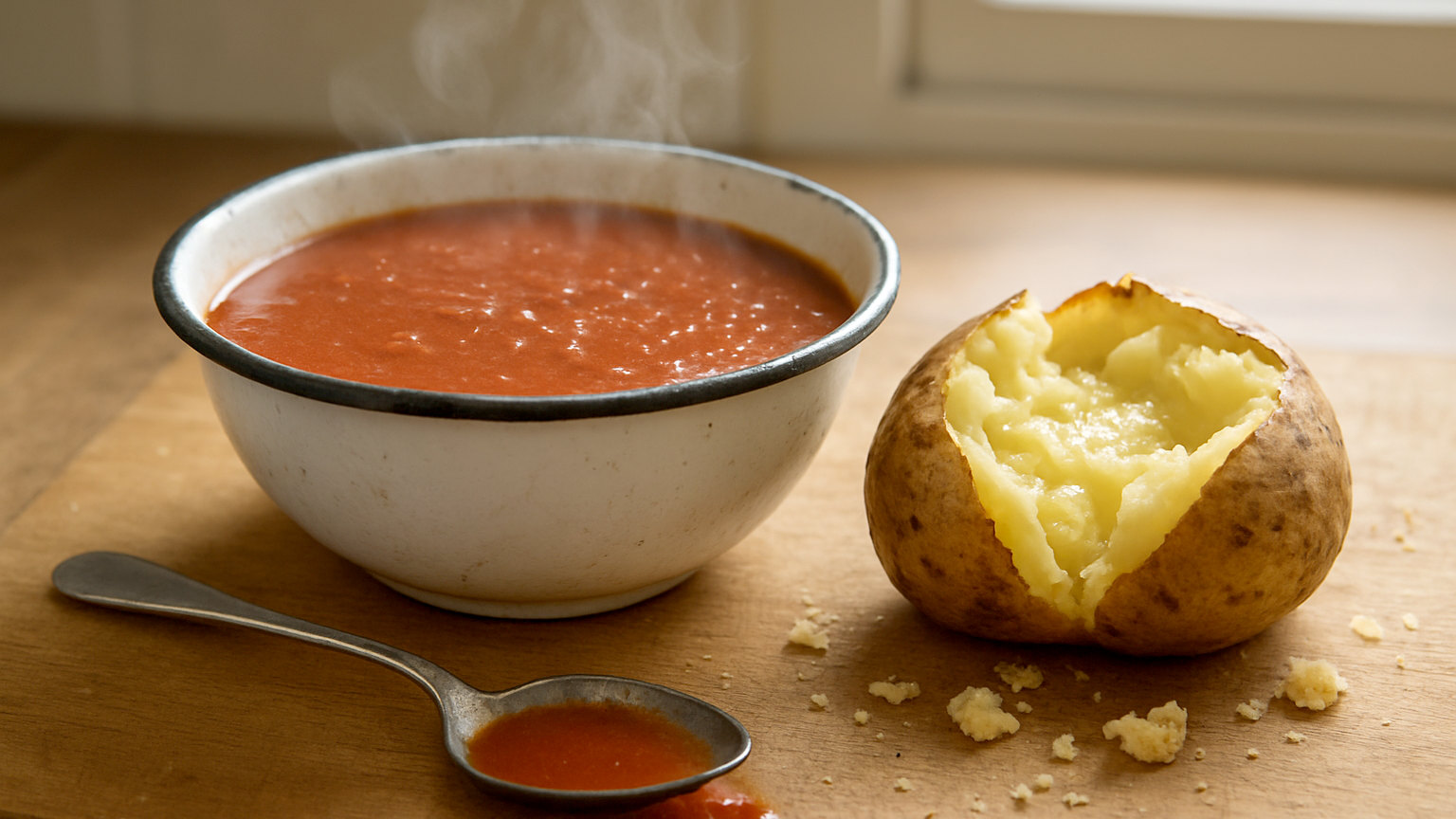
Tomato soup made from a tin is better than most versions made from fresh tomatoes, for the straightforward reason that tinned tomatoes were picked and processed ripe while supermarket fresh ones were picked hard and ripened in transit. The one thing tinned tomatoes need is help with their acidity and a slight metallic edge, and roasting solves both.
What do you need for 4 people?
- 2 tins of good plum tomatoes, 800g total
- 1 onion and 1 carrot, roughly chopped
- 4 cloves of garlic, unpeeled
- 3 tablespoons olive oil
- 1 tablespoon tomato puree
- 600ml chicken or vegetable stock
- 1 teaspoon caster sugar, or to taste
- A few basil leaves or a sprig of thyme
- 100ml double cream, optional
How do you make it?
- Heat the oven to 200C fan, 220C conventional, gas mark 7.
- Tip the tomatoes into a roasting tin with the onion, carrot and unpeeled garlic.
- Drizzle with oil, season and roast for 35 minutes until the edges have caught and darkened.
- Squeeze the garlic out of its skins into the tin.
- Scrape everything into a pan, add the tomato puree and stock, and simmer for 15 minutes.
- Blend until completely smooth.
- Taste, then add sugar a little at a time until the acidity is balanced.
- Stir in the cream if using and season.
Roast the tomatoes rather than simmering them from the tin. The dry heat caramelises the sugars and drives off the raw tinned flavour, which is the difference between a soup that tastes homemade and one that tastes like the tin it came from.
Why add sugar?
Tinned tomatoes are acidic and a teaspoon of sugar balances that without making the soup sweet. Taste before and after adding it and the difference is obvious.
Add it gradually, since the right amount varies between brands.
Which tinned tomatoes are best?
Whole plum tomatoes rather than chopped, which are usually a better grade of fruit and contain less added juice.
The price difference between the cheapest and a good brand is small and it is noticeable in a soup where tomatoes are the only real ingredient.
Does it need straining?
For a very smooth soup, pass it through a sieve after blending to remove the seeds and skin fragments.
A powerful blender makes this unnecessary for most people.
Why roast the garlic unpeeled?
The skin protects the clove from the direct heat so it turns sweet and soft rather than burning and going bitter.
Squeeze the flesh out afterwards and discard the skins.
Can it be made with fresh tomatoes?
Only when they are genuinely ripe, which in Britain means August and September. Roast them the same way, halved and cut side up.
Out of season, tinned is the better choice by a wide margin.
Does the carrot belong in it?
It adds sweetness and body and helps balance the acidity, which is why it is worth including even though it is not traditional.
One carrot for two tins is enough to help without making the soup taste of carrot.
What can you add?
A red pepper roasted alongside, a pinch of chilli, or a spoonful of harissa. Basil at the end rather than during cooking.
What should you serve with it?
Cheese on toast, or croutons and grated parmesan. Bread and butter is enough.
Why does it taste flat?
Usually salt or acid rather than anything more complicated. Taste for both separately, and a splash of red wine vinegar at the end lifts it noticeably.
A parmesan rind simmered in the soup adds savoury depth if it does not need to be vegetarian.
Should it be creamy?
Entirely optional. Cream softens the acidity and gives the familiar tinned soup character, and without it the soup tastes cleaner and more of tomato.
Try it before adding any, since it may not need it.
Can it be made ahead or frozen?
It improves overnight and freezes for three months without the cream. Cool it quickly, refrigerate within two hours and reheat once only until piping hot.
For something along the same lines, see Leek and Potato Soup, or browse all our Mains recipes.


