
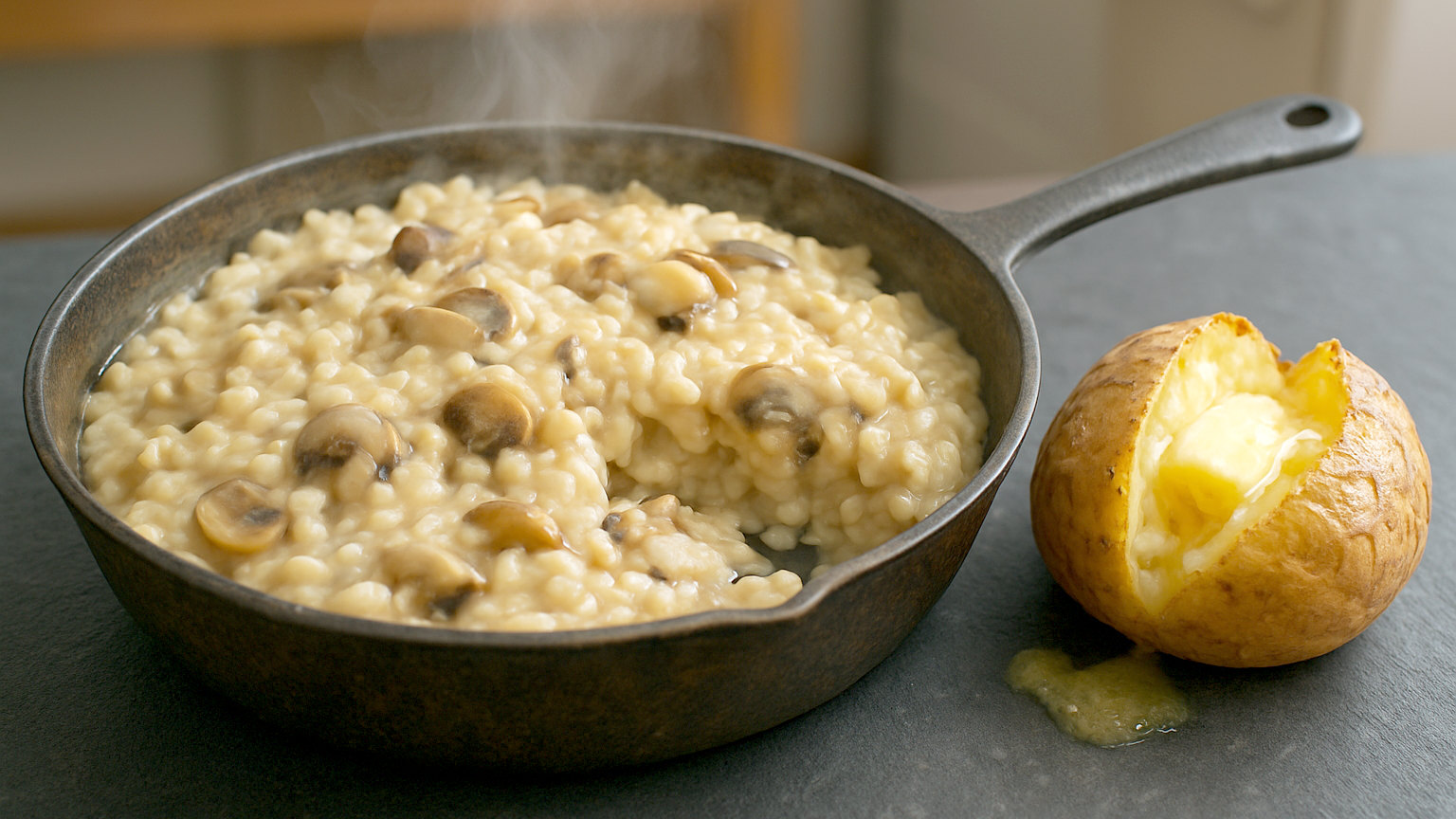
A mushroom risotto made with fresh mushrooms alone tastes mostly of rice and butter. The flavour comes from dried mushrooms, which are intensely concentrated, and from using their soaking liquid as part of the stock. That single change is what separates a good risotto from a bland one, and a 25g packet costs very little.
What do you need for 4 people?
- 300g arborio or carnaroli rice
- 25g dried porcini, soaked in 400ml hot water
- 400g chestnut mushrooms, sliced
- 1 onion, very finely chopped
- 3 cloves of garlic, crushed
- 150ml white wine or dry vermouth
- About 1 litre hot chicken or vegetable stock
- 60g butter and 60g parmesan, grated
- Thyme leaves and chopped parsley
How do you make it?
- Soak the porcini in hot water for 20 minutes, then chop them and strain the liquid into the stock.
- Fry the fresh mushrooms hard in butter until browned and the pan is dry, then set aside.
- Soften the onion in butter for 8 minutes without colouring, then add the garlic.
- Add the rice and stir for 2 minutes until the grains look translucent at the edges.
- Pour in the wine and stir until absorbed.
- Add the hot stock a ladleful at a time, stirring, waiting until each is absorbed before adding more.
- After 18 to 20 minutes the rice should be tender with a slight bite.
- Stir in the mushrooms, butter, parmesan and herbs off the heat and rest for 2 minutes.
Strain the porcini liquid carefully. Grit settles at the bottom of the soaking bowl, so pour it off slowly and leave the last tablespoon behind, or use a coffee filter.
Why toast the rice first?
Coating the grains in fat and heating them briefly firms the outside, which helps them hold their shape and release starch gradually rather than collapsing.
Two minutes is enough, and the grains should look translucent around a white centre.
Why add the stock gradually?
The constant stirring and slow addition rubs starch off the grains, which is what creates the creamy texture without any cream.
Adding it all at once produces boiled rice in stock rather than risotto.
Does the stock need to be hot?
Yes. Cold stock drops the temperature of the pan each time and stops the rice cooking evenly.
Keep it at a bare simmer in a separate pan alongside.
Which rice should you use?
Arborio is the most widely available. Carnaroli holds its shape better and is more forgiving of slight overcooking.
Ordinary long grain rice will not work, since it does not release the starch that makes the dish.
How do you know when it is done?
Taste it. The grain should be tender with a firm centre that still has a little resistance, and the whole risotto should flow slowly when the pan is tilted.
Stiff risotto that holds its shape has gone too far.
What can you use instead of wine?
Dry vermouth is excellent and keeps for months once opened. A squeeze of lemon in extra stock gives the acidity without alcohol.
The wine is providing sharpness rather than anything more complicated.
Why brown the fresh mushrooms separately?
They release a great deal of water, and adding them raw would stop the rice cooking properly and dilute the flavour.
Should you stir constantly?
Frequently rather than constantly. The stirring rubs starch off the grains, but standing over it without pause for twenty minutes is unnecessary.
Stir every twenty or thirty seconds and it will be fine.
What is the final butter for?
Beating in cold butter and parmesan off the heat is called mantecare and it is what gives risotto its gloss and creaminess.
Do it off the heat and rest the pan for two minutes before serving.
Can it be made ahead?
Not really. Risotto is best within minutes of finishing, and it stiffens as it cools.
Leftovers make excellent arancini. Cool quickly, refrigerate within one hour since it contains rice, and use within a day, in line with Food Standards Agency guidance.
If that was useful, Scrambled Eggs Worth Eating covers related ground, and there is plenty more in Mains recipes.


