
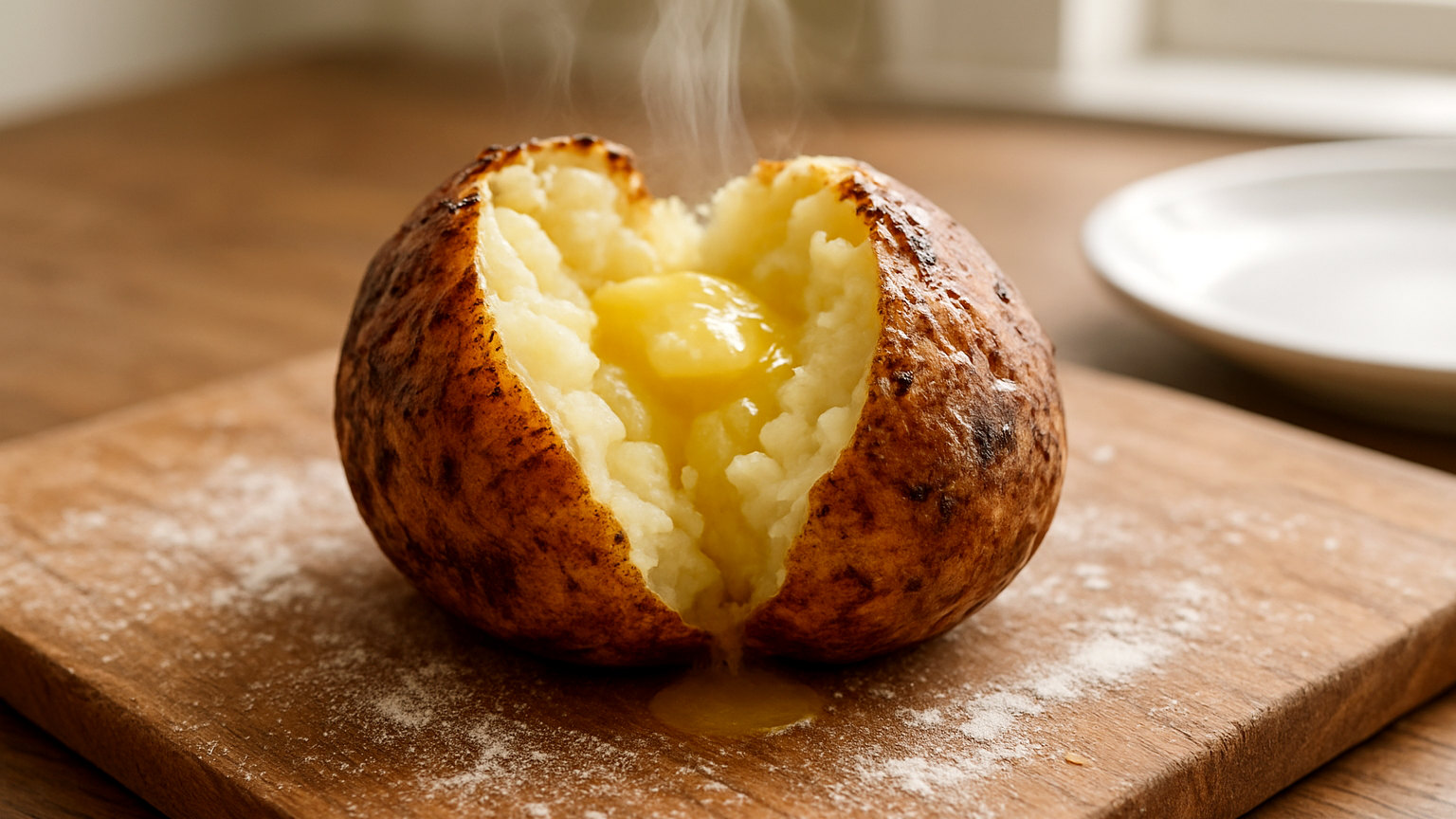
A jacket potato is one of the cheapest hot meals there is and the skin is the whole point. Most home baked potatoes have soft, slightly damp skins because they have been wrapped in foil, which traps steam and effectively steams the potato rather than baking it. Take the foil away and the same potato comes out with a crisp, salty, edible skin.
What do you need?
- 1 large baking potato per person, about 300g each
- 1 tablespoon oil or melted butter
- Plenty of flaky salt
- Butter, cheese or a filling to serve
How do you bake them?
- Heat the oven to 200C fan, 220C conventional, gas mark 7.
- Scrub the potatoes and dry them thoroughly.
- Prick each one several times with a fork.
- Rub all over with oil and roll in flaky salt.
- Put them directly on the oven shelf, not on a tray.
- Bake for 1 hour 15 minutes to 1 hour 30 minutes.
- Squeeze gently, and if it gives easily it is done.
- Cut a cross in the top and squeeze the sides to open it up.
Never wrap them in foil. Foil traps the steam the potato releases, so the skin stays wet and cannot crisp. It also slows the cooking rather than speeding it up.
Why put them straight on the shelf?
Air circulates all the way round, so the skin dries evenly. On a tray the underside sits in its own steam and stays soft.
Put a tray on the shelf below to catch any drips.
Why prick them?
Steam builds up inside as the potato cooks and needs somewhere to go. An unpricked potato can split violently, and occasionally burst.
Half a dozen holes with a fork is enough.
Which potatoes should you use?
Large floury varieties. Maris Piper, King Edward or anything sold as a baking potato.
Waxy salad potatoes will not go fluffy inside and are the wrong choice entirely.
Does the microwave shortcut work?
Yes, and it is a reasonable compromise. Microwave for 8 to 10 minutes until nearly soft, then oil, salt and finish in a 220C fan oven for 20 minutes.
You get a crisp skin in half an hour rather than an hour and a half. A potato done entirely in the microwave has a soft, leathery skin.
Can you use an air fryer?
Very well, at 190C for 45 to 55 minutes. The moving air dries the skin faster than an oven does and the result is excellent.
Why does the skin need salt?
Salt draws moisture out of the surface, which helps it crisp, and it seasons the skin so it is worth eating rather than something to be scraped off.
Use flaky salt and be generous, since most of it falls off.
How long do they take by size?
A 200g potato takes about an hour, a 300g one about an hour and a quarter, and a very large 400g potato closer to an hour and three quarters.
Keep them a similar size on the shelf so they finish together.
What fillings work best?
Butter and cheese is the classic. Beyond that, tuna mayonnaise, chilli, baked beans, coleslaw, or leftover stew.
Anything with a sauce works, since the potato is dry and floury and needs moisture.
How do you know when it is done?
Squeeze it with an oven glove. A cooked potato gives easily and the skin wrinkles slightly. A skewer should slide into the centre with no resistance.
Undercooked potato in the middle is the most common fault, and it usually means the potato was larger than it looked.
How do you get it fluffy inside?
Cut the cross as soon as it comes out and squeeze the sides to push the flesh up, which lets the steam escape.
A potato left whole for ten minutes goes dense, since the steam has nowhere to go.
Can they be reheated?
At 200C fan for 20 minutes, which restores the skin reasonably well. Cool leftovers quickly, refrigerate within two hours and use within two days, in line with Food Standards Agency guidance.
For something along the same lines, see Cheese on Toast Done Properly, or browse all our Mains recipes.


