
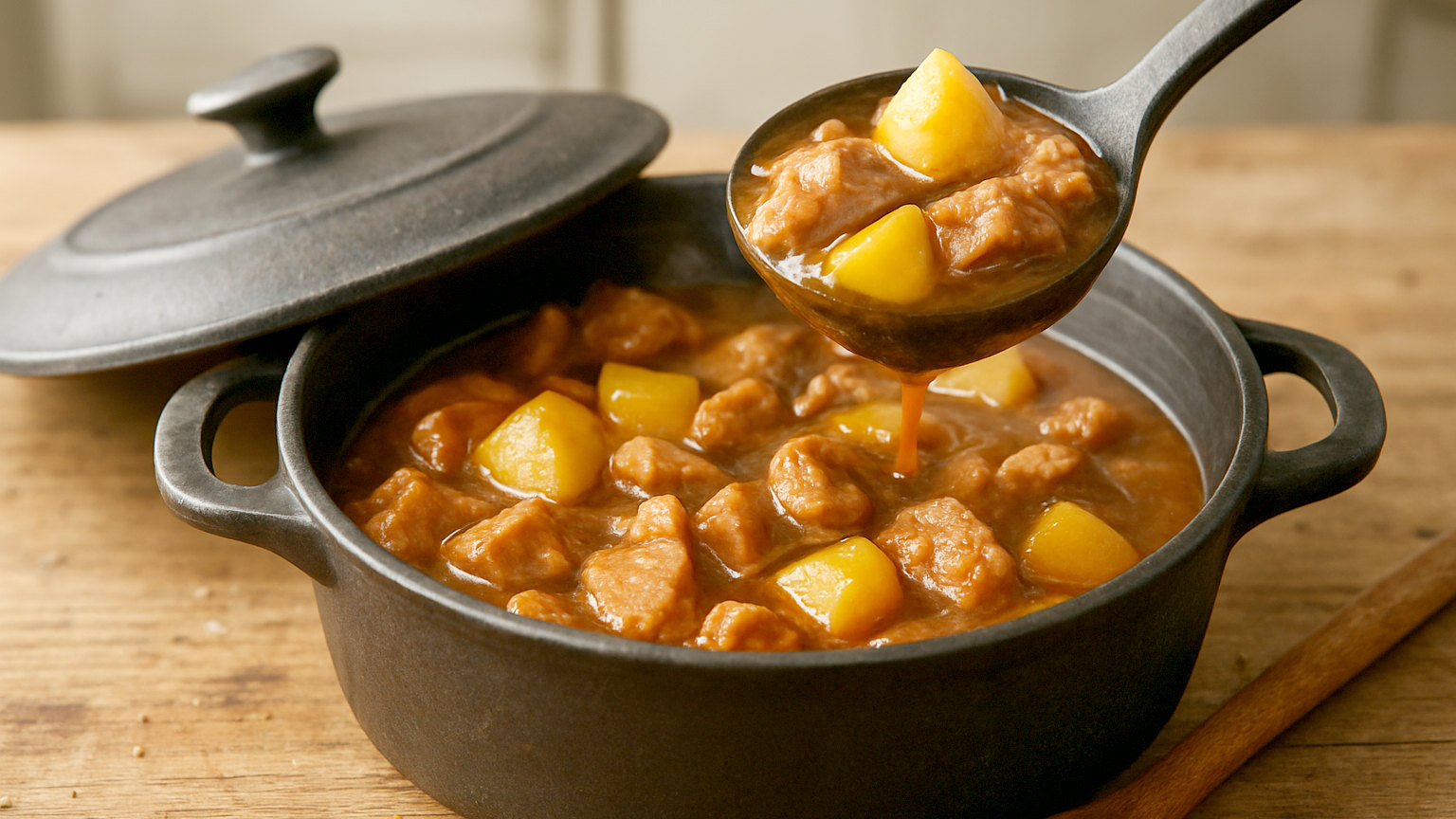
Pork and cider is one of the oldest pairings in English cooking and it belongs to the apple growing counties of the West Country. The two things that go wrong are using a lean cut, which dries out, and using sweet cider, which reduces into something cloying. Get both right and it is a straightforward one pot dinner.
What do you need for 6 people?
- 1kg pork shoulder, cut into 4cm cubes
- 2 tablespoons plain flour, seasoned
- 2 tablespoons oil or butter
- 150g smoked bacon lardons
- 2 onions, sliced, and 3 sticks of celery
- 2 leeks, thickly sliced
- 500ml dry cider
- 400ml chicken stock
- 2 eating apples, cored and cut into wedges
- 100ml double cream and 2 teaspoons wholegrain mustard
- 4 sprigs of thyme and 2 bay leaves
How do you make it?
- Heat the oven to 160C fan, 180C conventional, gas mark 4.
- Toss the pork in seasoned flour and brown it hard in batches. Set aside.
- Fry the bacon until crisp, then add the onions, celery and leeks and cook for 10 minutes.
- Pour in the cider and let it bubble down by half, scraping the base.
- Return the pork, add the stock and herbs, cover and cook for 2 hours.
- Add the apple wedges and cook uncovered for a further 25 minutes.
- Stir in the cream and mustard off the heat and check the seasoning.
The apples go in near the end. Added at the start they dissolve completely into the sauce, which thickens it but leaves you with no apple to eat and a stew that tastes sweeter than intended.
Which cut of pork?
Shoulder, also sold as hand or collar. It has the fat and connective tissue that a two hour braise needs.
Loin and tenderloin are wrong here, since they are lean and will be dry and stringy well before the sauce is ready.
Why dry cider?
Sweet cider reduces into something syrupy that fights with the pork. A dry cider provides acidity, which is what the dish actually needs.
A proper West Country scrumpy works well if you can get it, though it can be very dry, so taste before adding much.
What can you use instead of cider?
Dry white wine, perry, or chicken stock with two tablespoons of cider vinegar and a teaspoon of honey.
Apple juice needs the vinegar to stop it being sweet, and should be reduced hard before the stock goes in.
Should the cream go in at all?
It is optional and the dish works without it, particularly if you want to freeze the leftovers. Creme fraiche gives a sharper finish and is less likely to split.
Add either off the heat, since boiling cream in an acidic cider sauce is the main way this dish goes wrong.
Which apples work best?
Firm eating apples such as Braeburn or Cox, which hold their shape. Bramleys collapse entirely, which is useful if you want them to thicken the sauce but not if you want wedges.
British apples are at their best from September through to winter.
Can it be made ahead?
Yes, to the point before the cream goes in. Refrigerate for up to three days, then reheat and finish with the cream and mustard.
It freezes for three months without the cream, which can split.
Can it be cooked in a slow cooker?
Yes. Brown the pork and vegetables first, then give it 7 hours on low using two thirds of the liquid, since almost nothing evaporates.
Add the apples for the final hour and stir in the cream at the very end.
What else can go in?
Prunes suit pork particularly well, as does a handful of sage in place of the thyme. Fennel seeds add a note that works with both the pork and the apple.
What should you serve with it?
Mashed potato, buttered cabbage or kale. Bread is a good alternative if the sauce has been left thin.
Cool leftovers quickly, refrigerate within two hours and reheat once only until piping hot, following Food Standards Agency guidance.
If that was useful, Chicken Casserole With Root Vegetables covers related ground, and there is plenty more in Mains recipes.


